
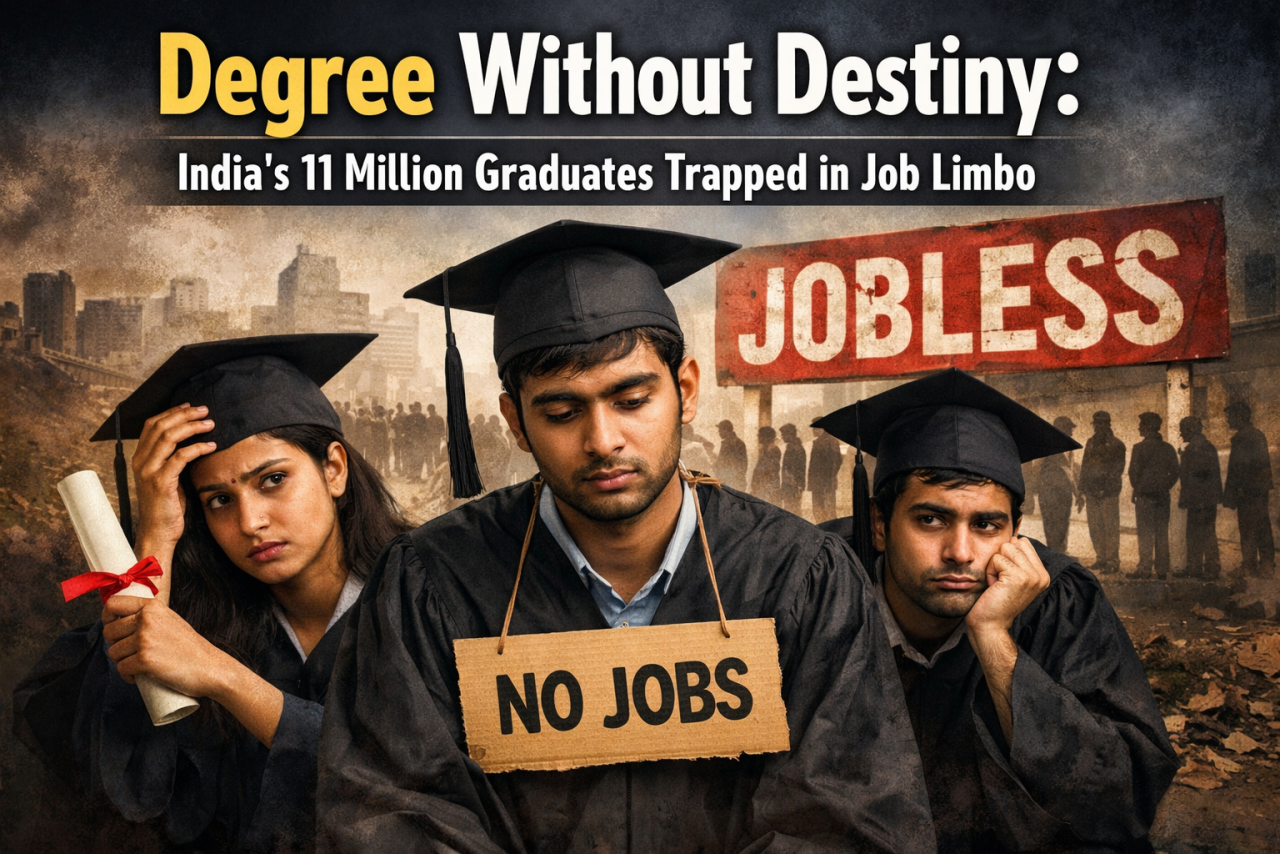
A degree was once India’s ticket to security—today, it’s a waiting slip. With 1.1 crore graduates stuck without meaningful work, the country’s biggest promise is quietly turning into its deepest crisis.
For decades, the Indian dream followed a familiar script: study hard, earn a degree, and secure a stable future. Today, that promise stands fractured. For nearly 1.1 crore young Indians, higher education has not opened doors—it has led to a prolonged standstill.
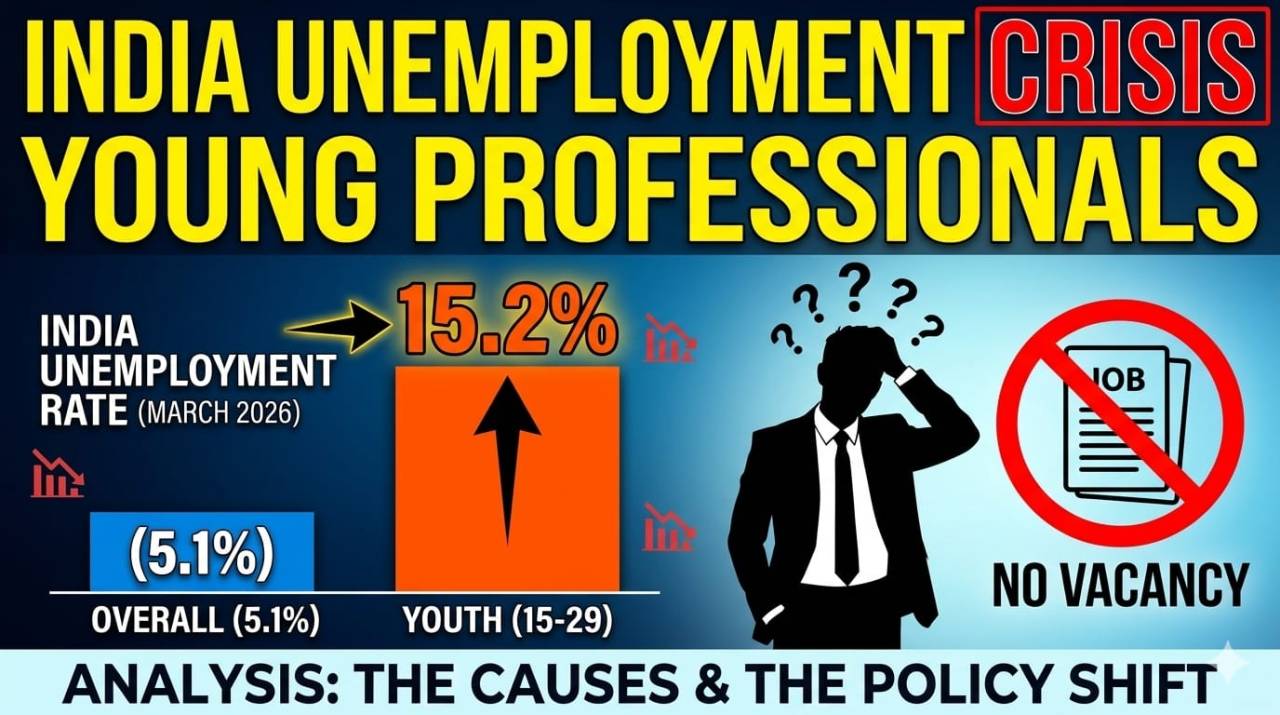
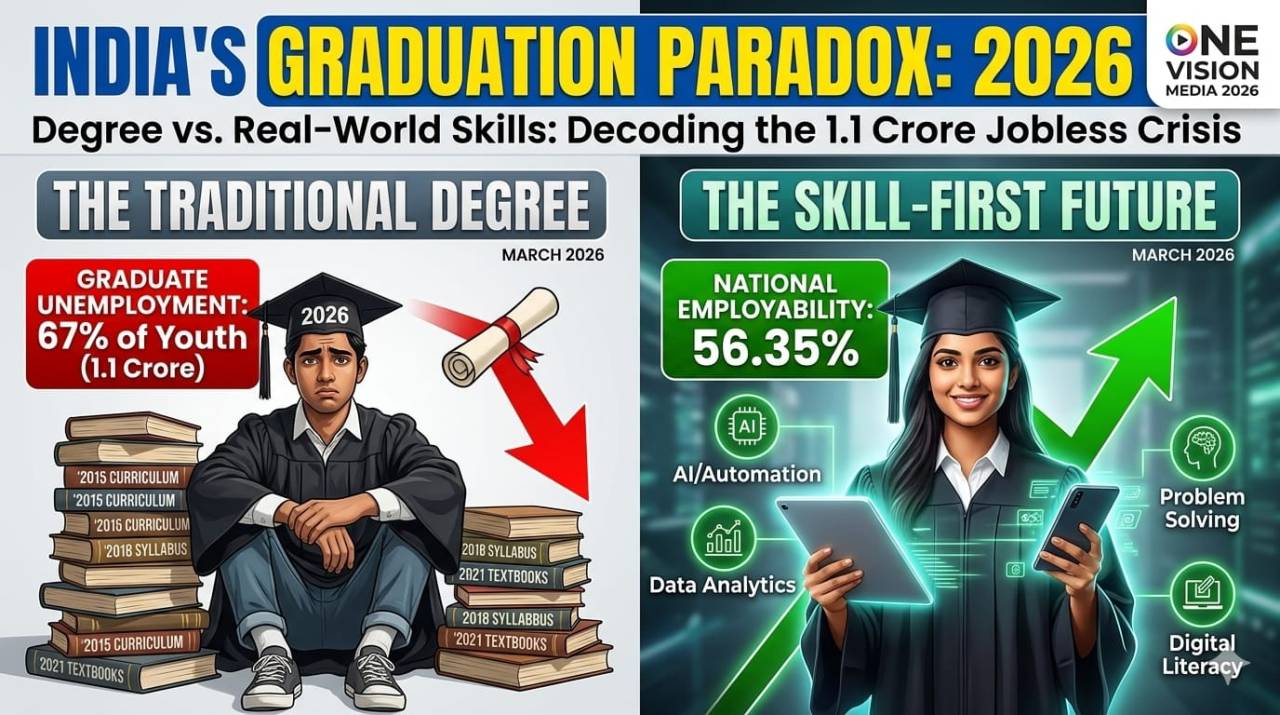
New data on India’s labour market reveals a stark inversion of expectations. Even as access to higher education has expanded dramatically, the economy has failed to keep pace in generating meaningful employment. The result is a deepening crisis where 67% of all unemployed youth (aged 20–29) are graduates, a sharp rise from just 32% two decades ago.
The Math of a Growing Mismatch
At the heart of the crisis lies a widening structural imbalance. Between 2004 and 2023, India added roughly 50 lakh graduates annually to its workforce. In contrast, the economy created only about 28 lakh jobs each year for this cohort.
The disparity becomes even more pronounced when job quality is examined. Of those who do find work, only 17 lakh secure salaried positions—a fraction of the total graduate output. The rest are absorbed into informal or self-employed roles, often far below their qualifications and earning potential.
This is not merely an employment issue; it is a crisis of underemployment and wasted human capital.
A 40-Year Pattern of Stagnation
Despite the explosion in the number of degree holders, unemployment rates among young graduates have remained stubbornly high. Data spanning four decades shows that graduate unemployment has consistently hovered between 35% and 40%.
|
Year |
Graduates as % of 20–29 Population |
Unemployed Graduates (in Lakhs) |
|
1983 |
4% |
7 |
|
2004 |
10% |
30 |
|
2023 |
28% |
110 |
The numbers tell a story of educational inflation. In 1983, a degree set individuals apart. By 2023, with 28% of the age group holding degrees (6.3 crore people), its value as a reliable pathway to employment has eroded significantly.
What was once a guarantee has become, at best, a gamble.
Beyond the Certificate
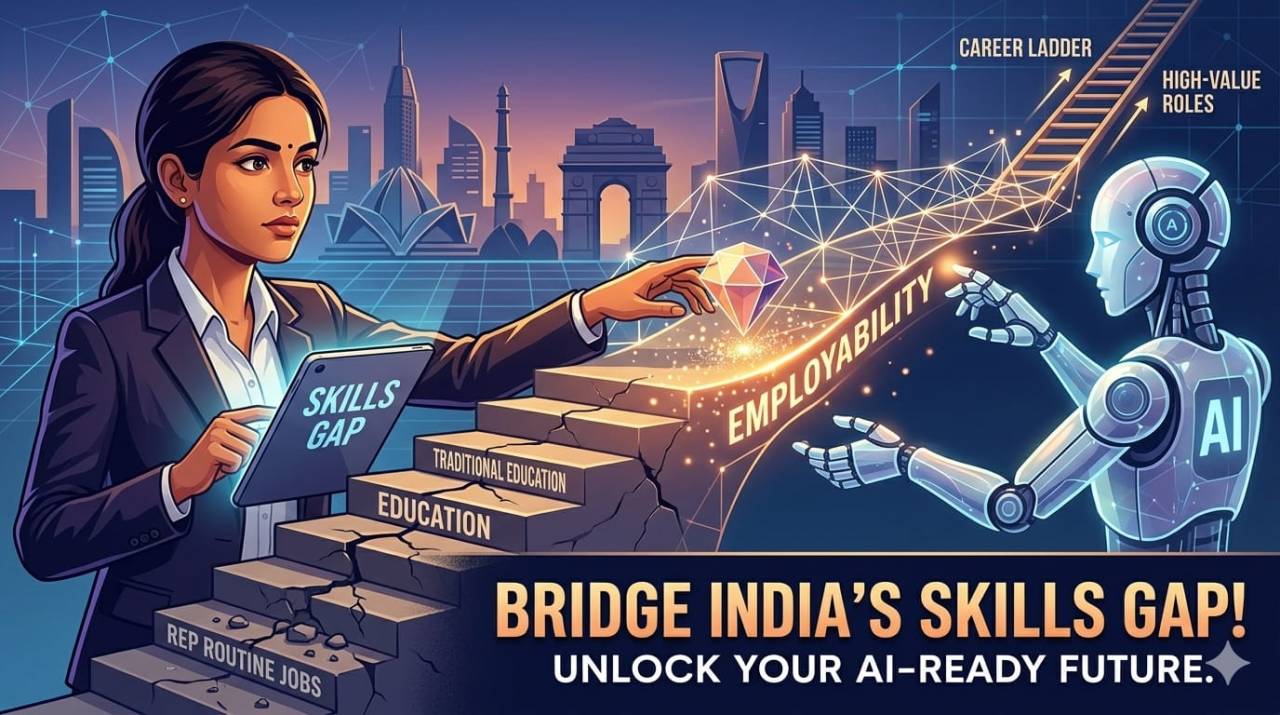
Economists increasingly point to a dual failure: jobless growth and skill-deficient education.
“We are witnessing a massive disconnect,” notes a labour market analyst. “Universities are producing graduates at record rates, but industry demand has shifted toward specialized technical and soft skills that traditional curricula fail to deliver.”
This disconnect leaves many graduates in a prolonged “waiting period.” Only 7% of male graduates secure a permanent salaried job within a year of completing their studies. For the majority, the years following graduation are spent preparing for competitive government exams or navigating short-term, low-skill work to stay afloat.
The Ticking Demographic Clock
India currently stands at the peak of its demographic dividend, with a median age of around 28. However, this window is narrowing and is expected to begin closing after 2030 as the population gradually ages.
If the economy cannot transition from mass education to mass employment, the consequences could be profound. A generation armed with degrees but denied opportunity risks becoming a source of widespread economic frustration and social instability.
A Crisis Demanding Urgency
The evidence is unequivocal: a degree alone is no longer a safeguard against unemployment or financial insecurity in India. Without a fundamental realignment between education and industry—and a decisive push toward creating high-quality jobs—the country risks deepening what can only be described as a “degree of joblessness.”
India’s challenge is no longer just to educate its youth, but to employ them meaningfully. Until then, millions will remain suspended between aspiration and reality—qualified, capable, and yet, without destiny.













Leave a Comment