
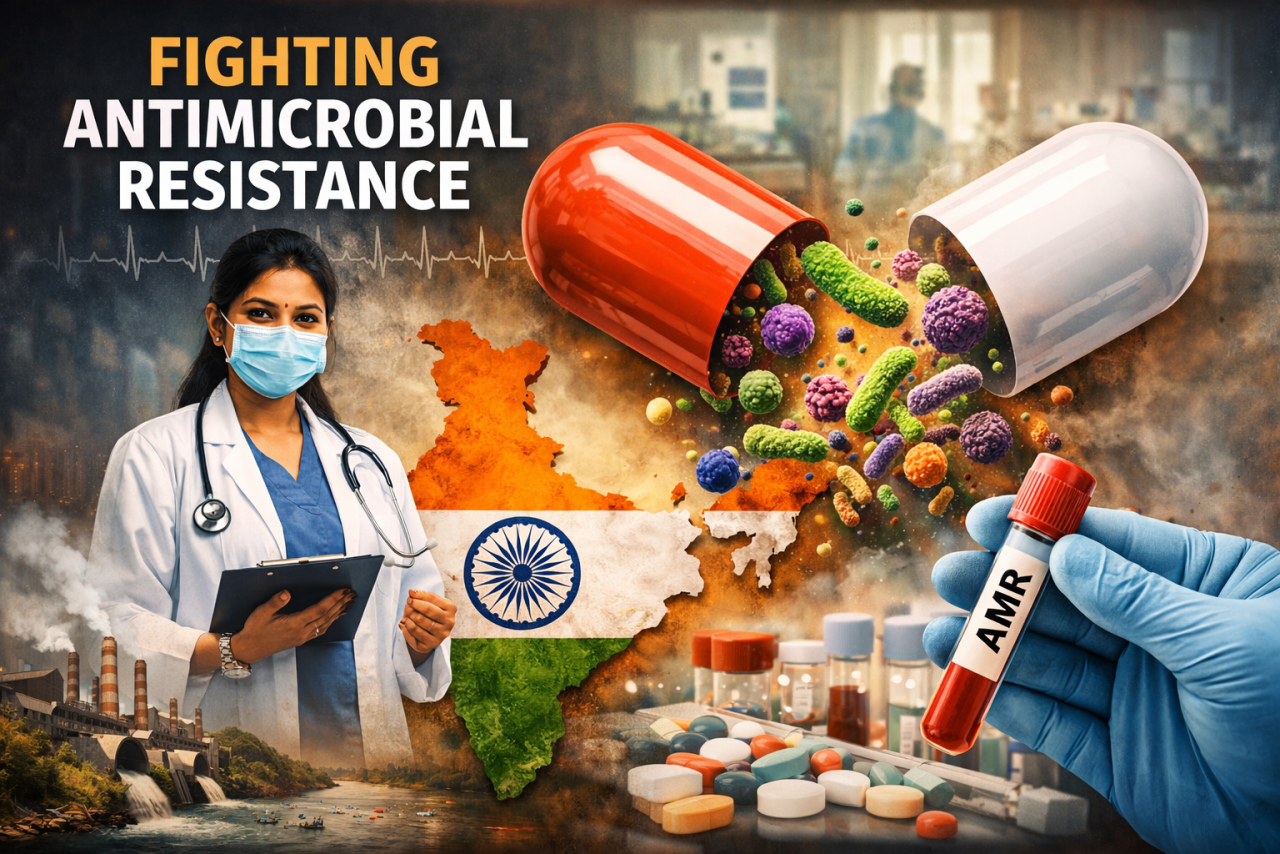
Antimicrobial resistance (AMR) is often described as a “silent pandemic.” Unlike a fast-moving virus that sweeps across the world in weeks, AMR is a slow, relentless threat that makes common medicines, especially antibiotics, stop working. Today, India finds itself at a critical crossroads. As one of the world’s largest consumers of antibiotics and a global pharmaceutical hub, the country is facing a health crisis that could undo decades of medical progress.
To understand why India is accelerating its response to grasp both the scale of the danger and the bold new measures being introduced to contain it.
Why India Is Stepping Up the Fight Against AMR
The urgency stems from a growing death toll and serious economic risks. In India alone, AMR is linked to nearly 297,000 deaths each year. Infections that were once easily cured with a short course of antibiotics are increasingly becoming life-threatening.
Newborns are among the most vulnerable. More than 58,000 infants in India die annually from sepsis caused by bacteria that no longer respond to standard treatments.
The financial implications are equally alarming. A 2024 study by the Center for Global Development estimates that if AMR remains unchecked, India could face economic losses of nearly $21 billion by 2050. Longer illnesses, reduced productivity, and the high cost of last-resort drugs and prolonged hospitalisation are likely to push many families deeper into poverty.
A New Roadmap: NAP-AMR 2.0
In response, the Indian government has launched the second phase of its National Action Plan on Antimicrobial Resistance (NAP-AMR 2.0), covering the period from 2025 to 2029. This ambitious framework brings together 20 different ministries, reflecting the scale and complexity of the challenge.
At its core is the “One Health” approach, which recognises that human health is closely linked to animal health and the environment. Excessive use of antibiotics in livestock or the release of pharmaceutical waste into rivers allows bacteria in these ecosystems to develop resistance. These drug-resistant bacteria eventually make their way back to humans, worsening the public health crisis.
Strict New Rules for Pharmacies and Doctors
Some of the most visible changes will be felt at local pharmacies. A high-level sub-committee of the Drugs Consultative Committee (DCC) has recommended a major overhaul of how antibiotics are sold and monitored.
One of the biggest contributors to AMR in India is the over-the-counter sale of antibiotics. Many people purchase these drugs without a prescription for common colds or flu, even though such illnesses are viral and do not respond to antibiotics. To curb this misuse, the proposed measures include:
- Stamping prescriptions to prevent repeated use of old prescriptions
- Real-time digital tracking through state-specific software to monitor every antimicrobial sale
- Mandatory CCTV surveillance at wholesale and retail outlets to ensure compliance
Disposal, Pollution, and the Environmental Threat
The AMR problem does not end once a course of medicine is completed. Improper disposal of expired or unused antibiotics—whether thrown into garbage bins or flushed into drains—contaminates soil and water. This allows bacteria in the environment to develop and strengthen resistance.
To address this, the DCC has recommended an Extended Producer Responsibility (EPR) policy, which would make pharmaceutical companies responsible for collecting and safely disposing of unused or expired medicines. Manufacturing units will also face stricter inspections to ensure antibiotic waste is not released into the environment.
Supporting Research and Innovation
Alongside tighter controls, the government is also working to encourage innovation. Developing new antibiotics is costly and time-consuming, and global investment in this area has been declining.
The new framework aims to expedite regulatory approvals for critical antibiotics and create a more supportive environment for research. The focus is on developing drugs targeted at the drug-resistant pathogens most prevalent in India.
What This Means for the Public
For ordinary citizens, these changes will likely make antibiotics harder to obtain—and that is precisely the point. Doctors will be under greater pressure to prescribe them only when absolutely necessary, while pharmacists will face stricter oversight to prevent misuse.
The message from the government is clear: antibiotics are a precious national resource. Continued misuse risks a future where even minor injuries or routine surgeries become life-threatening due to the lack of effective medicines. By stepping up the fight now, India is attempting to protect these life-saving drugs and ensure they remain effective for generations to come.

























Leave a Comment