
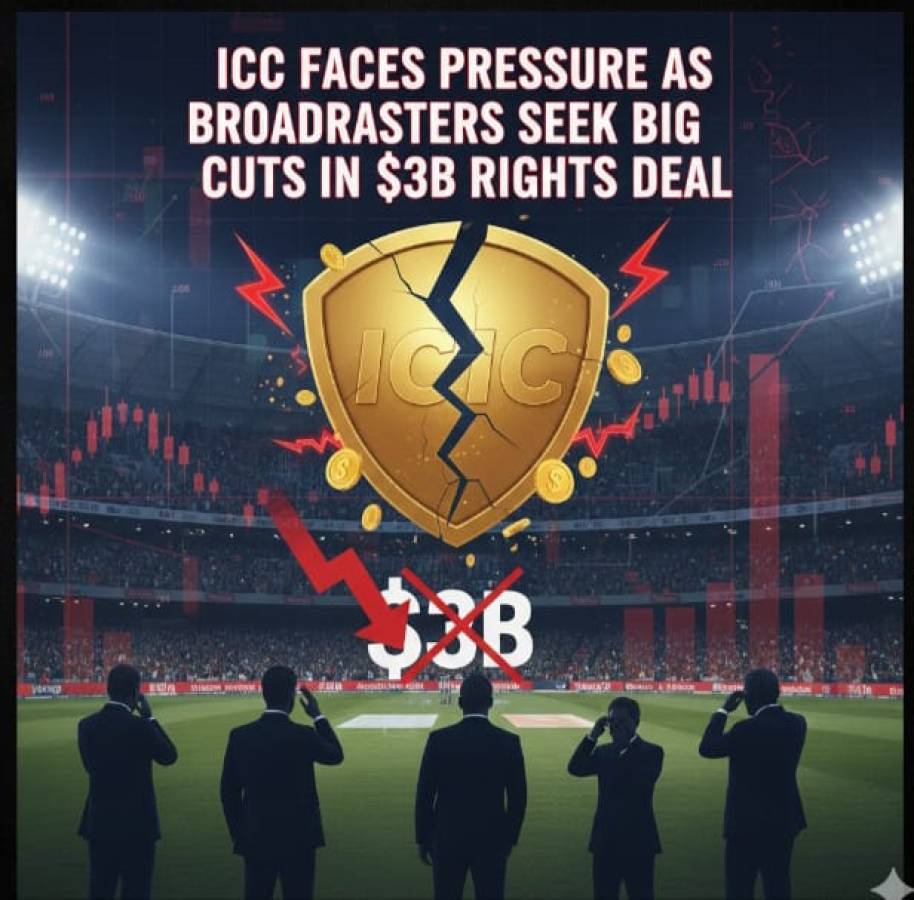
The global cricket landscape is currently fraught with tension as the International Cricket Council (ICC) faces escalating pressure from broadcasters, specifically the incumbent rights-holders, to revise the terms of the massive $3 billion media rights deal. These broadcasters are reportedly pushing for a significant renegotiation ahead of the upcoming ICC T20 World Cup, signaling a potential crisis for the ICC’s primary revenue stream.
The core of the dispute revolves around the ICC’s inability to honour the full currency and prevailing market conditions tied to the existing deal. Sources within the media industry suggest that initial talks for new media rights agreements included a steep price reduction, with some reports indicating demands for a 20% discount on the existing contract’s value, equating to a loss of approximately $600 million for the ICC. This is a severe blow to the sport’s governing body, which relies heavily on these rights to finance its operations and development activities across its member nations.
JioStar at the Center of the Storm
The most significant player exerting this pressure is JioStar, the current holder of the ICC media rights. The company, which is a key part of the Reliance conglomerate, has reportedly reached a point where it may feel it cannot follow through with the full financial commitment.
"It’s unlikely that they will walk away just like that," a senior cricket administrator noted, adding that "a leader, you can’t do that contractually, with an out or payout, unless the parting is mutual." This suggests that while a complete termination is unlikely, JioStar is utilizing its leverage to force a more favorable payout structure or a substantial reduction in the overall contract value. This move is supported by a general slowdown in the media rights market and a heightened sense of caution among global media players.
Negotiations and the Looming T20 World Cup
All conversations between the ICC and the prospective media partners, including JioStar and other digital players like Netflix, Amazon, and others, are described as being "verbal in nature," lacking any formal arrangements for a full renegotiation of the existing agreement. However, the intent to negotiate is clear, leaving the ICC in an awkward position.
In a related and potentially complicating factor, the recent merger between Viacom18 and Disney Star saw the latter approach the ICC shortly before the merger was finalized. Disney Star reportedly sought to have an "opt-out" clause written into the tax document related to the merger, giving them an exit route from their obligations if the tax situation of the deal changed adversely. While the ICC refused to grant this concession, the incident underscores the financial fragility and complexity surrounding the media deals.
The pressure is mounting further due to the schedule of the next major tournament. The upcoming T20 World Cup, next year's event, is scheduled to be staged in India and Sri Lanka. This is particularly problematic for the ICC, as the 2027 ODI World Cup, set to be held in South Africa, is already seen as less valuable to India's TV-only broadcasters like JioStar. The devaluation of a future major tournament strengthens the hand of current rights holders seeking a discount now.
The Broader Market Context
The concerns extend beyond just the current rights holders. The ICC's search for new partners has not been smooth, as potential buyers are understandably cautious. They are protected by a "waerthegarth contract" with JioStar, meaning any settlement reached with JioStar will likely affect the terms offered to future partners.
Currently, the ICC-JioStar media rights deal (TV and digital) accounts for over 85 percent of the global cricket revenue stream derived from world events. While three major cricket nations—the BCCI, England, and the West Indies Cricket Board—and Cricket Australia are financially self-sufficient, many other cricket nations are not.
The crisis is exacerbated by a lack of strong competition for the Indian media rights space. An anticipated 30% drop in ICC revenue for the next cycle is being actively discussed, indicating that the situation is far from resolved and that the ICC may have to brace for a substantial financial hit to secure its partnerships and maintain the stability of global cricket funding.










Leave a Comment