
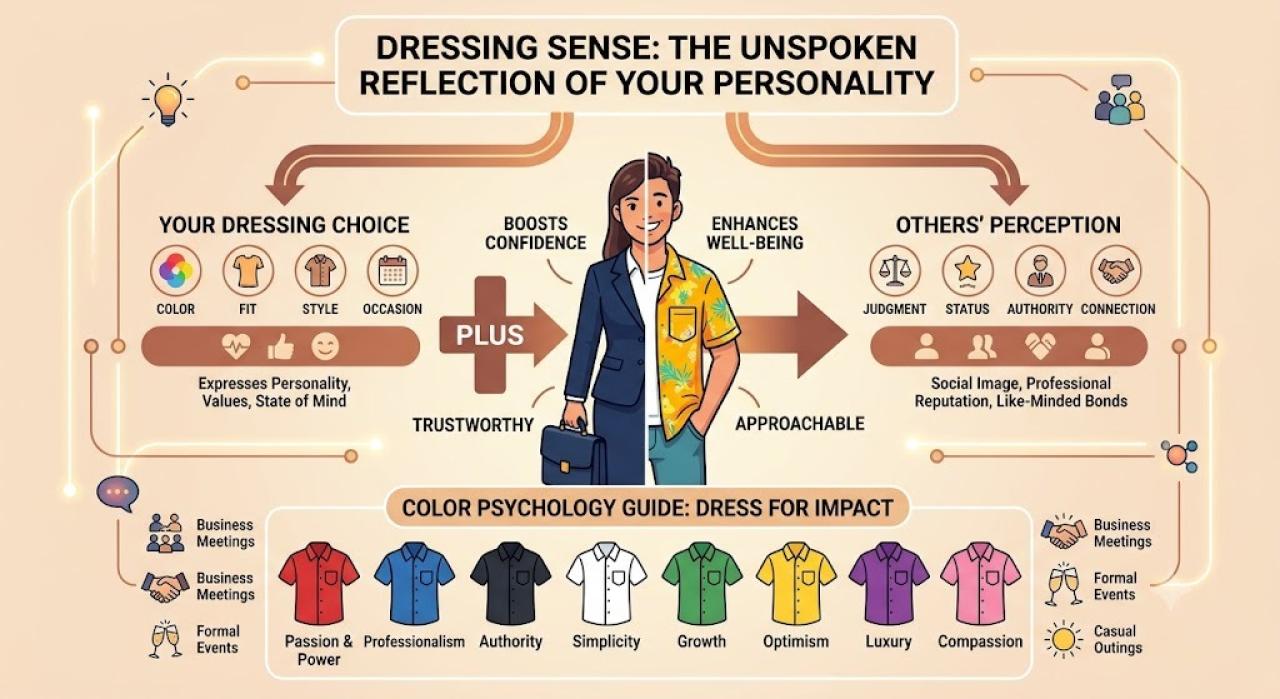
Before you say a single word, your clothes have already told your story. Are you sending the right message?
You may have heard the phrase, “Never judge a book by its cover,” many times. Yet, in everyday life, people often do exactly that. Everyone likes to wear good clothes, and the fashion market offers endless choices to help people look their best. Even corporate trainers who begin their sessions with this familiar saying often explain, midway through the session, why clothes and shoes matter in creating a positive impression.
Your dressing sense influences how others perceive you and how you feel about yourself. The way you dress contributes to your outward personality, while your character develops through your values, beliefs, and actions. People often confuse personality with morality, but the two are different. Morality is closely linked to the values that shape your character, whereas personality reflects the qualities and traits that others observe in you.
Your dressing sense conveys information about your personality, values, and state of mind. It is a way of expressing yourself without using words. Every element of your wardrobe, from the colours you choose to the style you adopt, can communicate something about you.
How Do You Choose the Colour of Your Dress to Create an Impact?
Most people choose colours that appeal to their eyes. If a particular colour looks attractive, they may naturally feel that it will suit them. However, choosing the right colour involves more than personal preference. The colour should complement your personality, suit the occasion, and help you create the impression you want to make.
Three important factors can guide your choice: the psychological associations of a colour, the occasion, and the personality you wish to express.
Colour Psychology and Its Influence
Different colours are commonly associated with particular emotions and qualities. Although these associations can vary across cultures and individuals, they can help you make thoughtful choices when selecting your clothes.
Colour
Psychological Association
Suitable Occasion
Red
Passion, power, and confidence
Events where you want to make a bold statement
Blue
Calmness, trustworthiness, and professionalism
Business meetings and interviews
Black
Elegance, authority, and sophistication
Formal events and occasions requiring a polished appearance
White
Simplicity, freshness, and cleanliness
Summer events and daytime gatherings
Green
Balance, growth, and harmony
Casual gatherings and occasions where you want to appear approachable
Yellow
Happiness, energy, and optimism
Casual outings and cheerful social events
Purple
Luxury, creativity, and mystery
Parties and events where you want to express individuality
Pink
Warmth, compassion, and affection
Social gatherings and romantic occasions
Dressing in a way that complements your personality can strengthen your social image and help you make a positive impression. Your choice of colour should also reflect the nature of the occasion. Clothes suitable for a professional meeting may not be the best choice for a casual outing or a social gathering.
The following guide can help you choose colours according to different occasions.
Choosing Colours for Different Occasions
Occasion
Suggested Colour Choices
Professional gatherings
Neutral or subdued colours such as navy blue, black, grey, and white
Social events
Bright colours, pastels, or bold jewel tones, depending on the event
Casual outings
A comfortable combination of bright, bold, or neutral colours
The right combination of colours, clothing, and accessories can help you look confident and appropriate without compromising your personal style.
Your Clothes Influence How Others Perceive You
The clothes you wear can influence how people perceive your social standing, professionalism, and personal preferences. In many situations, people form first impressions based on appearance before they have an opportunity to understand someone's character.
Your sense of style can also help you connect with like-minded people. When you feel comfortable with your appearance, you may become more confident in social interactions and more willing to express yourself. Wearing clothes that are both elegant and comfortable can help you feel at ease while presenting yourself in a manner that suits your personality.
This becomes particularly important in professional settings. Dressing neatly and appropriately can help you feel prepared for business discussions, interviews, and meetings with senior colleagues. It does not guarantee success, but it can contribute to a confident and professional presence.
Business leaders often understand the importance of presenting themselves appropriately in different situations. Their clothing choices may reflect the expectations of their industry, workplace culture, or professional responsibilities.
Dressing for Social and Professional Success
Your clothing choices can influence how you interact with different social groups. Dressing professionally may help you feel more prepared to participate in formal discussions, while a relaxed style may be more suitable for informal gatherings.
Politicians provide a familiar example of how clothing can become part of public communication. Their choice of attire may reflect their cultural background, political identity, or attempt to connect with a particular community. A simple traditional outfit, for instance, may communicate a different message from a formal Western suit.
However, clothing alone cannot establish a person's abilities, intentions, or moral character. A well-dressed person is not necessarily more honest or capable than someone who pays less attention to fashion. Appearance can influence an initial impression, but a person's conduct ultimately determines whether that impression lasts.
What Your Dressing Sense Says About Your Personality
Your choice of clothing can offer clues about your preferences, interests, and the image you wish to project. Someone who prefers subdued colours may appear reserved or understated, while a person who enjoys vivid colours may appear energetic and outgoing. Similarly, people who choose unconventional outfits may be expressing creativity, individuality, or a desire to challenge social expectations.
These interpretations are not universal rules. A preference for black, for example, does not necessarily mean that someone is serious or introverted. Clothing choices are influenced by several factors, including comfort, culture, occupation, personal taste, and practical needs.
Fashion can also reflect your ambitions and cultural background. Traditional clothing may express a connection with one's heritage, while contemporary styles may communicate an interest in changing trends. Some people combine both to create a style that reflects their individual identity.
Understanding these possibilities can help you make more deliberate choices about how you present yourself to the world.
Your Clothes Can Reflect Your State of Mind
The way you dress may also be connected to your emotions. When you feel cheerful and energetic, you may prefer bright colours, playful designs, or outfits that attract attention. When you feel tired, anxious, or low, you may choose comfortable clothes in neutral shades.
These preferences differ from person to person, and clothing does not always reveal someone's emotional state accurately. Nevertheless, choosing clothes that make you feel comfortable and confident can contribute to your sense of well-being.
You can use your wardrobe deliberately to support the mood you want to encourage. Wearing a well-fitted outfit for an important meeting, choosing colours you enjoy, or selecting comfortable clothes for a busy day may help you feel more prepared to handle your responsibilities.
The goal is not to follow every fashion trend but to understand what works for you.
Dressing Sense as a Form of Nonverbal Communication
Clothing communicates messages even when you remain silent. A formal outfit may suggest professionalism, a carefully chosen combination of colours may express creativity, and an unconventional look may communicate individuality.
These signals can influence how others approach you and how they respond during an interaction. Dressing appropriately for a particular situation can therefore support effective communication and help establish a positive impression.
At the same time, personal style should leave room for comfort, individuality, and authenticity. You do not need to change your entire wardrobe to satisfy other people's expectations. Instead, you can make choices that balance your preferences with the requirements of the occasion.
The most effective style is one that allows you to feel comfortable while presenting yourself confidently.
Final Take
Your dressing sense is an important part of how you express yourself and interact with the world. It can influence first impressions, support professional confidence, reflect personal preferences, and sometimes communicate your mood or cultural background.
However, clothes cannot define the whole person. Appearance may attract attention, but character, values, behaviour, and abilities determine the deeper impression you leave on others.
Therefore, choose your clothes thoughtfully. Consider the occasion, select colours that complement your personality, and give equal importance to comfort and confidence. Dress not merely to impress others, but also to express yourself.
The right outfit may open a conversation, but your character determines how it continues.
You may have heard the phrase, “Never judge a book by its cover,” many times. Yet, in everyday life, people often do exactly that. Everyone likes to wear good clothes, and the fashion market offers endless choices to help people look their best. Even corporate trainers who begin their sessions with this familiar saying often explain, midway through the session, why clothes and shoes matter in creating a positive impression.
Your dressing sense influences how others perceive you and how you feel about yourself. The way you dress contributes to your outward personality, while your character develops through your values, beliefs, and actions. People often confuse personality with morality, but the two are different. Morality is closely linked to the values that shape your character, whereas personality reflects the qualities and traits that others observe in you.
Your dressing sense conveys information about your personality, values, and state of mind. It is a way of expressing yourself without using words. Every element of your wardrobe, from the colours you choose to the style you adopt, can communicate something about you.
How Do You Choose the Colour of Your Dress to Create an Impact?
Most people choose colours that appeal to their eyes. If a particular colour looks attractive, they may naturally feel that it will suit them. However, choosing the right colour involves more than personal preference. The colour should complement your personality, suit the occasion, and help you create the impression you want to make.
Three important factors can guide your choice: the psychological associations of a colour, the occasion, and the personality you wish to express.
Colour Psychology and Its Influence
Different colours are commonly associated with particular emotions and qualities. Although these associations can vary across cultures and individuals, they can help you make thoughtful choices when selecting your clothes.
|
Colour |
Psychological Association |
Suitable Occasion |
|
Red |
Passion, power, and confidence |
Events where you want to make a bold statement |
|
Blue |
Calmness, trustworthiness, and professionalism |
Business meetings and interviews |
|
Black |
Elegance, authority, and sophistication |
Formal events and occasions requiring a polished appearance |
|
White |
Simplicity, freshness, and cleanliness |
Summer events and daytime gatherings |
|
Green |
Balance, growth, and harmony |
Casual gatherings and occasions where you want to appear approachable |
|
Yellow |
Happiness, energy, and optimism |
Casual outings and cheerful social events |
|
Purple |
Luxury, creativity, and mystery |
Parties and events where you want to express individuality |
|
Pink |
Warmth, compassion, and affection |
Social gatherings and romantic occasions |
Dressing in a way that complements your personality can strengthen your social image and help you make a positive impression. Your choice of colour should also reflect the nature of the occasion. Clothes suitable for a professional meeting may not be the best choice for a casual outing or a social gathering.
The following guide can help you choose colours according to different occasions.
Choosing Colours for Different Occasions
|
Occasion |
Suggested Colour Choices |
|
Professional gatherings |
Neutral or subdued colours such as navy blue, black, grey, and white |
|
Social events |
Bright colours, pastels, or bold jewel tones, depending on the event |
|
Casual outings |
A comfortable combination of bright, bold, or neutral colours |
The right combination of colours, clothing, and accessories can help you look confident and appropriate without compromising your personal style.
Your Clothes Influence How Others Perceive You
The clothes you wear can influence how people perceive your social standing, professionalism, and personal preferences. In many situations, people form first impressions based on appearance before they have an opportunity to understand someone's character.
Your sense of style can also help you connect with like-minded people. When you feel comfortable with your appearance, you may become more confident in social interactions and more willing to express yourself. Wearing clothes that are both elegant and comfortable can help you feel at ease while presenting yourself in a manner that suits your personality.
This becomes particularly important in professional settings. Dressing neatly and appropriately can help you feel prepared for business discussions, interviews, and meetings with senior colleagues. It does not guarantee success, but it can contribute to a confident and professional presence.
Business leaders often understand the importance of presenting themselves appropriately in different situations. Their clothing choices may reflect the expectations of their industry, workplace culture, or professional responsibilities.
Dressing for Social and Professional Success
Your clothing choices can influence how you interact with different social groups. Dressing professionally may help you feel more prepared to participate in formal discussions, while a relaxed style may be more suitable for informal gatherings.
Politicians provide a familiar example of how clothing can become part of public communication. Their choice of attire may reflect their cultural background, political identity, or attempt to connect with a particular community. A simple traditional outfit, for instance, may communicate a different message from a formal Western suit.
However, clothing alone cannot establish a person's abilities, intentions, or moral character. A well-dressed person is not necessarily more honest or capable than someone who pays less attention to fashion. Appearance can influence an initial impression, but a person's conduct ultimately determines whether that impression lasts.
What Your Dressing Sense Says About Your Personality
Your choice of clothing can offer clues about your preferences, interests, and the image you wish to project. Someone who prefers subdued colours may appear reserved or understated, while a person who enjoys vivid colours may appear energetic and outgoing. Similarly, people who choose unconventional outfits may be expressing creativity, individuality, or a desire to challenge social expectations.
These interpretations are not universal rules. A preference for black, for example, does not necessarily mean that someone is serious or introverted. Clothing choices are influenced by several factors, including comfort, culture, occupation, personal taste, and practical needs.
Fashion can also reflect your ambitions and cultural background. Traditional clothing may express a connection with one's heritage, while contemporary styles may communicate an interest in changing trends. Some people combine both to create a style that reflects their individual identity.
Understanding these possibilities can help you make more deliberate choices about how you present yourself to the world.
Your Clothes Can Reflect Your State of Mind
The way you dress may also be connected to your emotions. When you feel cheerful and energetic, you may prefer bright colours, playful designs, or outfits that attract attention. When you feel tired, anxious, or low, you may choose comfortable clothes in neutral shades.
These preferences differ from person to person, and clothing does not always reveal someone's emotional state accurately. Nevertheless, choosing clothes that make you feel comfortable and confident can contribute to your sense of well-being.
You can use your wardrobe deliberately to support the mood you want to encourage. Wearing a well-fitted outfit for an important meeting, choosing colours you enjoy, or selecting comfortable clothes for a busy day may help you feel more prepared to handle your responsibilities.
The goal is not to follow every fashion trend but to understand what works for you.
Dressing Sense as a Form of Nonverbal Communication
Clothing communicates messages even when you remain silent. A formal outfit may suggest professionalism, a carefully chosen combination of colours may express creativity, and an unconventional look may communicate individuality.
These signals can influence how others approach you and how they respond during an interaction. Dressing appropriately for a particular situation can therefore support effective communication and help establish a positive impression.
At the same time, personal style should leave room for comfort, individuality, and authenticity. You do not need to change your entire wardrobe to satisfy other people's expectations. Instead, you can make choices that balance your preferences with the requirements of the occasion.
The most effective style is one that allows you to feel comfortable while presenting yourself confidently.
Final Take
Your dressing sense is an important part of how you express yourself and interact with the world. It can influence first impressions, support professional confidence, reflect personal preferences, and sometimes communicate your mood or cultural background.
However, clothes cannot define the whole person. Appearance may attract attention, but character, values, behaviour, and abilities determine the deeper impression you leave on others.
Therefore, choose your clothes thoughtfully. Consider the occasion, select colours that complement your personality, and give equal importance to comfort and confidence. Dress not merely to impress others, but also to express yourself.
The right outfit may open a conversation, but your character determines how it continues.

















Leave a Comment