
Chef Manish Mehrotra is best known for changing how Indian food was received in global fine-dining rooms. Through Indian Accent, he introduced unexpected pairings, precise plating, and a modern vocabulary that travelled far beyond Delhi. Nisaba, his latest restaurant, takes a quieter route. It is less about reinterpretation and more about returning to flavours that feel lived in.
Set within the Humayun’s Tomb Museum Complex near Sunder Nursery, Nisaba sits inside one of Delhi’s most reflective cultural spaces. The location is not incidental. Surrounded by history and open green spaces, the restaurant feels grounded before the first plate arrives. Named after Nisaba, the Mesopotamian goddess of grain and writing, the project also marks Mehrotra’s first independent venture under Manish Mehrotra Culinary Arts (MMCA).
A Dining Room That Stays Out of the Way
Unlike many high-end restaurants that rely on mood lighting and dramatic interiors, Nisaba lets daylight take the lead. Large windows open up views of trees and stone architecture outside, making the room feel open and calm. There is no attempt to manufacture intimacy.
The design language is restrained. Sandstone finishes, soft neutral tones, and jaali detailing allow the restaurant to blend into the heritage site rather than compete with it. At the centre of the room stands a sculptural installation by artist Dhananjay Singh, inspired by grain and agricultural cycles. It sits quietly in the space, reinforcing the idea of nourishment without demanding attention.
The overall feel lands somewhere between casual and refined. Nisaba is formal enough for a planned evening out, but relaxed enough for a long lunch that stretches into the afternoon.
Choosing À La Carte Over Performance
One of Nisaba’s clearest departures from contemporary fine dining is its decision to skip tasting menus entirely. Everything here is served à la carte, allowing diners to order freely, without structure or obligation.
The menu includes around 42 dishes, shaped by street food, regional cooking, and everyday Indian kitchens. The approach is straightforward. There are no technical explanations attached to the plates, and no attempt to impress through complexity. The food arrives familiar, confident, and well-balanced.
Reworking Indian Classics Without Overhandling Them
Some expected favourites make an appearance, but with thoughtful adjustments. Butter Chicken comes with a smoky, lighter makhani sauce, paired with achari mirch and crisp onion rings. The flavours are sharper and cleaner, but the comfort remains intact.
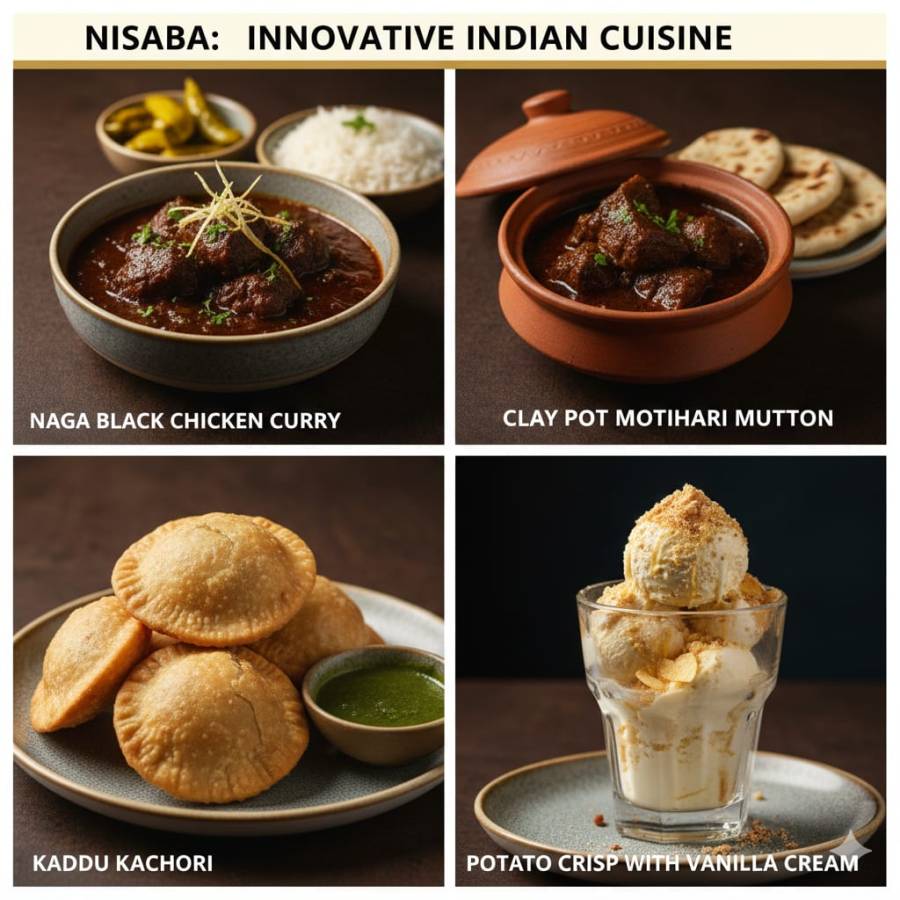
Regional dishes form the backbone of the menu. The Naga Black Chicken Curry, served with bamboo pickle and sticky rice, brings fermented heat and depth from the Northeast. The Clay Pot Motihari Mutton draws directly from Bihar, quietly acknowledging Mehrotra’s roots without framing it as a statement.
Seafood options lean toward indulgence. The Chilli Tomato Crab Ghotala, eaten with soft butter buns, is intentionally messy and deeply satisfying. It is the kind of dish that encourages eating with your hands and not worrying about presentation.
Familiar Ideas, Played With Gently
Mehrotra allows traces of his earlier work to surface. Dishes like Pork Ribs with Mango Chunda link his Indian Accent years to this newer, calmer phase.
Desserts follow the same logic. A Potato Crisp with Vanilla Ice Cream or a Gulab Jamun Lava Sundae may seem unconventional, but they rely on recognisable flavours. The combinations feel playful rather than clever, grounded in memory rather than novelty.
A Restaurant Shaped by Experience
Nisaba does not try to redefine Indian cuisine or set a new dining trend. Instead, it feels shaped by time and experience. The food avoids spectacle, the space avoids excess, and the menu avoids pressure.
For diners who appreciate technical finesse but still seek bold, familiar flavours, Nisaba offers a comfortable middle ground. It is a restaurant that values ease over drama, clarity over complexity, and flavour over form. In many ways, it reads less like a reinvention and more like a chef choosing to cook the way he wants to now.



























Leave a Comment