
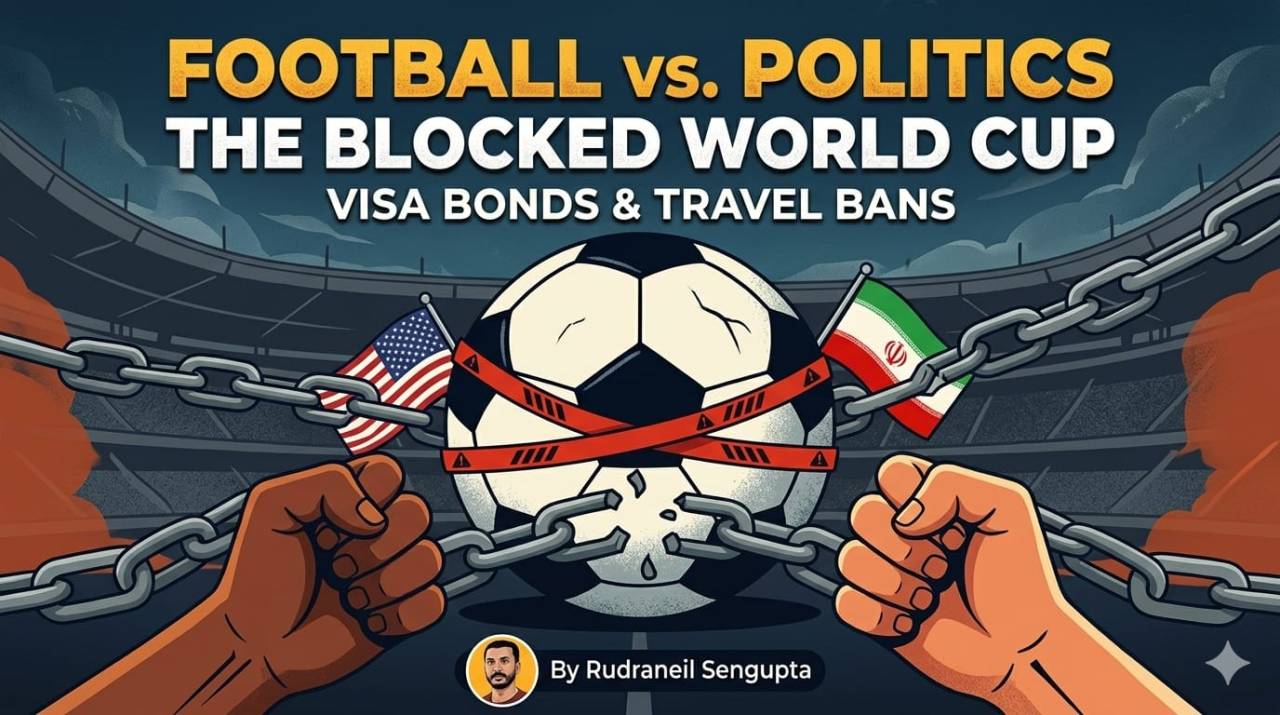
As geopolitical conflicts, travel restrictions, and financial barriers mount, the spirit of football’s biggest tournament faces an unprecedented test.
The FIFA World Cup 2026 is expected to be a grand celebration of football, bringing together nations, cultures, and millions of fans under one global spectacle. Yet, as the countdown to the tournament begins, the atmosphere surrounding the event feels far from festive. Instead of unity, the build-up is increasingly shaped by geopolitical tensions, restrictive travel policies, and growing uncertainty.
At the heart of the controversy lies the strained relationship between the United States and Iran. Following a recent conflict and a fragile ceasefire, Iran now faces the prospect of playing matches in a country it was recently at odds with. This unusual and delicate situation has created a major diplomatic dilemma for global football authorities. Reports suggest that Iran has expressed reluctance to play on U.S. soil, raising concerns about potential forfeits or disruptions to the tournament schedule.
Hopes that matches involving Iran might be relocated to co-host nations such as Mexico or Canada have so far not materialized. The governing body, FIFA, has reportedly ruled out such adjustments, leaving little room for compromise. This decision has placed one of Asia’s strongest footballing nations in an uncertain position, with implications that could extend beyond the pitch.
The challenges are not limited to teams alone. Fans from several participating nations are also facing significant barriers. Travel restrictions imposed by the United States have made it extremely difficult for supporters from countries like Iran, Haiti, Senegal, and Côte d’Ivoire to attend matches. For many, the dream of witnessing the World Cup in person has effectively been shut down.
Even for those not subject to outright bans, the road to attendance is far from smooth. Reports indicate that fans from countries including Egypt, Ghana, Jordan, and Morocco may be required to deposit a substantial financial bond—reportedly as high as $15,000—to secure visas. Such measures create a steep financial hurdle, turning what should be a celebration of sport into an exclusive event accessible only to a limited few.
Historically, the World Cup has not been immune to political tensions. During the 1974 FIFA World Cup, East and West Germany competed under the shadow of Cold War divisions. Similarly, the 1986 FIFA World Cup witnessed Argentina and England facing off in the aftermath of the Falklands War. In those instances, however, the political undertones largely remained confined to the background, allowing the game itself to take center stage.
The current scenario appears markedly different. Today, political and administrative barriers are influencing the tournament even before the first whistle is blown. The awarding of a “FIFA Peace Prize” to the U.S. President in 2025 was intended as a symbolic gesture toward global unity. Yet, for many fans—particularly in Africa and Asia—the reality feels contradictory. When access to the tournament is restricted by financial and bureaucratic hurdles, the message of inclusivity becomes difficult to sustain.
A World Cup thrives on its ability to unite people across borders, languages, and cultures. It is at its most powerful when fans from every corner of the world can participate in the shared joy of the game. When that access is limited—whether by political tensions or economic barriers—the tournament risks losing its essence.
As June approaches, the world will be watching closely to see whether football can rise above these challenges. The question remains whether the FIFA World Cup 2026 will be remembered for its moments of brilliance on the field or for the obstacles that kept many away from it. For now, the balance between sport and politics hangs delicately, with the spirit of the beautiful game facing one of its toughest tests yet.
The FIFA World Cup 2026 is expected to be a grand celebration of football, bringing together nations, cultures, and millions of fans under one global spectacle. Yet, as the countdown to the tournament begins, the atmosphere surrounding the event feels far from festive. Instead of unity, the build-up is increasingly shaped by geopolitical tensions, restrictive travel policies, and growing uncertainty.
At the heart of the controversy lies the strained relationship between the United States and Iran. Following a recent conflict and a fragile ceasefire, Iran now faces the prospect of playing matches in a country it was recently at odds with. This unusual and delicate situation has created a major diplomatic dilemma for global football authorities. Reports suggest that Iran has expressed reluctance to play on U.S. soil, raising concerns about potential forfeits or disruptions to the tournament schedule.
Hopes that matches involving Iran might be relocated to co-host nations such as Mexico or Canada have so far not materialized. The governing body, FIFA, has reportedly ruled out such adjustments, leaving little room for compromise. This decision has placed one of Asia’s strongest footballing nations in an uncertain position, with implications that could extend beyond the pitch.
The challenges are not limited to teams alone. Fans from several participating nations are also facing significant barriers. Travel restrictions imposed by the United States have made it extremely difficult for supporters from countries like Iran, Haiti, Senegal, and Côte d’Ivoire to attend matches. For many, the dream of witnessing the World Cup in person has effectively been shut down.
Even for those not subject to outright bans, the road to attendance is far from smooth. Reports indicate that fans from countries including Egypt, Ghana, Jordan, and Morocco may be required to deposit a substantial financial bond—reportedly as high as $15,000—to secure visas. Such measures create a steep financial hurdle, turning what should be a celebration of sport into an exclusive event accessible only to a limited few.
Historically, the World Cup has not been immune to political tensions. During the 1974 FIFA World Cup, East and West Germany competed under the shadow of Cold War divisions. Similarly, the 1986 FIFA World Cup witnessed Argentina and England facing off in the aftermath of the Falklands War. In those instances, however, the political undertones largely remained confined to the background, allowing the game itself to take center stage.
The current scenario appears markedly different. Today, political and administrative barriers are influencing the tournament even before the first whistle is blown. The awarding of a “FIFA Peace Prize” to the U.S. President in 2025 was intended as a symbolic gesture toward global unity. Yet, for many fans—particularly in Africa and Asia—the reality feels contradictory. When access to the tournament is restricted by financial and bureaucratic hurdles, the message of inclusivity becomes difficult to sustain.
A World Cup thrives on its ability to unite people across borders, languages, and cultures. It is at its most powerful when fans from every corner of the world can participate in the shared joy of the game. When that access is limited—whether by political tensions or economic barriers—the tournament risks losing its essence.
As June approaches, the world will be watching closely to see whether football can rise above these challenges. The question remains whether the FIFA World Cup 2026 will be remembered for its moments of brilliance on the field or for the obstacles that kept many away from it. For now, the balance between sport and politics hangs delicately, with the spirit of the beautiful game facing one of its toughest tests yet.
















Leave a Comment