
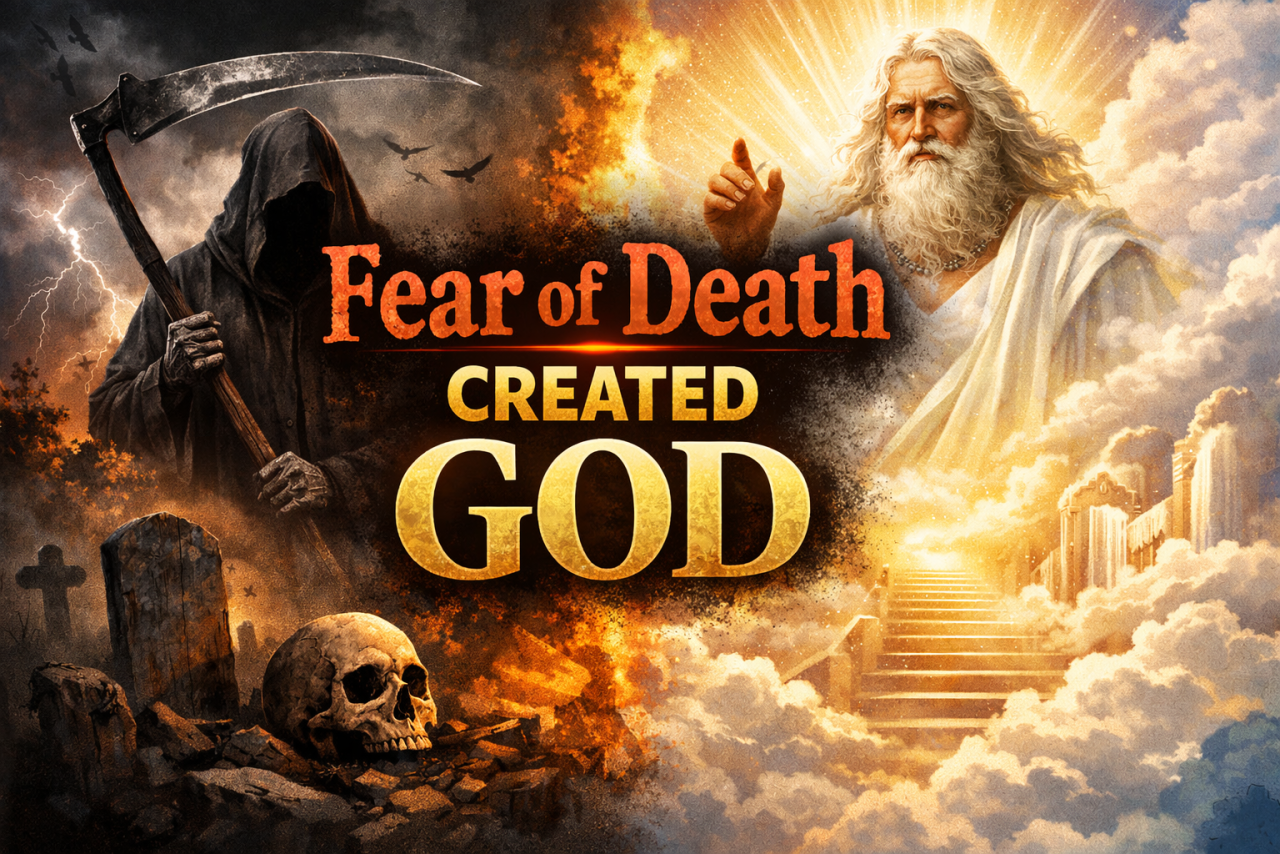
Every human being, at some point in life, is forced to face a deeply uncomfortable truth: one day, everything will end. Our thoughts will stop, our memories will fade, and our bodies will return to dust. This awareness separates humans from all other living beings. Animals struggle to survive, but they do not sit awake at night imagining their own funeral. Humans do. And it is from this unique awareness—this fear of death—that the idea of God most likely took shape.
From the earliest days of human history, death was sudden and unforgiving. A minor injury could turn fatal. A storm could wipe out entire families. Disease spread without warning or cure. With no scientific explanations, early humans were left with fear and confusion. Death appeared random and cruel. To make sense of this chaos, humans imagined a higher power—one that controlled life and death, one that gave meaning to suffering. God was born as an answer to the most frightening mystery of all.
Fear of death is not just fear of physical pain; it is fear of disappearance. Humans fear the idea that their love, struggles, and dreams might mean nothing in the end. The concept of God softened this terror. If God existed, then life was not an accident. If God watched over the world, then death was not meaningless. It was part of a larger plan. This belief transformed death from an enemy into a doorway.
Across civilizations, this pattern repeats itself. Ancient Egyptians believed in an afterlife where the soul would be judged. Hindus imagined rebirth, where death was not an end but a return. Christians and Muslims spoke of heaven and hell, eternal reward or punishment beyond the grave. Different cultures, different stories—but the same purpose. Each belief system offered a way to escape the finality of death. God became the guardian of life beyond life.
The idea of an afterlife did more than reduce fear; it gave people hope. When someone died young or unjustly, belief in God provided comfort. Loved ones were told, “They are in a better place,” or “God had a reason.” Such explanations did not erase pain, but they made grief survivable. Without God, death feels like silence. With God, death speaks. It promises reunion, justice, and continuation.
Fear of death also shaped morality. Once God was seen as the ruler of life and the afterlife, God naturally became the judge of human behavior. Good actions were rewarded, bad actions punished—if not in this life, then in the next. This idea brought order to societies long before written laws. People followed moral rules not just because of social pressure, but because they feared divine judgment after death. In this way, fear gave birth not only to God, but also to ethics.
Even today, this connection remains powerful. Many people who claim to be non-religious still pray in moments of crisis. In hospitals, during accidents, or at funerals, logic often collapses. Fear takes over. The human mind reaches for something greater than itself. God becomes a psychological shelter when science has no comforting words. Medicine can extend life, but it cannot explain why losing life hurts so deeply.
Science has explained much about death. We understand how the body fails, how diseases spread, how aging works. Yet science stops at the edge of meaning. It can describe the process of dying, but not the purpose of living. This gap keeps belief alive. As long as humans ask, “Why am I here?” and “What happens after I die?”, God remains relevant.
It is important to understand that saying fear of death created God does not insult faith. Instead, it reveals something profound about human nature. Humans are not weak for fearing death. They are imaginative. When faced with the unbearable, they create meaning. God represents humanity’s refusal to accept that life is temporary and meaningless. Faith is not just belief—it is resistance.
God also provided emotional strength. The belief that a higher power watches over us reduces loneliness in an indifferent universe. When death threatens, God becomes a companion. This emotional bond explains why religious belief survives even in the modern age. Technology may change lifestyles, but it does not erase fear. The grave remains as real as ever.
In the end, the question is not whether God exists, but why humans need God. The answer lies in our relationship with death. Fear of death is permanent. It cannot be cured, only managed. God is humanity’s most powerful response to that fear.
As long as humans continue to love, dream, and hope, they will fear losing everything. And as long as that fear exists, so will the idea of God. Not merely as a religious figure, but as a symbol of humanity’s deepest desire—to believe that death is not the end, and that our lives matter beyond the final breath.
That is why humans created God. And that is why we never outgrew the fear that created Him.






















Leave a Comment