
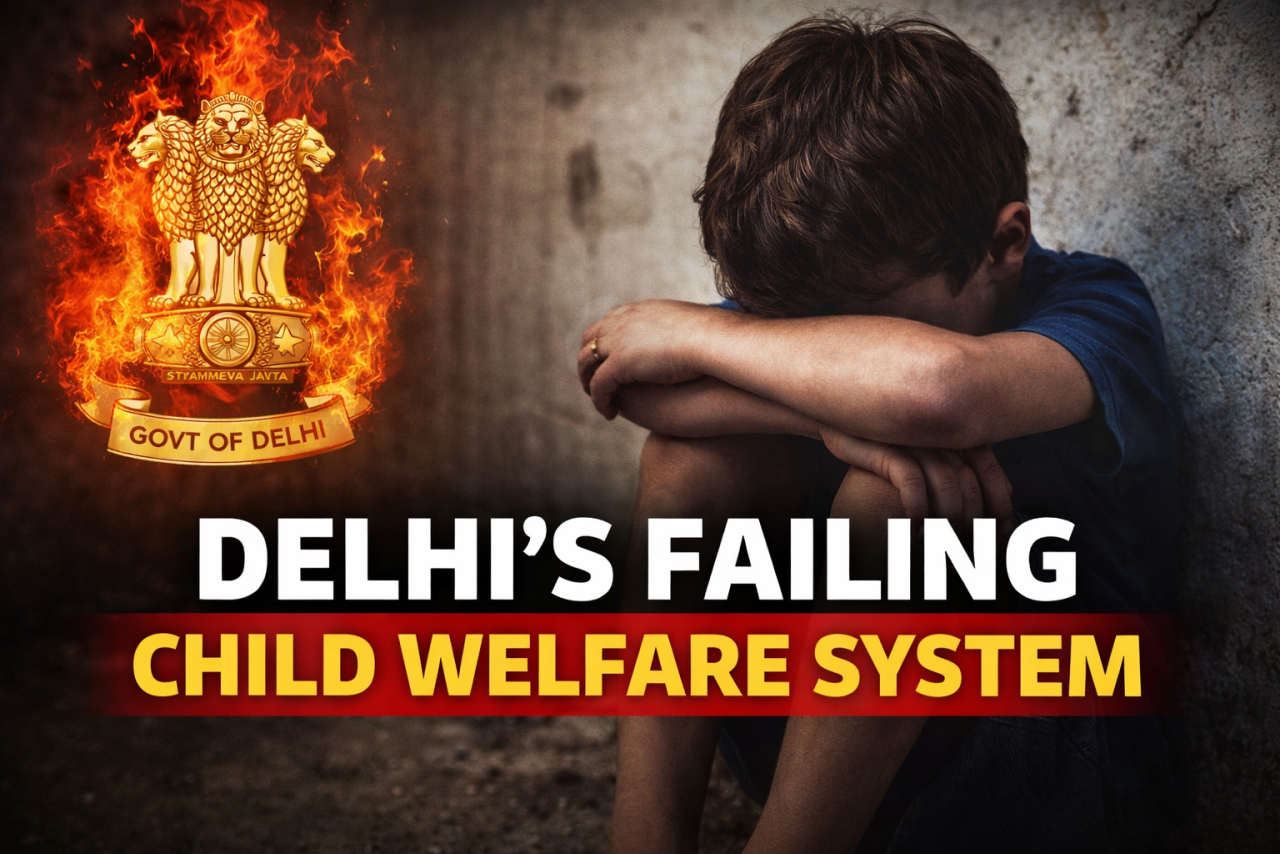
Thousands of children in the capital are slipping through the cracks of a system meant to protect them—no records, no proper care, and no accountability. The real question is not what the report says, but why these failures were allowed to continue for so long.
The latest findings on child welfare institutions in Delhi raise serious concerns about the efficiency of the government’s system. The report clearly shows that basic responsibilities like identifying vulnerable children and preparing proper records were not carried out properly. This is not a minor administrative issue. It directly affects the lives of children who depend on state support for survival, safety, and development.
One of the most troubling findings is that the basic activity of identifying children in need of care and protection was not done effectively. Without proper identification, many children remain invisible to the system. This means they do not receive the benefits, protection, and support that they urgently need. A welfare system cannot function if it does not even know who its beneficiaries are.
Another major gap highlighted in the report is the absence of a proper database. A database is essential for tracking children, monitoring their progress, and ensuring that no one is left out. The report clearly states that no proper database was prepared. This failure leads to poor planning and weak implementation. Without reliable data, policies remain only on paper and cannot bring real change on the ground.
The condition of child care institutions also reflects serious negligence. The report points out that education outcomes for children in these institutions were poor. Only a small percentage of children were receiving formal education. This shows that the government has not ensured even basic schooling for children under its care. Education is not optional. It is a fundamental right, and failure to provide it is a clear sign of inefficiency.
Nutrition and health are also areas where the system has failed. The audit found that children were given reduced quantities of essential food items like eggs, milk, and other dietary components. Proper nutrition is necessary for physical and mental growth. When children in government-supported homes are not receiving adequate food, it shows a serious lack of monitoring and accountability.
The report also mentions that many homes did not maintain proper records. Record-keeping is a basic administrative function. It helps in tracking funds, resources, and outcomes. When records are incomplete or missing, it becomes difficult to verify whether resources are being used correctly. This creates space for mismanagement and possible misuse of funds.
Another important issue is the delay in administrative actions. For example, registration processes for institutions were not completed on time. Some applications were rejected after long delays, yet children continued to stay in these facilities. This shows a lack of clear decision-making and poor governance. Delays in such matters directly affect the quality of care provided to children.
The functioning of Child Welfare Committees also raises questions. These committees are supposed to play a key role in protecting children and ensuring their rights. However, the report suggests that they were not functioning effectively. Delays in forming committees and lack of proper oversight have weakened the entire system.
The issue of missing children is another serious concern. Thousands of children were reported missing, and a significant number could not be traced. This points to weak coordination between departments and poor use of technology. Systems like facial recognition were not used effectively, and data was not updated properly. This failure puts children at risk and shows that the system is not equipped to handle such critical challenges.
Financial management also appears weak. Funds were allocated, but a large portion remained unspent. This indicates poor planning and execution. When funds meant for child welfare are not used properly, it directly impacts services like education, nutrition, and shelter. At the same time, the lack of transparency in spending raises concerns about accountability.
Staff shortages have further worsened the situation. Many key positions remain vacant, including social workers and counsellors. These professionals are essential for supporting children emotionally and mentally. Without them, children do not receive the care and attention they need. This reflects poor human resource planning by the government.
Overall, the report presents a clear picture of a system that is not functioning as it should. The problems are not isolated. They exist at multiple levels, including identification, data management, service delivery, and monitoring. This shows a deeper issue of governance and accountability.
The government of Delhi needs to take immediate and serious action. First, a proper database of all children in need must be created and regularly updated. Second, strict monitoring of child care institutions is necessary to ensure that standards are maintained. Third, funds should be used efficiently with clear accountability mechanisms. Fourth, vacancies in key positions must be filled without delay. Finally, technology should be used effectively to track missing children and improve coordination.
Child welfare is not just another administrative responsibility. It is a moral and legal duty. The findings of this report highlight that the current system is failing many children. If these issues are not addressed quickly, the consequences will be long-lasting. The government must move beyond reports and take real action to fix these gaps. Only then can it ensure that every child receives the care, protection, and opportunities they deserve.
























Leave a Comment