
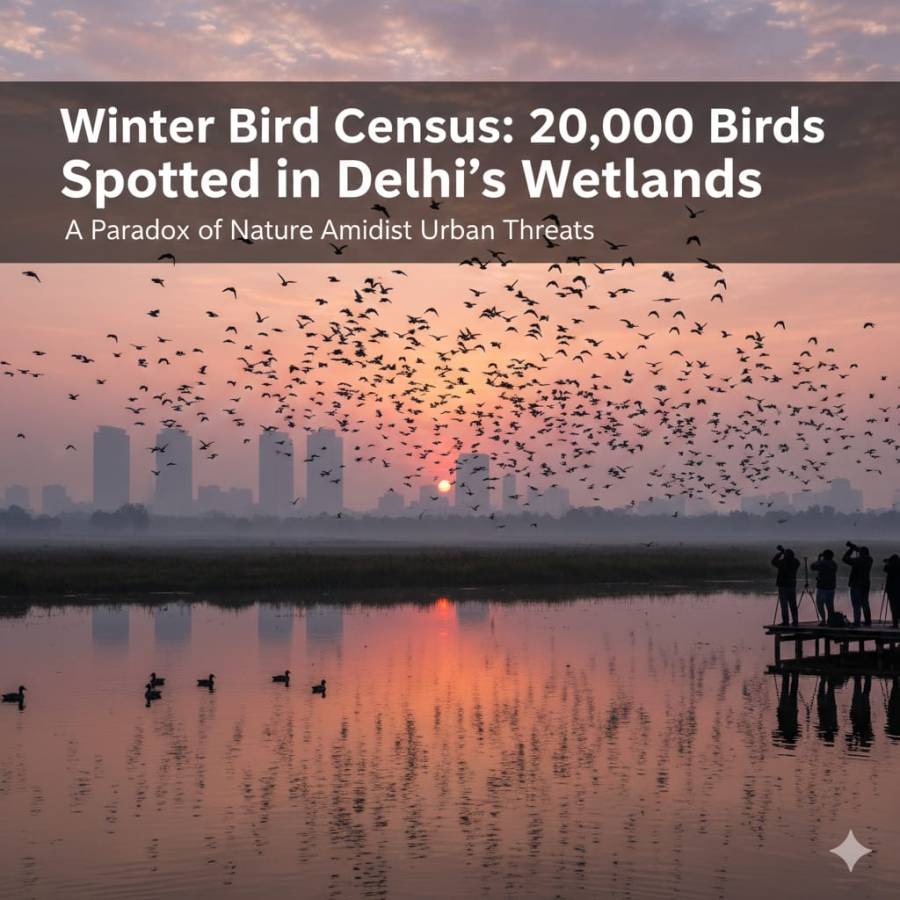
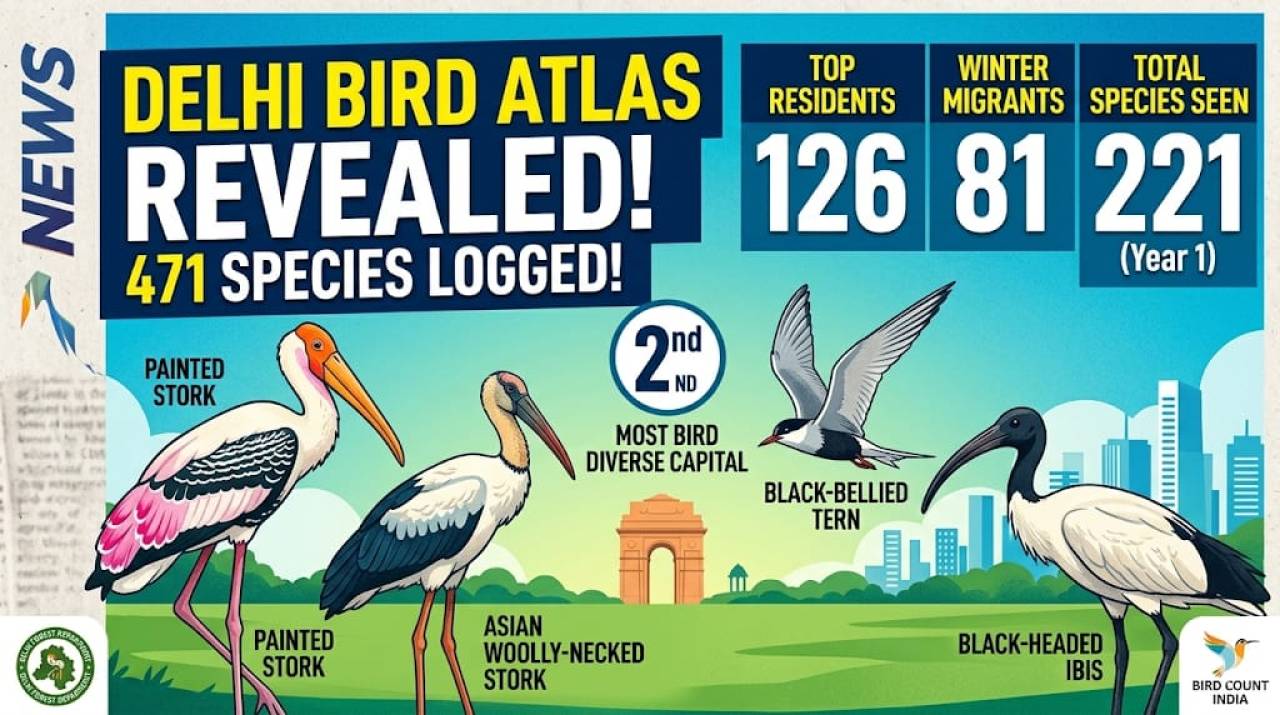
The latest findings of the Asian Waterbird Census (AWC) in Delhi-NCR present a striking ecological paradox. On the surface, the sighting of over 20,000 wintering birds at the Okhla Bird Sanctuary and the Surajpur wetlands appears to be a reassuring sign of ecological vitality. Beneath this spectacle lies a sobering reality that these wetlands are under mounting pressure from pollution, human encroachment, and long-standing neglect. The census numbers, while encouraging, function less as a celebration and more as a diagnostic indicator of biodiversity in one of the world’s most densely populated urban regions.
The recording of nearly 15,500 birds at Okhla and more than 6,000 at Surajpur—including species such as the northern shoveller, common pochard, greylag goose, and the rare black-headed gull—underscores a remarkable degree of ecological resilience. These migratory birds travel thousands of kilometres from Siberia, Central Asia, and parts of Europe, returning each winter to the same fragile water bodies. Their continued arrival confirms that these wetlands still retain enough primary productivity to sustain large avian populations, despite being surrounded by intense urban development.
In biodiversity terms, the presence of 101 species at Okhla and 83 at Surajpur points to a complex and functioning food web. Such diversity can only exist where aquatic vegetation, fish, molluscs, and insects are sufficiently abundant. These wetlands therefore continue to act as critical refuges along international migratory flyways, even as the city around them expands relentlessly.
However, the census also reveals a deeper vulnerability. Birdwatchers and conservationists involved in the count have flagged multiple local threats, including polluted river inflows, hazardous kite strings (manjha), unregulated cattle grazing, and illegal waste dumping. These pressures compromise not only habitat quality but also bird survival.
The unusually high concentration of birds may itself be a warning sign. As smaller wetlands vanish due to urban sprawl and infrastructure projects, migratory species are increasingly funnelled into the few protected sites that remain. This “concentration effect” intensifies competition for food and increases the risk of disease transmission. Persistent water-quality problems in the Yamuna further suggest that while birds continue to arrive, they are doing so in environments that may undermine their long-term health. In such conditions, wetlands risk becoming ecological traps—areas that attract wildlife but ultimately contribute to population decline.
A notable development in this year’s census was the integration of the eBird platform, marking a shift toward participatory, data-driven conservation. With 45 volunteers working across multiple teams, the exercise not only generated valuable scientific data but also expanded public engagement with urban biodiversity.
The call by AWC eBird project coordinator Pankaj Gupta for official recognition and protection of smaller wetlands is especially significant. Delhi’s biodiversity remains fragmented, with many stretches of the Yamuna and its floodplains treated as drainage channels rather than living habitats. While the Wazirabad-to-Okhla stretch alone recorded nearly 9,000 birds, large parts of the city’s wetland network—including Najafgarh, Chandu, and Dhanauri—remain vulnerable due to weak protection and poor governance.
The return of more than 20,000 wintering birds is a powerful reminder of Delhi’s potential as an urban ecological corridor. It shows that even under extreme environmental stress, nature continues to persist. Yet this coexistence is fragile. The 2024 census makes clear that Delhi stands at a critical juncture. It can either confront pollution, encroachment, and habitat loss, or continue to ignore these threats until the annual spectacle fades away.
For a city facing rising temperatures, water stress, and worsening air quality, biodiversity is not an optional luxury—it is an essential component of urban resilience. The birds have already delivered their message by returning. Whether Delhi chooses to listen will determine the future of its wetlands and the life they sustain.



















Leave a Comment