
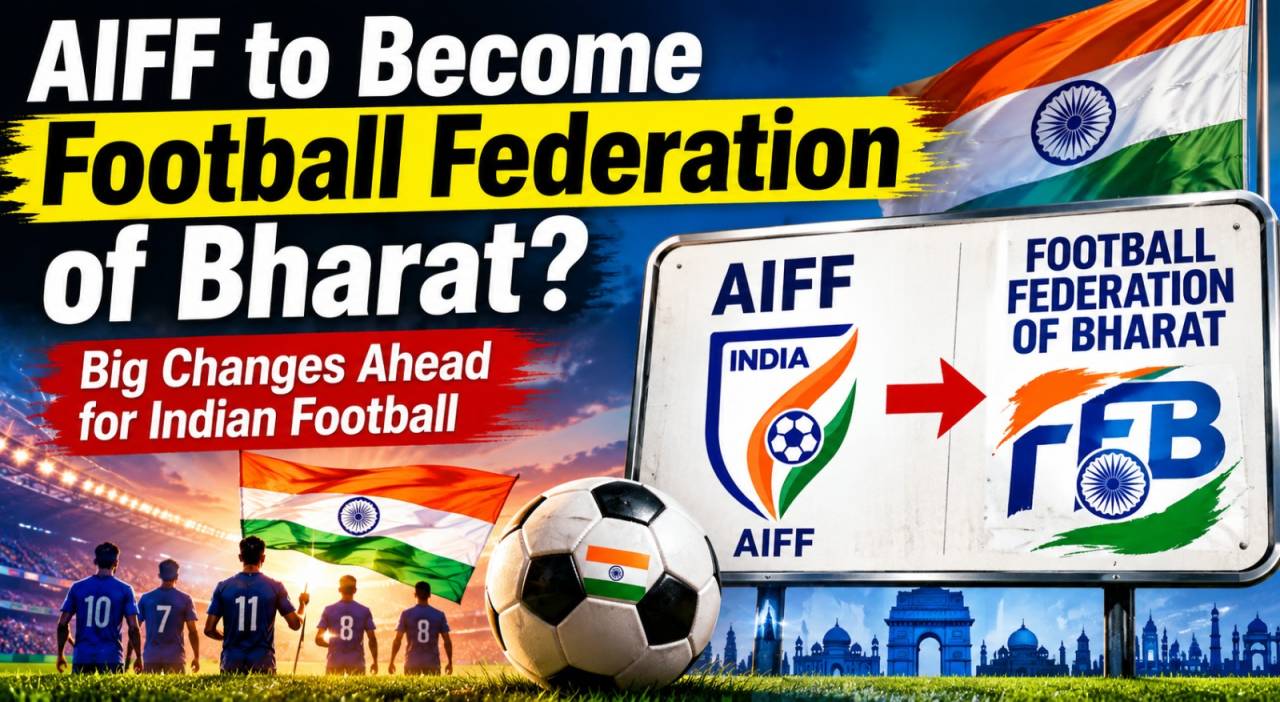
As AIFF approaches its 90th anniversary, a bold proposal to rename the federation as the Football Federation of Bharat is sparking debate across Indian football.
The All India Football Federation (AIFF) has initiated a proposal to rename itself the Football Federation of Bharat (FFB), marking what could become one of the most significant identity shifts in Indian football's history. The move comes just three days before the federation celebrates its 90th anniversary.
If approved through all required channels, India's national football teams would no longer compete under the AIFF banner. Instead, they would represent the newly proposed Football Federation of Bharat, reflecting a broader effort to align the sport's governing body with the country's traditional name.
Federation Approves Proposal in Kolkata
The proposal was accepted during a Special General Body Meeting (SGM) held in Kolkata on Saturday.
AIFF President Kalyan Chaubey said the federation believes Indian football should mirror the country's evolving international identity.
"Traditionally, India is known as Bharat. We felt Indian football should reflect that identity on the global stage as well," Chaubey said, noting that the term "Bharat" has increasingly appeared in international forums and diplomatic engagements.
A Multi-Step Approval Process
Despite the symbolic significance of the announcement, the proposed name change remains far from final.
The federation must first seek approval from the Union Ministry of Youth Affairs and Sports. If the ministry grants clearance, the proposal will return to the AIFF General Body for formal ratification before being forwarded to FIFA for final approval.
Officials from both FIFA and the Asian Football Confederation attended the Kolkata meeting, highlighting the importance of the discussions.
Chaubey pointed to examples such as Türkiye and Czechia, whose football organizations have adopted names more closely aligned with contemporary national identity.
National Anthem and Vande Mataram Before Matches
The SGM also approved another proposal that could reshape the matchday experience across Indian football.
Under the new recommendation, both "Jana Gana Mana", India's national anthem, and "Vande Mataram", the national song, would be played before every match organized by the federation.
According to Chaubey, the initiative is intended to strengthen national pride among young footballers.
"Singing the national anthem and Vande Mataram will generate a stronger sense of nationalism among boys and girls when they begin their football journey. Their mindset will be different when they wear the national team jersey," he said.
The national anthem was already played before matches in the Indian Super League until last season. Whether the practice—and the addition of Vande Mataram—will be extended across the ISL, the Indian Football League, and the Indian Women's League will depend on consultations with the governing councils of those competitions.
Changes to Foreign Player Rules
The meeting also approved significant modifications to foreign-player regulations in domestic football.
The Asian quota for the ISL, which is scheduled to expand to 14 teams from September 4, will now allow clubs to field four foreign players on matchday. One of those slots will be reserved for a player who qualifies as an Overseas Citizen of India (OCI).
The same framework will be adopted by the Indian Football League.
Supporters of the move argue that it could widen the talent pool available to clubs while maintaining opportunities for Indian players.
Mandatory Indian Striker Rule
Perhaps the most debated decision from the SGM was the introduction of a rule requiring every ISL and IFL team to have an Indian striker on the field throughout the duration of a match.
The federation believes the measure will create guaranteed opportunities for domestic attacking talent, an area where Indian football has long sought improvement.
"It will provide assured game time for Indian strikers while also giving clubs access to a broader overseas talent pool," Chaubey explained.
However, questions remain about how the rule will be implemented in practice. Modern football often involves fluid positional changes during matches, making the definition and monitoring of a designated striker a potential challenge for officials.
What Happens Next?
For now, the transformation from AIFF to Football Federation of Bharat remains a proposal rather than a certainty.
The initiative must secure approval from the sports ministry, receive ratification from the federation's General Body, and ultimately obtain clearance from FIFA before becoming official.
Yet the timing of the proposal—arriving just days before the federation's 90th anniversary—carries clear symbolic weight. More than a simple administrative adjustment, the move reflects a broader effort to align Indian football's identity with the name that many believe best represents the nation's heritage.
If the proposal succeeds, Indian football may soon enter a new chapter—one in which the country's teams take the field under the banner of the Football Federation of Bharat.
The All India Football Federation (AIFF) has initiated a proposal to rename itself the Football Federation of Bharat (FFB), marking what could become one of the most significant identity shifts in Indian football's history. The move comes just three days before the federation celebrates its 90th anniversary.
If approved through all required channels, India's national football teams would no longer compete under the AIFF banner. Instead, they would represent the newly proposed Football Federation of Bharat, reflecting a broader effort to align the sport's governing body with the country's traditional name.
Federation Approves Proposal in Kolkata
The proposal was accepted during a Special General Body Meeting (SGM) held in Kolkata on Saturday.
AIFF President Kalyan Chaubey said the federation believes Indian football should mirror the country's evolving international identity.
"Traditionally, India is known as Bharat. We felt Indian football should reflect that identity on the global stage as well," Chaubey said, noting that the term "Bharat" has increasingly appeared in international forums and diplomatic engagements.
A Multi-Step Approval Process
Despite the symbolic significance of the announcement, the proposed name change remains far from final.
The federation must first seek approval from the Union Ministry of Youth Affairs and Sports. If the ministry grants clearance, the proposal will return to the AIFF General Body for formal ratification before being forwarded to FIFA for final approval.
Officials from both FIFA and the Asian Football Confederation attended the Kolkata meeting, highlighting the importance of the discussions.
Chaubey pointed to examples such as Türkiye and Czechia, whose football organizations have adopted names more closely aligned with contemporary national identity.
National Anthem and Vande Mataram Before Matches
The SGM also approved another proposal that could reshape the matchday experience across Indian football.
Under the new recommendation, both "Jana Gana Mana", India's national anthem, and "Vande Mataram", the national song, would be played before every match organized by the federation.
According to Chaubey, the initiative is intended to strengthen national pride among young footballers.
"Singing the national anthem and Vande Mataram will generate a stronger sense of nationalism among boys and girls when they begin their football journey. Their mindset will be different when they wear the national team jersey," he said.
The national anthem was already played before matches in the Indian Super League until last season. Whether the practice—and the addition of Vande Mataram—will be extended across the ISL, the Indian Football League, and the Indian Women's League will depend on consultations with the governing councils of those competitions.
Changes to Foreign Player Rules
The meeting also approved significant modifications to foreign-player regulations in domestic football.
The Asian quota for the ISL, which is scheduled to expand to 14 teams from September 4, will now allow clubs to field four foreign players on matchday. One of those slots will be reserved for a player who qualifies as an Overseas Citizen of India (OCI).
The same framework will be adopted by the Indian Football League.
Supporters of the move argue that it could widen the talent pool available to clubs while maintaining opportunities for Indian players.
Mandatory Indian Striker Rule
Perhaps the most debated decision from the SGM was the introduction of a rule requiring every ISL and IFL team to have an Indian striker on the field throughout the duration of a match.
The federation believes the measure will create guaranteed opportunities for domestic attacking talent, an area where Indian football has long sought improvement.
"It will provide assured game time for Indian strikers while also giving clubs access to a broader overseas talent pool," Chaubey explained.
However, questions remain about how the rule will be implemented in practice. Modern football often involves fluid positional changes during matches, making the definition and monitoring of a designated striker a potential challenge for officials.
What Happens Next?
For now, the transformation from AIFF to Football Federation of Bharat remains a proposal rather than a certainty.
The initiative must secure approval from the sports ministry, receive ratification from the federation's General Body, and ultimately obtain clearance from FIFA before becoming official.
Yet the timing of the proposal—arriving just days before the federation's 90th anniversary—carries clear symbolic weight. More than a simple administrative adjustment, the move reflects a broader effort to align Indian football's identity with the name that many believe best represents the nation's heritage.
If the proposal succeeds, Indian football may soon enter a new chapter—one in which the country's teams take the field under the banner of the Football Federation of Bharat.



























Leave a Comment