
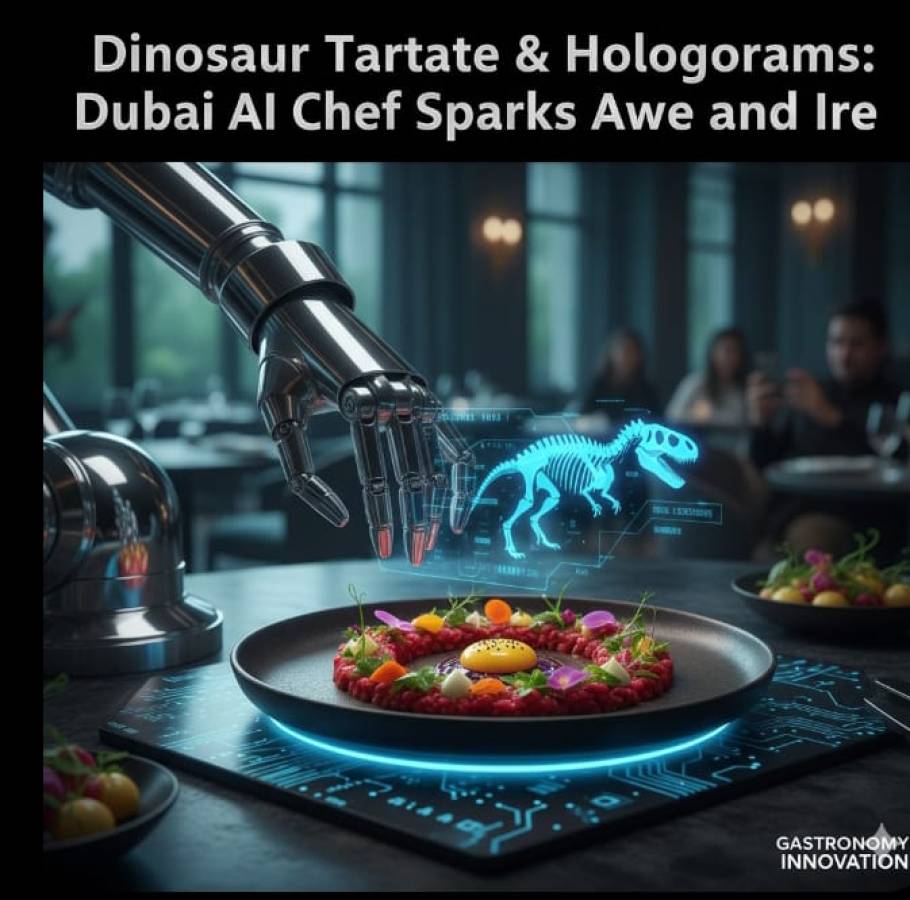
The landscape of haute cuisine is undergoing a radical metamorphosis, nowhere more vividly than in Dubai, a city perpetually at the vanguard of innovation. A new dining establishment has thrust artificial intelligence onto the center stage of the kitchen, sparking a polarizing discourse that pits technological marvel against the traditional sanctity of the culinary arts. The emergence of the so-called “AI chef,” embodied by the system known as Anan, has simultaneously generated widespread awe for its novelty and considerable ire among traditionalists and discerning food critics.
The restaurant promises an unprecedented fusion of high-tech spectacle and gastronomic experimentation. Patrons are not merely served a meal; they are immersed in an experiential journey. Dishes are presented alongside vivid, life-sized holograms, transforming the dining room into a futuristic theater where virtual reality enhances the flavor profiles. The menu itself is a testament to the AI's complex algorithms, which purportedly analyze global taste data and historical culinary trends to concoct never-before-seen recipes. Take, for example, the dish that has become the establishment’s instant signature: “Dinosaur Tartare.” While its name is deliberately provocative and an obvious metaphor for ancient-meets-modern, the actual ingredients are a sophisticated assembly of raw, meticulously prepared components, demonstrating the AI’s capability for creative synthesis.
Chef Anan, the brainchild of a team of data scientists and former culinary professionals, operates not on intuition but on ceaseless learning. The system is programmed to adapt, evolve, and refine its recipes based on patron feedback, ingredient availability, and an ever-expanding database of successful flavor combinations. The architects of this digital maestro argue that Anan represents the purest form of innovation. By eliminating human error and inconsistency, the AI ensures a level of precise execution previously unattainable. One designer noted that the intent is not to replace the soul of cooking but to offer a tool that pushes the boundaries of possibility; the technology becomes a means of creative expression, unbound by conventional limitations. The flawless presentation, the temperature precision, and the intricate plating are all executed with a consistency that human hands, however skilled, could scarcely replicate night after night.
Yet, this mechanical perfection is precisely what draws the most pointed criticism. For many, the very concept of an AI chef strips cooking of its essential human element—the passion, the spontaneity, and the subtle, intangible sense of connection between cook and diner. Detractors, including several prominent food critics, have described the food as technically flawless but emotionally sterile. Reports surface of dishes being deemed "too spicy" or compositions that are simply too esoteric for the human palate, suggesting that while the algorithms understand flavor, they may lack an appreciation for context and cultural nuance. One respected food writer, upon sampling Anan’s creations, lamented that while the experience was novel, the meal itself was a sterile, overly calculated event. “I spoke to Chef Anan again,” the critic quipped, “but the conversation, much like the dish, lacked warmth.”
This tension encapsulates the broader cultural debate surrounding AI adoption. Is gastronomy an art form reserved for human endeavor, or can the mastery of flavor and technique be codified and perfected by code? As establishments like the Dubai restaurant continue to flourish, leveraging sophisticated algorithms and holographic projections to redefine the act of dining, the question remains: Can a machine, however brilliantly programmed, ever truly achieve the ineffable artistry of a human chef? The advent of Chef Anan confirms that artificial intelligence is poised to become a formidable force in the kitchen, but whether it ultimately earns the title of a true culinary artist, or merely a sophisticated automaton, is a controversy that will continue to simmer for years to come.


















Leave a Comment