
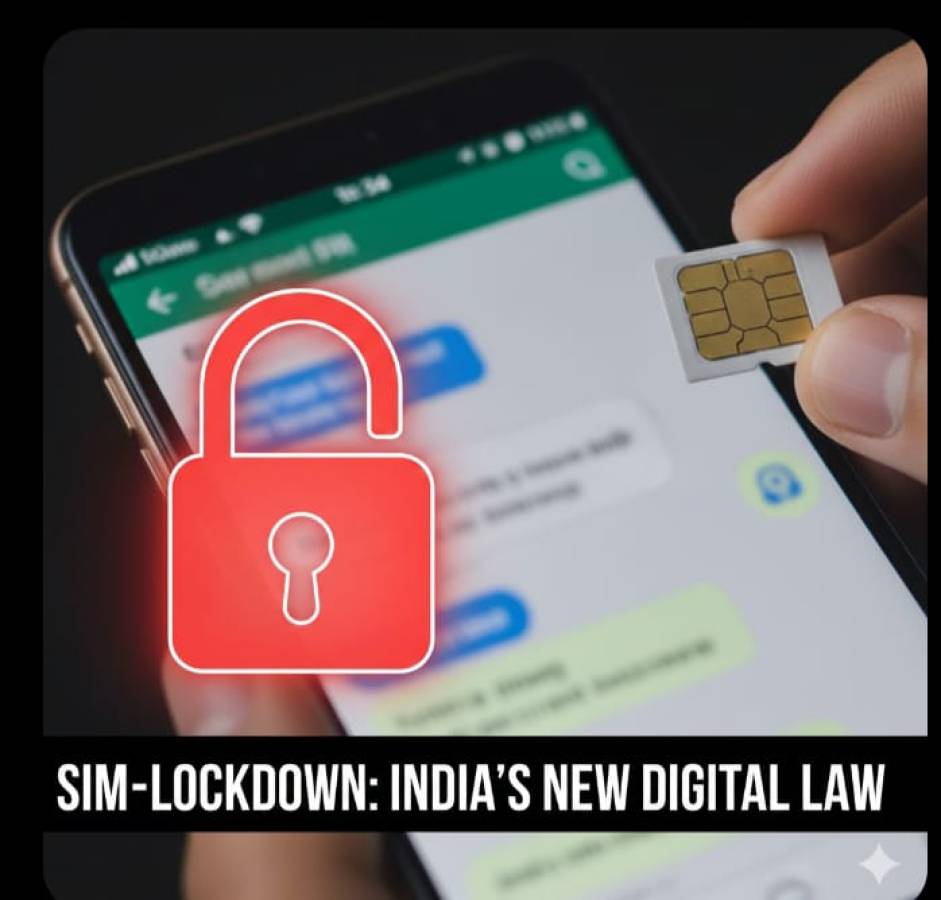
Wake up, check your messages, and suddenly the app you rely on for everything from coordinating your work calls to chatting with your family overseas logs you out. Not because you forgot your password, but because a recent governmental mandate now treats your favorite messaging application like a utility bill—it demands proof of an active connection, right here, right now.
This is the unprecedented digital reality ushered in by a recent directive from the Department of Telecommunications (DoT). In a sweeping regulatory move, the government has mandated that key messaging platforms operating in India—the likes of WhatsApp, Telegram, Signal, and others—must enforce a strict linkage between the application and a constantly active SIM card tied to the user's registered mobile number. The current system, industry sources lament, has been deemed "rushed and poorly designed."
The reason for this dramatic intervention is rooted in national security and the fight against online crime. The DoT, having issued this directive on November 28, gives service providers a mere 120 days to become fully compliant. Authorities assert that a significant flaw exists, enabling accounts to remain operational even after the associated SIM card has been discarded or removed. This operational "loophole," they contend, is routinely being “misused from outside the country to commit cyber-frauds.” By making the active SIM a continuous prerequisite, the government seeks to bolster accountability and ensure that every digital conversation can be traced back to a verified, present user. Failure to conform to these stringent new norms will expose these platforms to legal action under the updated Telecommunications Act, 2023.
This regulatory tightening, however, has triggered a loud alarm within the technology sector. Industry organizations, notably the Internet and Mobile Association of India (IAMAI), representing major digital firms including Meta, had previously sounded warnings about this trajectory. They caution that classifying platforms under a Telecom User Entity (TUe) category imposes crippling “telecom-like compliance costs” that small and large digital businesses can ill afford. The IAMAI’s fear is palpable: this approach risks widespread service disruptions and mass user deactivations, fundamentally destabilizing the country's vibrant digital ecosystem.
But the most immediate and painful impact falls squarely on you, the end user. The practical implementation of this mandate is already creating tangible barriers. Consider the newly enforced six-hour logout rule on services like WhatsApp Web. Every six hours, the platform now automatically signs you out, forcing a manual re-link via a QR code. For professionals, this is not a minor inconvenience; it is a serious impediment to productivity. An executive rightly pointed out that with typical workdays stretching eight or nine hours, a forced six-hour sign-out is simply impractical and undermines the service's utility for crucial work communication.
Furthermore, this new rigidity severely complicates life for several common user demographics. Individuals who travel frequently, those who utilize dual SIM setups for managing international and domestic numbers, or users in rural areas who swap SIM cards to maximize network coverage, are all suddenly penalized. The new rule fails to accommodate legitimate, flexible communication habits, insisting instead on a restrictive, single-SIM model. You are effectively being asked to choose between convenient access and the cost saving measures you may employ using multiple connections.
While the DoT has offered assurances that it has the full 90-day compliance window to address any implementation issues, the underlying tension remains. The impulse to protect citizens from cyber-fraud is entirely laudable. Yet, the method chosen—a blunt instrument that restricts access based on physical SIM presence—creates a significant trade-off. We must closely monitor whether this sweeping new legal framework successfully shuts the door on external threats without simultaneously slamming the door on the convenience and digital freedom of millions of legitimate users. The final outcome will determine if India’s regulatory landscape can truly balance security with the simple, vital need for accessible communication.

















Leave a Comment