
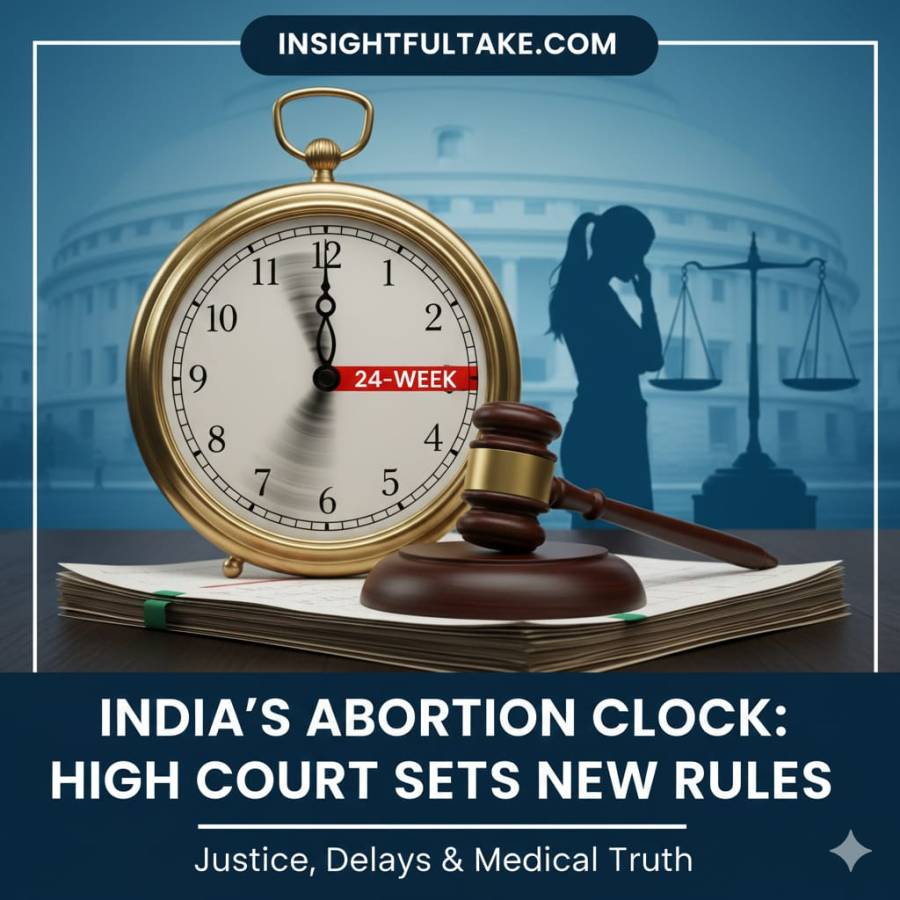
In a recent and significant judgment, the Delhi High Court has addressed the complexities surrounding late-term abortion requests in India. The court, led by Justice Swarana Kanta Sharma, emphasized that when a person seeks a legal remedy for a sensitive health matter, the system must act with both scientific precision and human urgency. This ruling is particularly important for survivors of sexual assault who find themselves navigating a complicated legal and medical landscape.
The Legal Background: When is Abortion Allowed?
To understand the court's decision, it is helpful to look at the Medical Termination of Pregnancy (MTP) Act. In India, the law generally allows a woman to seek an abortion up to 20 weeks of pregnancy. For specific groups, such as survivors of rape or minors, this limit is extended to 24 weeks.
However, once a pregnancy passes the 24-week mark, the law becomes much stricter. At this stage, an abortion is usually only permitted if there are serious abnormalities in the fetus or if continuing the pregnancy would pose a "grave risk" to the woman’s life or health. Because these decisions are so high-stakes, judges rely on a Medical Board—a group of expert doctors—to tell them whether the procedure is safe and necessary.
The Problem: Vague Reports and Systemic Delays
The High Court noticed that many medical reports submitted to judges were "vague" or "qualified". Instead of giving a clear answer, these reports often used medical language that could be interpreted in different ways. Justice Sharma pointed out that a judge is not a doctor; therefore, the court cannot make a fair decision if the medical evidence is unclear.
The ruling was sparked by a case involving a 14-year-old minor who was 28 weeks pregnant. Even though a police report (FIR) was filed quickly on August 8, the girl was not medically examined until August 22—a delay of two full weeks. In the world of pregnancy, two weeks can be the difference between a safe procedure and a dangerous one.
The New Rules for Doctors and Police
To fix these "procedural rots," the Delhi High Court has laid down new rules that everyone must follow:
- Clear Medical Opinions: Doctors must provide a definitive "Yes" or "No" regarding the risks involved. Reports must state the exact age of the pregnancy and the physical and mental health of the person involved.
- Digital Speed: Medical boards must now send scanned electronic copies of their reports to the police immediately. This prevents the loss of precious days while waiting for physical papers to be delivered.
- Police Coordination: Investigating officers must be given physical copies of orders from the Child Welfare Committee (CWC) so that everyone is working from the same information.
- Urgency for Minors: The CWC has been directed to create faster internal ways to handle cases involving minor survivors so that they are not left waiting for administrative paperwork.
Final Take
This judgment is a reminder that the law should serve the people, not the other way around. By requiring doctors to be specific and the police to be fast, the court is trying to ensure that no one is forced to continue a pregnancy simply because the system was too slow to act.
The 14-year-old girl in this specific case eventually decided to continue her pregnancy and give birth. While the court respected her choice, it used her story to make sure that for the next person, the system works better and faster. It is a step toward a more compassionate and efficient justice system for all.



























Leave a Comment