
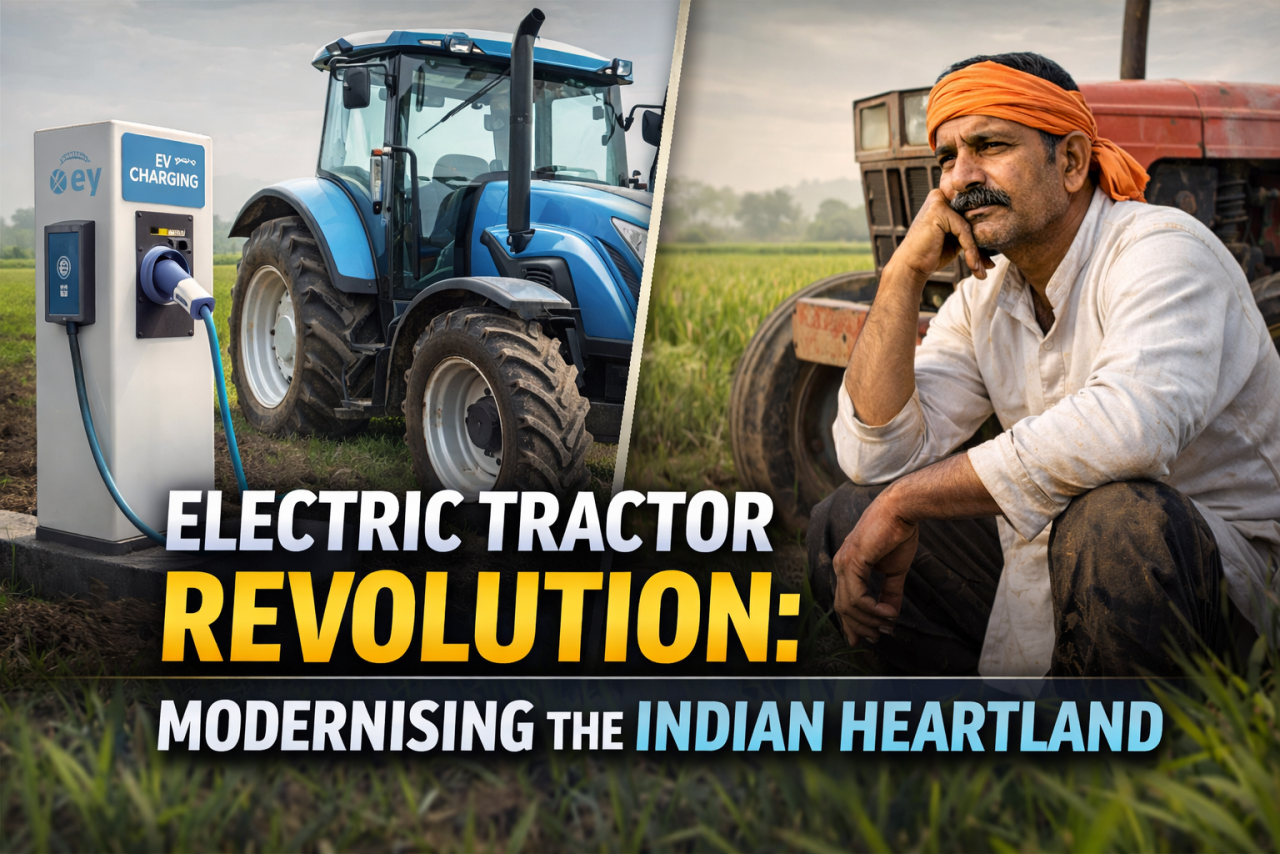
As India pushes its green transition into the fields, a quiet revolution is taking shape—new standards for electric tractors could determine whether farmers embrace the future of farming, or stick with the diesel engines that have powered their livelihoods for decades.
India has taken a significant step toward modernising its agricultural machinery sector with the introduction of new standards for electric farm tractors. As part of the country’s broader push to reduce emissions and lower fuel dependence, the Bureau of Indian Standards (BIS) has released dedicated testing protocols for battery-powered tractors. These guidelines are intended to ensure that electric tractors sold in India are safe, reliable, and suitable for real farming conditions.
The standards, notified by the Ministry of Consumer Affairs, represent the first nationwide framework specifically designed for electric agricultural machinery. Until now, the lack of clear testing rules has been a major barrier to adoption. With these protocols in place, electric tractors move closer to becoming a practical alternative rather than a limited pilot technology.
Electric tractors operate under very different conditions compared to electric cars. While passenger EVs are built for paved roads and predictable usage, farm tractors must perform in loose soil, mud, uneven terrain, and extreme temperatures. They also operate for long hours while pulling heavy equipment or powering implements. Recognising this, the BIS standards focus on performance measures that reflect actual farm use.
One of the key areas covered is power take-off (PTO) performance, which is critical for running implements such as rotavators, threshers, and seed drills. The standards also assess drawbar power, which determines a tractor’s ability to pull ploughs and other attachments through dense soil. In addition, the protocols include checks on vibration levels, electrical safety, and structural strength to ensure durability over extended use.
For farmers, adopting new machinery is a major financial decision. Tractors are long-term investments, and reliability in field conditions is essential. The absence of uniform benchmarks has previously made farmers cautious about electric alternatives. According to the Department of Consumer Affairs, credible and consistent standards are necessary to reduce uncertainty and improve trust in new technologies.
A tractor certified under the BIS framework indicates that it has been tested against conditions similar to those found on Indian farms. This assurance is expected to play an important role in encouraging farmers to consider electric models, particularly as awareness grows and availability improves.
The new standards also offer clarity for manufacturers. Defined testing requirements allow companies to plan product development, investment, and scaling more confidently. Both established manufacturers and startups stand to benefit from this regulatory certainty, which could accelerate innovation and domestic production.
Over time, wider adoption of electric tractors could reduce farmers’ dependence on diesel, which is often subject to price fluctuations. Lower fuel and maintenance costs may improve long-term affordability, though factors such as charging infrastructure, battery lifespan, and upfront costs will remain important considerations.
The introduction of these standards does not signal an immediate shift away from diesel-powered tractors. Instead, it marks the beginning of a gradual transition. By setting clear and practical rules early, the government is preparing the agricultural sector for a future where electric machinery can play a meaningful role.
As India’s energy transition reaches beyond cities and highways, these standards help ensure that change at the farm level is guided by reliability, safety, and real-world performance. With proper regulation now in place, electric tractors are better positioned to move from concept to everyday use in Indian agriculture.

























Leave a Comment