
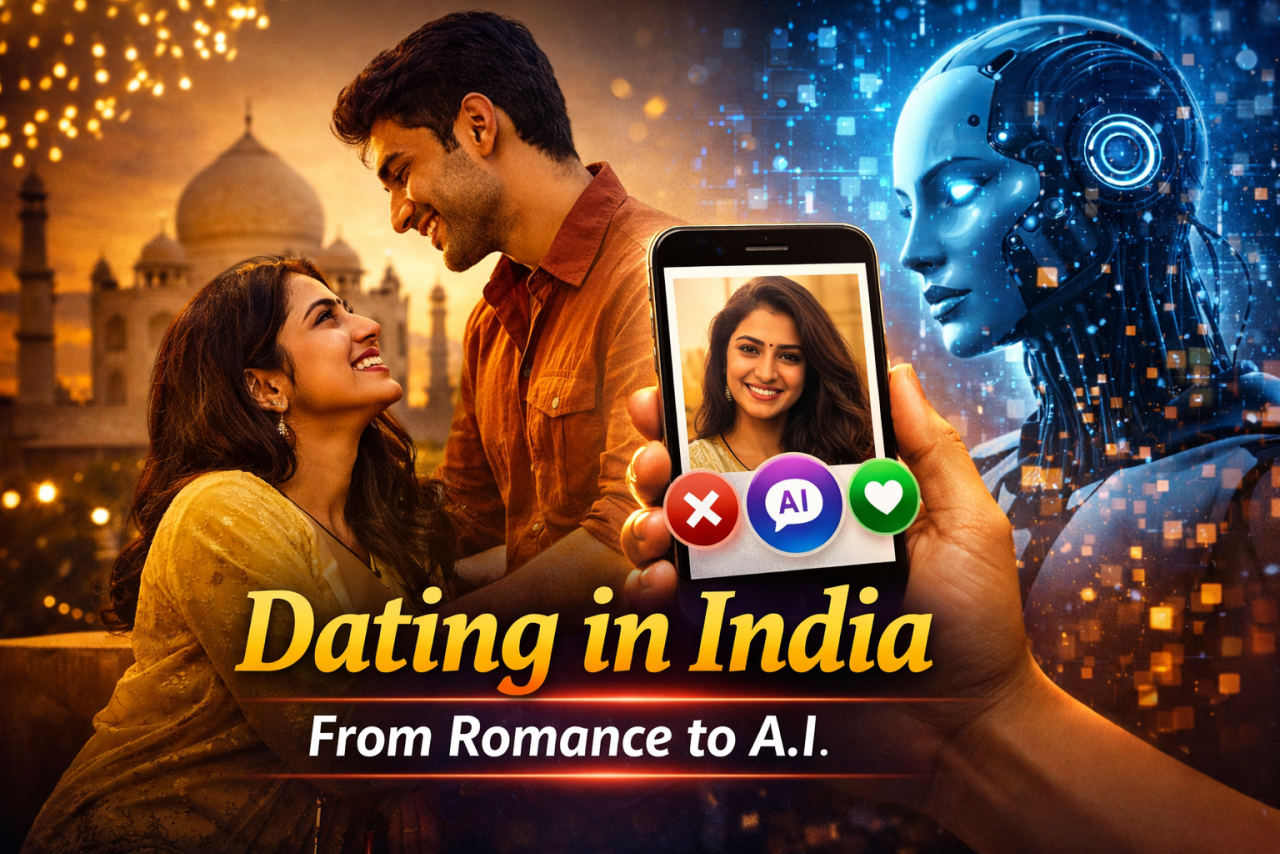
Dating in India has never been simple—but it has never been this automated either. A decade ago, relationships grew through college friendships, workplace conversations, weddings, and introductions by friends or family. Even online platforms felt personal, driven by long chats and human judgment. Today, artificial intelligence is reshaping Indian dating into something faster, cleaner, and strangely less human.
AI now influences who we see, how we present ourselves, and even what we say when a conversation begins. Dating apps track swipes, pauses, replies, and preferences to predict compatibility. Some platforms suggest photos, rewrite bios, or generate opening messages. While this promises better matches, it also raises a deeper question for modern India: are we finding connection—or simply optimising loneliness?
Before AI: Slow, Social, and Uncertain
Ten years ago, dating in India moved at a slower pace. Relationships were shaped by shared spaces—classrooms, offices, neighbourhoods—and unfolded over time. Conversations were awkward, silences meaningful, and misunderstandings part of growing closer. Choices were fewer, but emotional investment was higher.
Rejection felt personal, but so did acceptance. There was no endless scroll of alternatives waiting behind a screen. When two people chose each other, it carried weight.
After AI: Fast, Filtered, and Performative
Today’s dating culture looks very different. AI-driven apps prioritise efficiency over exploration. Algorithms decide visibility, timing, and frequency of matches. Profiles are curated not for honesty, but for performance. The result is a quiet shift: dating becomes less about discovery and more about presentation.
Many Indian users now feel pressure to market themselves correctly—choosing the right words, the right photos, the right interests. The question is no longer “Who am I?” but “What will work?” Over time, this blurs authenticity and turns relationships into transactions.
The Mental Cost of Algorithmic Romance
AI-driven dating affects mental health in subtle ways. Constant comparison, ghosting, and silent rejection create emotional fatigue. Metrics—matches, likes, replies—replace real signals of connection. In urban India, where loneliness is already rising, dating apps often intensify isolation instead of easing it.
Abundance of choice also reduces commitment. When another option is always one swipe away, emotional depth is delayed. People stay in conversation loops—talking, matching, moving on—without truly arriving.
AI and India’s Social Filters
Despite claims of neutrality, AI often reinforces existing biases. Caste, class, language, region, and appearance still shape preferences—now encoded into data. Algorithms learn what users choose and amplify those patterns. Old hierarchies do not disappear; they simply become invisible.
For a society negotiating modern values and traditional expectations, this creates tension. Technology promises freedom, but often mirrors social reality rather than challenging it.
What AI Gets Right
To be fair, AI has opened doors. For Indians with limited social circles, unconventional schedules, or conservative surroundings, dating apps provide autonomy. Introverts and first-time daters benefit from guidance and structure. AI can reduce anxiety and make connection feel accessible.
The problem is not AI itself—but over-dependence on it.
Finding Balance in the Digital Age
Dating in the age of AI requires conscious effort. Algorithms can suggest, but they cannot feel. Compatibility scores cannot measure timing, kindness, or emotional safety. Love still demands patience, vulnerability, and risk—qualities no machine can automate.
India today is technologically fast but emotionally rushed. We optimise everything except presence. If dating is to remain meaningful, we must slow down, choose intentionally, and remember that connection is not a product—it is a process.
AI may change how we meet. It should not change why we love.






















Leave a Comment