
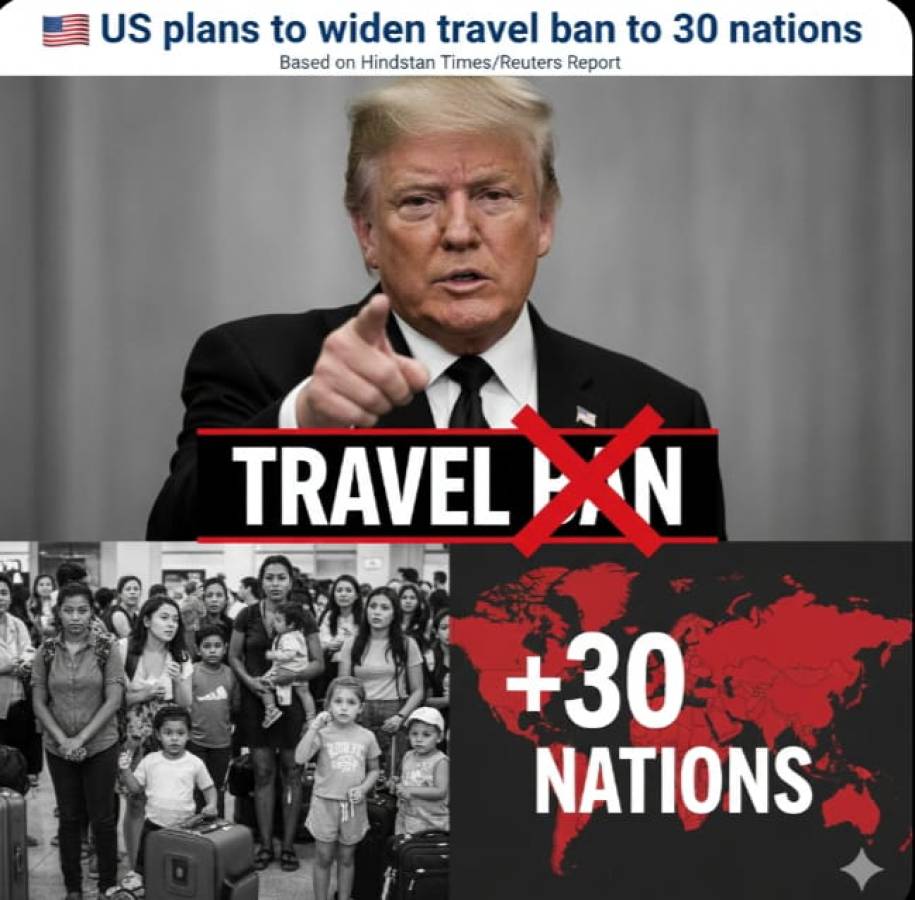
The United States, once widely seen as a symbol of refuge, opportunity and the energy brought by newcomers, is now preparing for a major and unsettling shift in its travel policies. According to U.S. Homeland Security Secretary Kristi Noem, the new restrictions are not just small adjustments. They signal a deeper and more ideological shift in how the nation views and manages the movement of people across its borders.
The proposal intends to swell the number of countries subject to a travel ban to more than 30 nations. This expansion, as Noem alluded, is not specific on the final tally, but she affirmed it would be "over 30," with the administration actively evaluating additional countries. This incrementalism suggests a methodical, rather than impulsive, tightening of the security perimeter around the United States.
The Architecture of Restriction
The original travel ban, signed by President Donald Trump in June, was a contentious proclamation that initially restricted citizens from seven countries and banned the entry of citizens from 12 countries. The stated rationale then, as now, was to protect the nation against "foreign terrorists" and other security threats. Crucially, the current proposal maintains this broad scope, applying the bans equally to both immigrants and non-immigrants—a net sweeping up tourists, students, and business travelers alike.
The underpinning logic for this sweeping restriction was articulated by Secretary Noem with stark clarity: "If they don’t have a stable government there, if they don’t have a country that can sustain itself and tell us who those individuals are and help us vet them, why should we allow people from that country to come here to the United States?”
This statement reveals the fundamental criterion for exclusion: not just the potential for threat, but the failure of state capacity in the originating nation. It shifts the burden of proof entirely onto the foreign country, effectively penalizing states grappling with instability, governance deficits, or civil conflict. It suggests an almost Manichean view of the world—stable, verifiable nations whose citizens are welcomed, versus unstable, ungovernable territories whose citizens are suspect by association.
A Post-Shooting Pause and the 'Third World' Trope
The impulse to expand the ban gained acute momentum following a tragic shooting incident in Washington, DC, that resulted in the death of two National Guard members. Investigators determined the shooter was an Afghan national who arrived in the US in 2021 through a resettlement program. This fact provided immediate, albeit controversial, ammunition for administration officials who have long argued that the current vetting processes are insufficient.
In the wake of this event, President Trump declared a "permanent pause" on migration from all "Third World Countries." The phrase, an anachronistic term from the Cold War lexicon, was deployed without any official definition or naming of the countries encompassed by the designation. Its use is perhaps more telling as a rhetorical device than a policy directive, invoking a broad, undifferentiated geopolitical category of nations perceived to be sources of poverty, instability, and threat.
The Escalation of Migration Measures
An expansion of the travel ban to over 30 countries represents a marked escalation of migration measures by the administration. It signals a move away from targeted restrictions toward a more generalized policy of deterrence and exclusion. While proponents will frame it as an essential layer of national security, critics will undoubtedly see it as a significant step back from the liberal, cosmopolitan ethos that has historically defined America's engagement with the world.
The policy is poised to affect vast segments of the global population, hindering economic, educational, and familial exchanges. It risks isolating the United States from countries that require assistance, rather than facilitating the stability that the government claims to seek. Ultimately, the widening of this travel ban is not just a matter of immigration policy; it is a policy of fear, one that chooses to seal off the great republic rather than engage with the complexities of a volatile world.




















Leave a Comment