
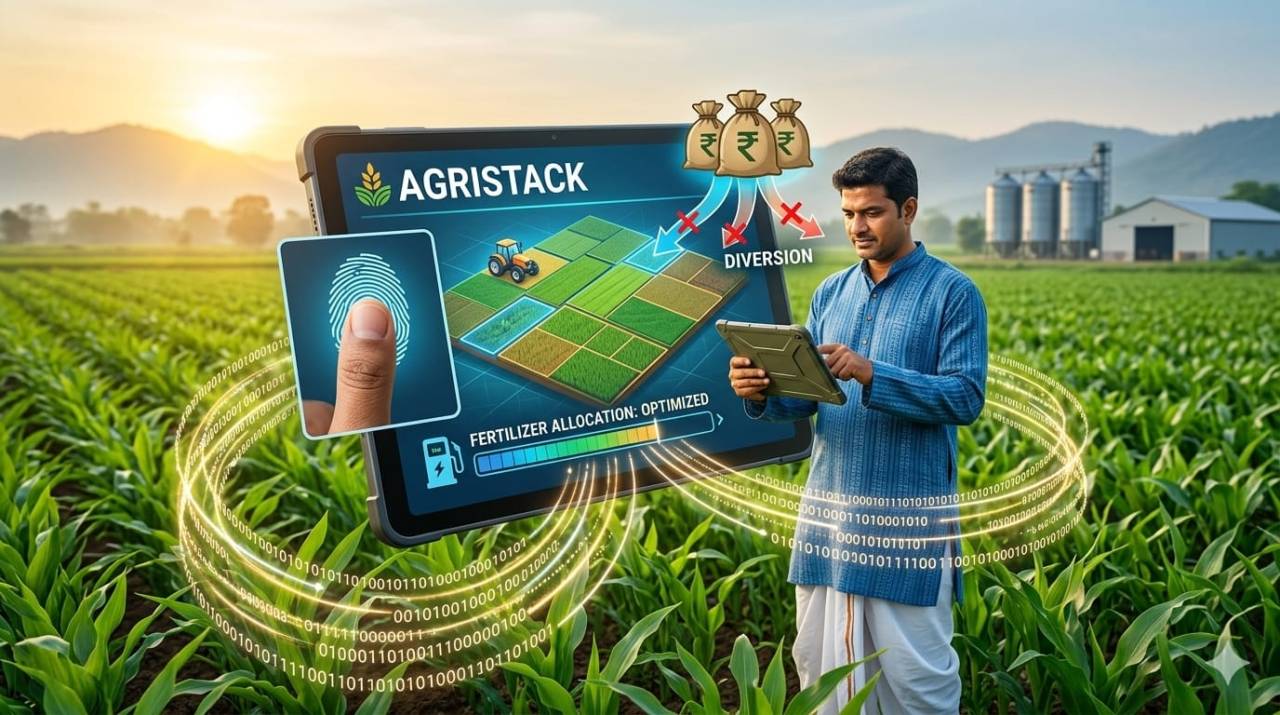
As global supply chains tighten and fertilizer costs surge, India is turning to a powerful new tool—data. With Agristack, the government aims to decide who gets how much fertilizer, marking a shift that could redefine how the country protects both its farmers and its food security.
India is preparing to overhaul how millions of farmers access subsidized fertilizers, as the government rolls out a data-driven “rationalization” system built around its expanding digital database, Agristack. The move is aimed at reducing waste, curbing illegal diversion, and managing supply pressures triggered by global disruptions.
The initiative, led by the Ministry of Agriculture and the Ministry of Chemicals and Fertilizers, comes at a crucial time. With the summer sowing season approaching, geopolitical tensions in West Asia and Eastern Europe have disrupted global fertilizer supply chains. Shipping costs have surged, and uncertainty among international suppliers has tightened availability, turning fertilizer distribution into a matter of national food security.
Understanding the Fertilizer Crunch
India remains one of the world’s largest consumers of fertilizers but continues to rely heavily on imports for key inputs. Natural gas—essential for producing nitrogen-based urea—and minerals such as phosphate and potash are sourced largely from regions facing geopolitical instability.
Government officials maintain that buffer stocks are currently stable. According to officials, fertilizer availability stands at around 18 million tonnes, higher than last year’s levels. However, demand during the peak season is projected to reach nearly 39 million tonnes, creating a significant supply-demand gap.
Rising freight costs and cautious export behaviour from supplier nations have compounded the challenge, pushing policymakers to focus on improving domestic distribution efficiency.
What is Agristack?
At the centre of the new system is Agristack, a digital ecosystem that has already enrolled over 90 million farmers. The platform assigns each farmer a unique ID linked to Aadhaar and land records, creating a verified database of farm holdings.
The government plans to use this database to regulate fertilizer sales based on actual need. By integrating land size and crop data, authorities can estimate the optimal quantity of fertilizer required for each farmer.
“The objective is to prevent misuse, overuse, or diversion of subsidized agro-chemicals,” a government official said. “Linking land and crop data with digital credentials allows for more accurate demand assessment.”
Curbing Diversion and Black Marketing
Diversion of subsidized urea has long been a concern in India’s agricultural sector. Due to its low price for farmers, urea is frequently diverted to industries such as plywood, textiles, and detergents.
Under the proposed system, fertilizer purchases will be verified through Point of Sale (PoS) devices at retail outlets. Farmers will need to authenticate their identity, and transactions will be cross-checked against their land and crop data.
Any attempt to purchase quantities exceeding estimated requirements will be flagged, reducing the likelihood of leakages. The measure is expected to ensure that subsidies reach intended beneficiaries rather than being siphoned off for industrial use.
Diversifying Import Sources
Alongside domestic reforms, India is expanding its global sourcing strategy to reduce dependence on any single region. Fertilizer imports are being diversified to include countries such as Russia, Morocco, Australia, Algeria, Egypt, Indonesia, Malaysia, and Canada.
This approach aims to safeguard supplies against disruptions in specific regions, particularly the Gulf and China. However, rising import costs continue to strain the Union Budget, making efficient fertilizer use both an economic and strategic priority.
Challenges on the Ground
The shift to a digital, data-driven system presents implementation challenges. A large proportion of India’s farmers are smallholders, many of whom operate in areas with limited internet connectivity and low digital literacy.
To address this, the government has indicated that farmers not yet registered on Agristack will still be allowed to purchase fertilizers under existing norms. However, these transactions will be subject to stricter manual verification.
Union Agriculture Minister Shivraj Singh Chouhan has urged officials to accelerate the rollout of farmer IDs, emphasizing the need for a transparent and efficient distribution system.
Long-Term Gains: Soil Health and Sustainability
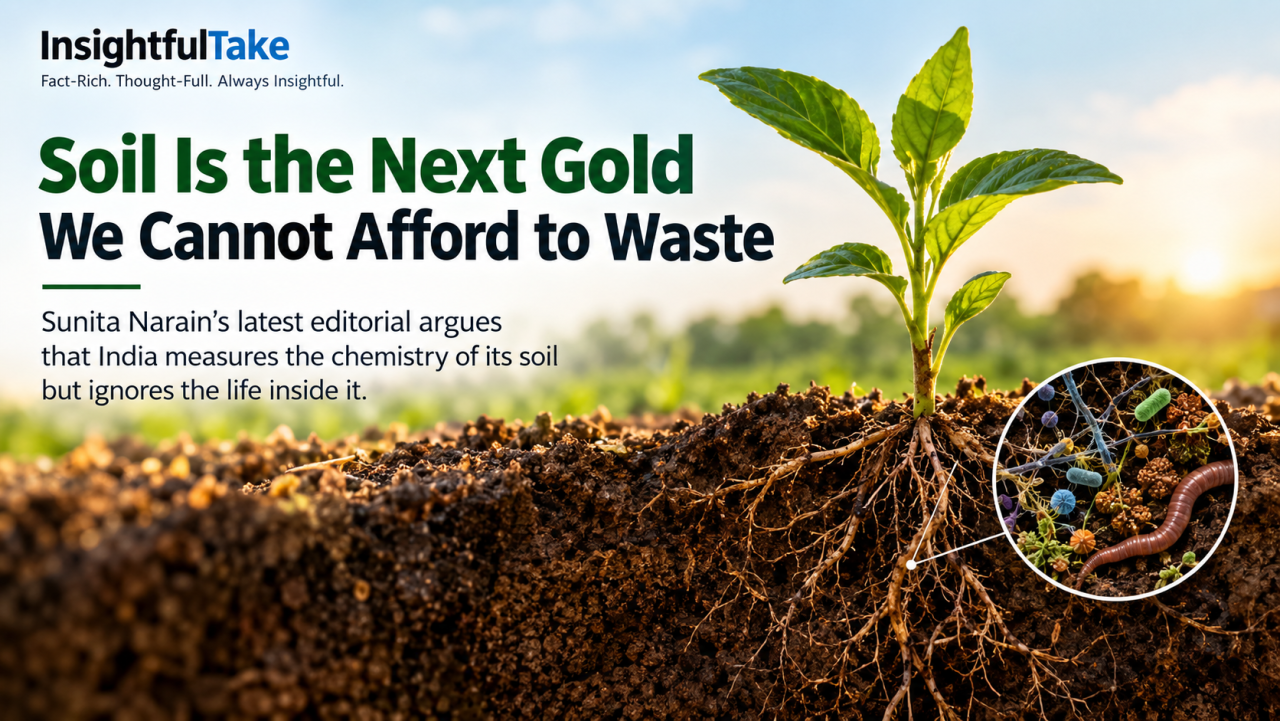
Beyond managing the immediate supply crunch, the initiative also seeks to address long-standing issues of soil degradation. Excessive use of urea has damaged soil health in agriculturally intensive states such as Punjab and Haryana.
By recommending crop-specific, per-hectare fertilizer usage, the government aims to promote balanced nutrient application. This aligns with the broader Nutrient Based Subsidy (NBS) framework, which encourages a shift from nitrogen-heavy fertilization to a more balanced mix of phosphorus, potassium, and other nutrients.
A Test Case for Digital Governance
The Agristack-based rationing system represents a significant step in India’s attempt to integrate technology into agricultural governance. Its success will depend on effective implementation, farmer adoption, and the reliability of digital infrastructure.
If executed well, the initiative could emerge as a global model for managing agricultural subsidies and ensuring food security through data-driven policymaking.



















Leave a Comment