
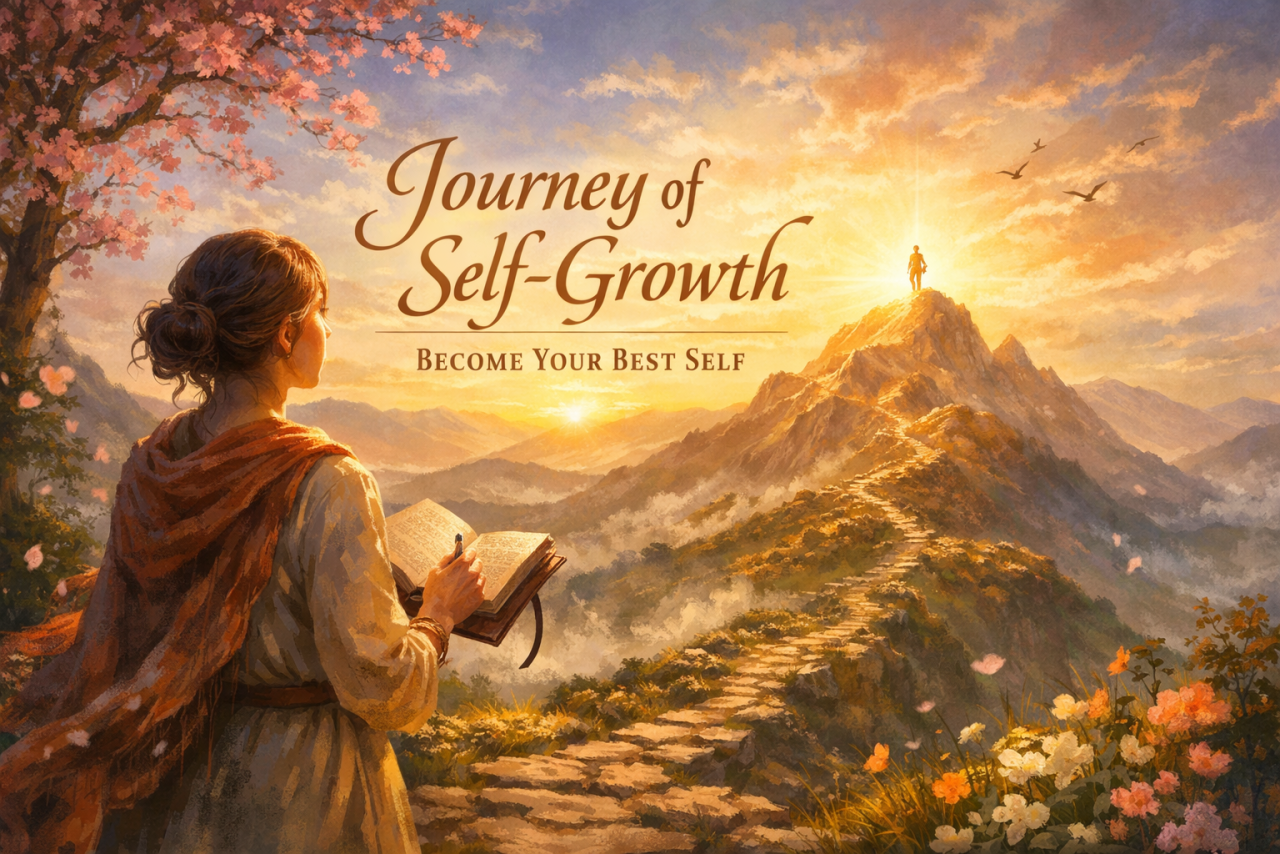
Most of your life will happen in private—unseen, uncelebrated, and repetitive.
What you do with those moments will decide who you become.
There is a certain kind of lie the world tells you.
It tells you that you must arrive. That you must become something visible, measurable, applauded. That somewhere, at the end of all your striving, there is a clean, well-lit place called success—where everything finally makes sense.
But life, as it turns out, is not built like that.
It is messier. Softer. More stubborn.
It unfolds in fragments—in half-finished thoughts, in tired evenings, in mornings that begin before you are ready. It gathers itself in the unnoticed hours. And it is there, precisely there, in those small, almost forgettable moments, that something within you begins to shift.
Not loudly. Not dramatically. But irreversibly.
To fall in love with the process of self-growth is to refuse the lie. It is to choose, instead, the slow and uncertain work of becoming. Not for the applause. Not for the outcome. But for the quiet, persistent truth that you are changing—even when it does not look like it.
Especially then.
Because growth is not a spectacle.
It does not arrive with declarations. It does not announce itself like victory. It seeps in. It rearranges things quietly—your habits, your thoughts, your thresholds for pain and patience. One day, without warning, you find yourself reacting differently. Thinking differently. Choosing differently.
And you realize—you are no longer who you were.
But the world does not teach you to notice this.
It teaches you to look outward. To measure yourself against others. To chase speed. To equate worth with arrival. And so, you begin to rush. You begin to doubt the slow days, the quiet efforts, the invisible work.
You begin to mistake stillness for stagnation.
But stillness is not the absence of growth.
Sometimes, it is where growth hides.
There is a kind of intimacy in effort that is rarely spoken about. It lives in repetition—in doing the same thing again and again, not because it is exciting, but because it matters. It lives in discipline, which is not harsh or punishing, but deeply personal. A promise you make to yourself, and keep, even when no one is watching.
Especially then.
Because the truth is, most of your life will not be witnessed. It will not be celebrated. It will not be shared. It will simply be lived.
And in that living, you will either abandon yourself—or you will build yourself.
This is where the process begins to matter.
Not as a means to an end, but as the end itself.
To love the process is to sit with your own incompleteness without rushing to fix it. It is to understand that you are not broken—you are unfinished. And there is a difference.
An important one.
Because unfinished things hold possibility. They stretch. They evolve. They resist definition.
You do too.
There will be days when the effort feels unbearable. When nothing seems to move. When you question the point of all this quiet striving. On those days, the temptation will be to quit—not dramatically, but slowly. To stop showing up. To stop trying.
But something small, almost insignificant, will keep you there.
A stubbornness. A flicker. A refusal.
And that is enough.
Because growth does not require perfection. It requires presence.
It asks only that you return. Again and again. To your work. To your effort. To yourself.
Comparison, of course, will try to interrupt this.
It will whisper that others are ahead. That you are late. That your pace is insufficient. But comparison is a distortion. It flattens lives into timelines. It erases context. It reduces something deeply personal into something performative.
Your journey is neither a race nor a spectacle.
It is a conversation. Between who you were. Who you are. And who you are becoming.
And like all honest conversations, it takes time.
There is a quiet kind of freedom in accepting this. In stepping away from urgency. In allowing yourself to grow at your own pace, in your own way, without constant justification.
You begin to notice things differently.
The effort feels lighter. The pressure loosens. The small wins begin to matter. Not because they are impressive, but because they are yours.
And slowly, almost imperceptibly, the process stops feeling like a burden.
It becomes a rhythm.
A way of being.
You no longer chase outcomes with desperation. You move with intention. You work with patience. You rest without guilt. You begin to trust that something is unfolding—even when you cannot yet see it.
And perhaps that is the most radical shift of all.
To trust the unseen.
To believe that the hours you spend trying, failing, learning, repeating—are not wasted. That they are, in fact, the work itself. The real work.
Because one day—and it will not arrive like a grand revelation—you will look back.
Not at a single moment of triumph, but at a long, winding path of effort. Of days you showed up. Of days you almost didn’t. Of choices that felt small but changed everything.
And you will understand something quietly, almost gently.
The outcome was never the point.
You were.


.jpeg)


















Leave a Comment