
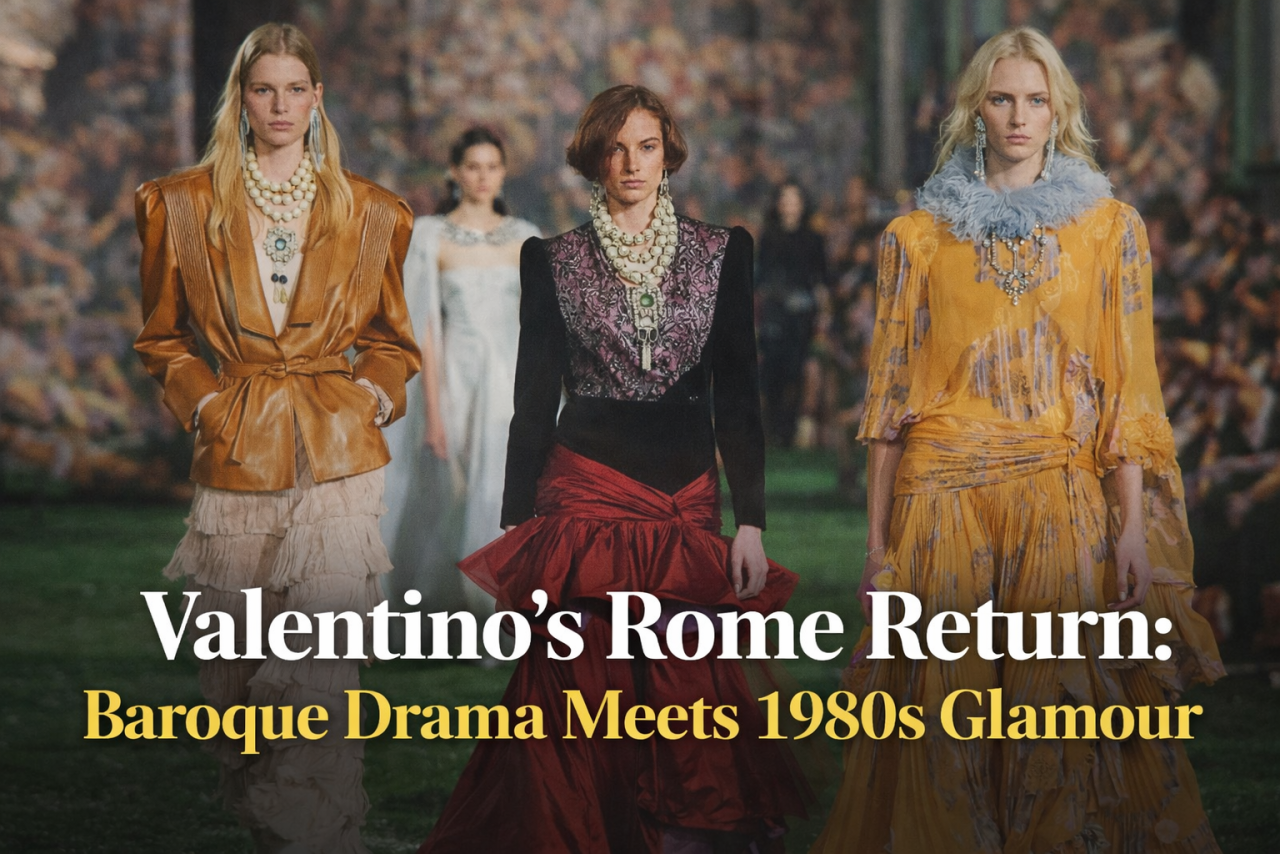
Fashion met history in Rome as Valentino staged a dramatic homecoming, blending Baroque opulence with the bold silhouettes of the 1980s.
Fashion, at its best, is a dialogue between time periods. Few houses understand this better than Valentino. In a season heavy with emotion and reflection, the iconic label returned to its birthplace, Rome, unveiling a Fall/Winter 2026–27 ready-to-wear collection that felt both like a tribute and a reinvention. The show arrived months after the passing of the legendary founder Valentino Garavani, turning the runway into something more than a fashion presentation—it became a moment of remembrance.
The setting itself was steeped in grandeur. Inside the galleries of Palazzo Barberini, beneath the dramatic fresco The Triumph of Divine Providence by Pietro da Cortona, models strode across a runway laid with artificial grass. The juxtaposition of nature, art, and couture set the tone for a collection where eras collided. The house’s creative director Alessandro Michele orchestrated a spectacle that fused Baroque theatricality with the unapologetic glamour of the 1980s.
For decades, Valentino presentations have typically taken place in Paris, the global epicenter of haute couture. But this season, returning to Rome carried symbolic weight. The brand, founded in 1960, reconnected with the city where its story began. In doing so, it reaffirmed its roots while opening a new chapter in its narrative.
Michele’s aesthetic vision leaned heavily into the power silhouettes that defined the 1980s. Strong shoulders, cinched waists, and daring mini skirts dominated the runway, each piece layered with rich textures and ornate detailing. Yet the collection was far from a nostalgic recreation. Instead, it felt like a conversation between the exuberance of that decade and the ornate elegance of the Baroque period.
The garments themselves reflected this creative dialogue. Leather jackets were cut with sculptural precision, their silhouettes both structured and fluid. Draped gowns cascaded in pleats and folds reminiscent of classical sculpture. Oversized jewelry—giant pearls, dramatic pendants, and heavy necklaces—transformed each look into a statement of opulence. The accessories, bold and unapologetic, echoed the maximalist spirit that has become a signature of Michele’s work.
But the show’s most striking quality lay in its theatricality. Models appeared almost like living portraits stepping out of a Baroque painting. Soft lace, velvet textures, and layered fabrics created a sense of movement and drama with every step. Some ensembles combined delicate lace bodices with voluminous skirts, while others played with contrasting fabrics—matte leather against shimmering silk, sheer overlays against structured tailoring.
One look in particular captured the spirit of the collection: a sharply cut jacket paired with cascading ruffles beneath, blending masculine tailoring with romantic softness. Another featured a dramatic gown in deep red—a color long associated with Valentino’s legacy. Often referred to as “Valentino red,” the shade has been a defining symbol of the house’s identity, and its appearance in the final look served as a visual reminder of the brand’s enduring heritage.
Michele described the collection as a reflection on a time when Garavani was still actively shaping the house’s creative direction. Through sculpted silhouettes and intricate drapery, the designs placed women firmly at the center of Valentino’s aesthetic philosophy—powerful, elegant, and unapologetically expressive.
The audience, numbering around 700 guests, included actors, fashion insiders, and longtime admirers of the house. Their presence reinforced the cultural weight of the moment. This was not merely a seasonal showcase; it was a statement about continuity—about how a legacy brand evolves while honoring the vision that built it.
Fashion history often moves in cycles, rediscovering and reinterpreting the past. Valentino’s Fall/Winter 2026–27 collection exemplified this process beautifully. By blending Baroque artistry with the bold silhouettes of the 1980s, Michele crafted a visual language that felt both timeless and contemporary.
In many ways, the show demonstrated the enduring power of fashion as storytelling. Clothes can evoke memory, identity, and cultural heritage all at once. On that Roman runway, beneath a ceiling painted centuries ago, Valentino reminded the world that elegance is not bound by time—it simply reinvents itself with each new generation.
And in that reinvention, the house proved that its legacy remains as vibrant as ever.




















Leave a Comment