
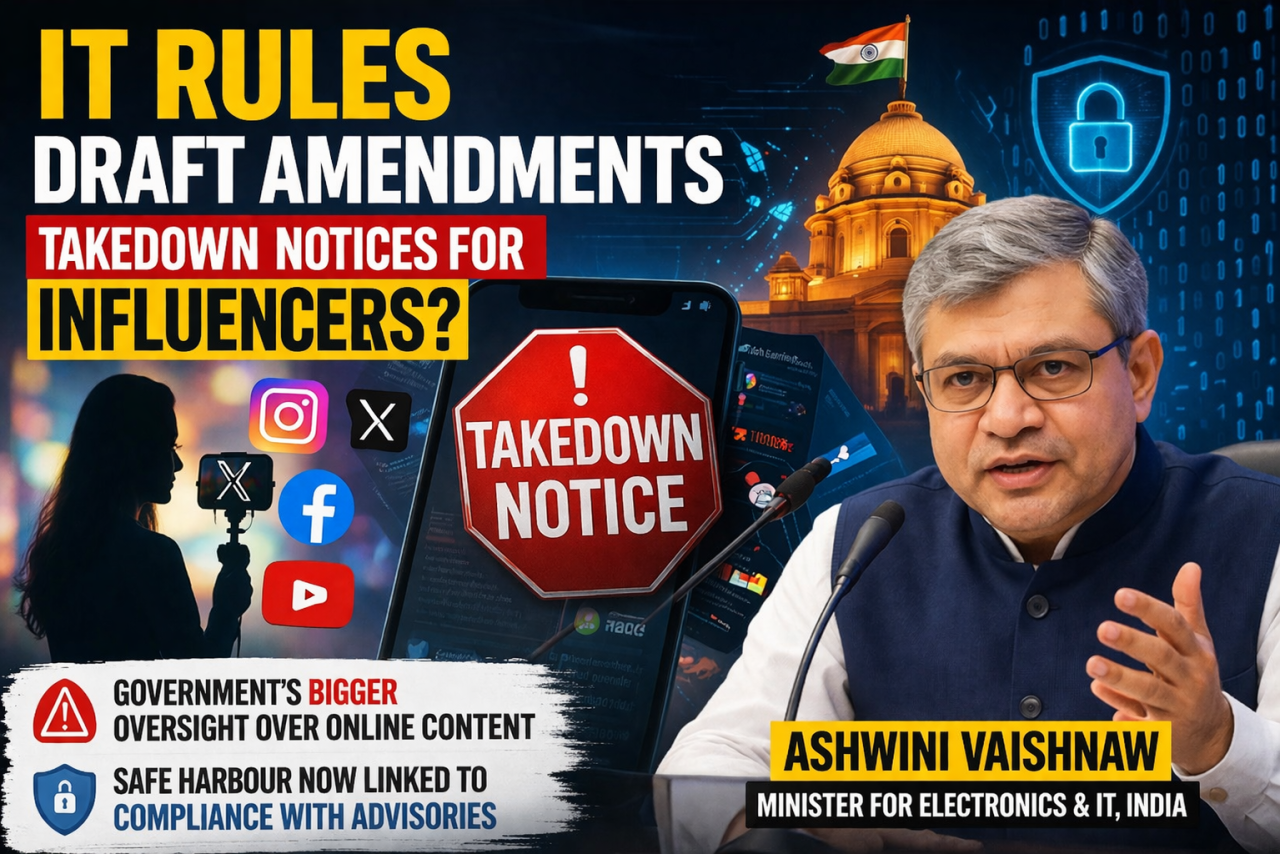
What you post online in seconds could now be taken down just as fast—India’s draft IT Rules are set to bring influencers and everyday users under the same powerful regulatory lens.
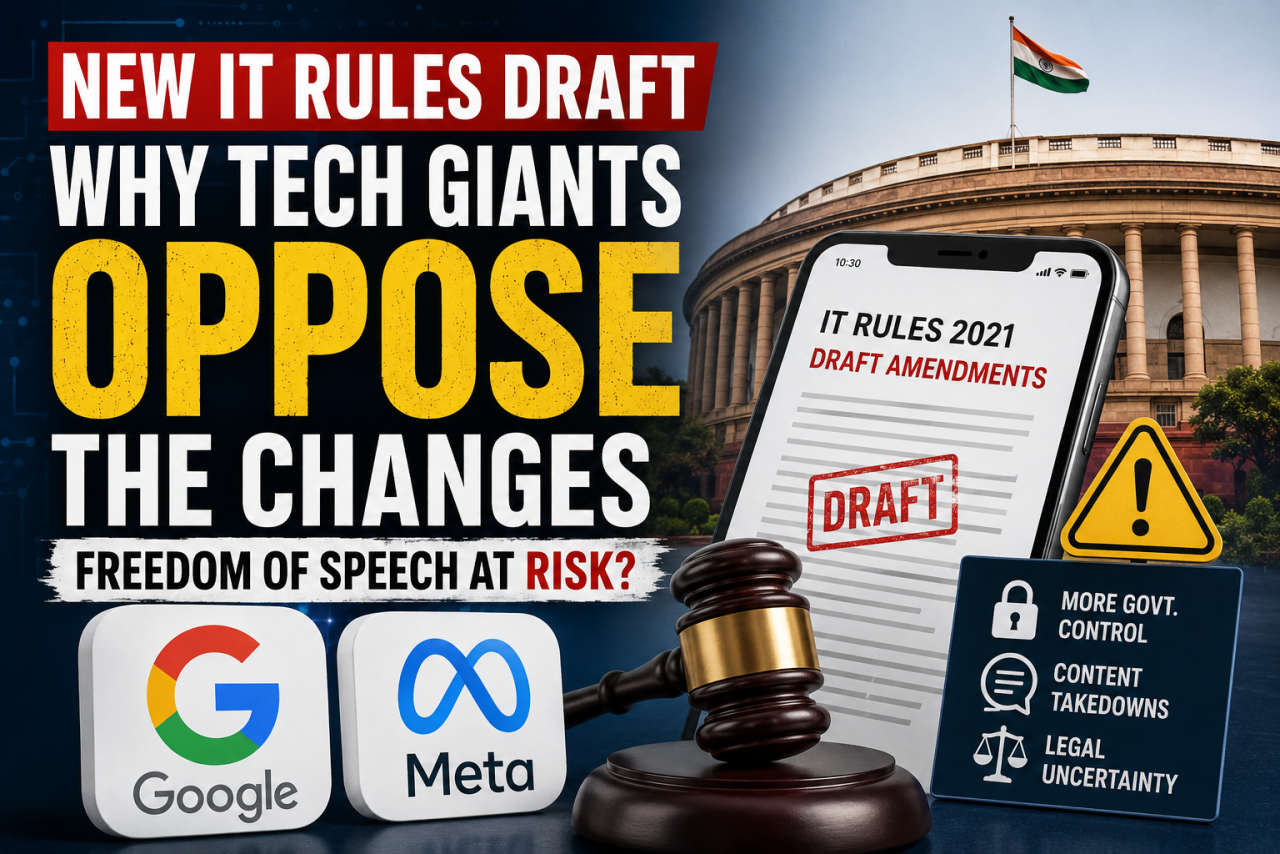
In a country where social media has become a primary arena for news, opinion, and public discourse, the Union government’s latest draft amendments to the Information Technology (IT) Rules signal a significant shift. The proposed changes, currently open for public consultation, aim to bring individual users—including influencers—under a regulatory framework that was previously focused largely on publishers and intermediaries.
At the heart of the proposal is a simple but far-reaching idea: content posted by individuals on platforms such as X, Facebook, and Instagram may now be treated on par with content published by formal news entities, particularly when it pertains to news and current affairs. This marks a departure from the earlier approach, where regulation largely targeted platforms and professional publishers, leaving individual users in a relatively grey zone.
The draft amendments extend the scope of the Ministry of Information and Broadcasting (MIB), allowing it to exercise broader oversight through mechanisms such as the Inter-Departmental Committee (IDC). Notably, the IDC’s role is proposed to be expanded beyond handling formal complaints to examining “any matter” referred to it. This change effectively widens the government’s ability to initiate scrutiny, even in the absence of a formal grievance.
Another key feature of the draft is the alignment with Section 69A of the IT Act, which empowers the government to block online content in the interest of sovereignty, public order, or national security. While this provision has traditionally been used to direct platforms to remove content, the new framework suggests that its ambit could extend to a wider range of actors, potentially including individual creators. Legal experts note that this could blur the distinction between platform liability and user responsibility.
Equally significant is the move to formalise compliance with advisories issued by the Ministry of Electronics and Information Technology (MeitY). Until now, such advisories were often seen as guidance rather than binding directives. Under the proposed changes, adherence to these advisories may become a condition for retaining “safe harbour” protections under Section 79 of the IT Act. In effect, platforms that fail to comply could face legal exposure, thereby incentivising stricter enforcement of takedown orders.
The backdrop to these changes is the rapid proliferation of misinformation, particularly in the form of AI-generated content and deepfakes. Officials have indicated that the surge in such content has prompted platforms to significantly increase takedowns in recent months. The government appears keen to institutionalise this trend, ensuring quicker and more consistent responses to problematic content.
However, the proposed tightening of rules has also raised concerns among digital rights advocates. Critics argue that expanding the definition of regulated content and lowering the threshold for government intervention could have a chilling effect on free expression. The inclusion of individual users within the regulatory net, they contend, risks discouraging legitimate commentary, satire, and political critique—forms of expression that are central to a लोकतांत्रिक society.
There are also questions about safeguards. Observers point out that the draft does not clearly outline independent oversight mechanisms or avenues for appeal beyond existing judicial recourse. This, they argue, could tilt the balance towards expedited enforcement at the cost of due process.
Another notable aspect of the amendments relates to data retention. The draft clarifies that platforms may be required to retain certain data for a minimum of 180 days, even in cases where content has been removed. This provision is intended to aid investigations but also raises privacy concerns, particularly in the absence of robust data protection legislation.
For influencers and content creators, the implications are immediate and tangible. As individuals who often command audiences comparable to traditional media outlets, they may now be expected to exercise greater diligence in verifying information and adhering to regulatory norms. The informal nature of social media communication may no longer offer insulation from legal scrutiny.
For the average user, the changes underscore a broader shift: the internet in India is moving towards a more regulated environment, where the boundaries between personal expression and public communication are increasingly blurred. While the government frames the amendments as necessary to combat misinformation and ensure accountability, the debate over their impact on freedom of expression is likely to intensify in the coming months.
As the consultation process unfolds, the challenge will be to strike a balance—between curbing harmful content and preserving the openness that has made social media a vital space for democratic engagement.















Leave a Comment