

The 2025 Bihar Assembly Election has reshaped the state’s political landscape with a mandate that is both emphatic and revealing. The National Democratic Alliance (NDA) secured a historic victory, not through sudden political winds but through the gradual consolidation of trust, the weight of past governance, and a maturing electorate that has learned to separate rhetoric from reality. This election was less a battle of charisma and more a test of credibility—and voters made their judgment clear.
The starkest contrast in the campaign emerged between Tejashwi Yadav’s sweeping promise of giving “one job to each family” and the NDA’s targeted welfare message. Tejashwi’s announcement grabbed headlines, but not confidence. In a state where economic constraints and structural challenges are well understood, voters quickly recognised that such a vast employment promise lacked a strategic roadmap. Without clarity on resources, timelines or feasibility, the offer appeared aspirational at best, impossible at worst.
The NDA’s welfare approach, in contrast, was immediate, tangible and focused. The promise of a ₹10,000 cash transfer to women—announced and rolled out strategically before the nomination process concluded—resonated deeply. Women, now an influential electoral force in Bihar, saw the benefit as practical assistance rather than political speculation. The contrast between a distant dream of jobs and a direct support transfer forged a decisive psychological gap, one that worked overwhelmingly in the NDA’s favour.
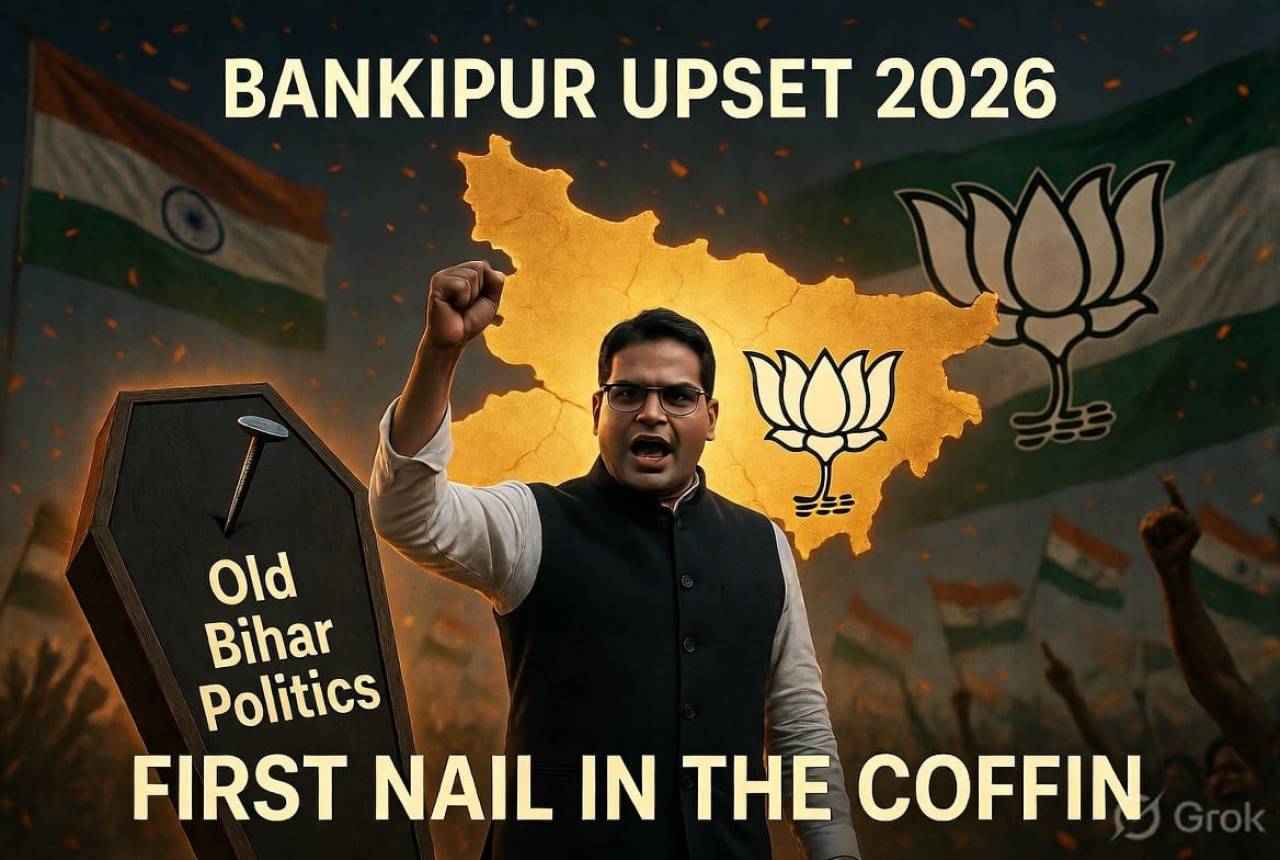
Another silent factor weakening the opposition’s position was the absence of Prashant Kishor from the electoral fray. After building expectations for years through his state-wide outreach, Kishor’s refusal to contest created a hollowness in his larger political narrative. Many who followed his “Jan Suraaj” movement found themselves without a clear political destination. While Kishor played a significant role in raising political awareness—teaching voters to question promises, assess leadership, and demand development—his decision not to translate that influence into electoral participation left a vacuum at a crucial moment.
Yet Kishor’s influence cannot be dismissed. His three-year journey across Bihar helped build a more discerning electorate. Villagers, youth, and women—traditionally swayed by emotional appeals—were encouraged to examine governance records, fiscal realities, and development indicators. This shift in voter consciousness intensified scrutiny of the Mahagathbandhan’s promises and sharpened comparisons with the NDA’s track record.
And when that comparison unfolded, Nitish Kumar’s long political career emerged as a stabilising force. His record—two decades as Chief Minister and earlier experience as a Union minister—carried a reputation for honesty and administrative reliability. For many, Nitish remained the leader who replaced the lawlessness of the 1990s with improved roads, policing and basic governance. When the fear of returning to the “jungle raj” era resurfaced in the campaign, it reinforced Nitish’s standing as Bihar’s anchor figure.
The resulting mandate was therefore not a sudden wave but a layered verdict. It reflected trust built over years, fatigue with ungrounded promises, and the electorate’s preference for predictability over populism. The NDA’s campaign strategy, combined with Nitish Kumar’s residual goodwill and the opposition’s miscalculations, produced a political outcome that was both sweeping and meticulously shaped.
The 2025 Bihar election demonstrates that Bihar’s voters are no longer passive recipients of political messaging. They are informed, analytical and increasingly impatient with promises that sound grand but lack substance. They weigh a leader’s past performance against future claims. They remember the 1990s. They recognise delivery. And they reward credibility.
Now, as the NDA prepares to govern with a renewed mandate, the responsibility is clear: convert this trust into progress. Bihar has announced its expectations through a decisive vote. The message is unmistakable—governance must be grounded in realism, continuity and measurable change. The electorate has chosen stability; it now waits for results that match the magnitude of this historic verdict.
By Gautam Jha
Managing Editor
























Leave a Comment