
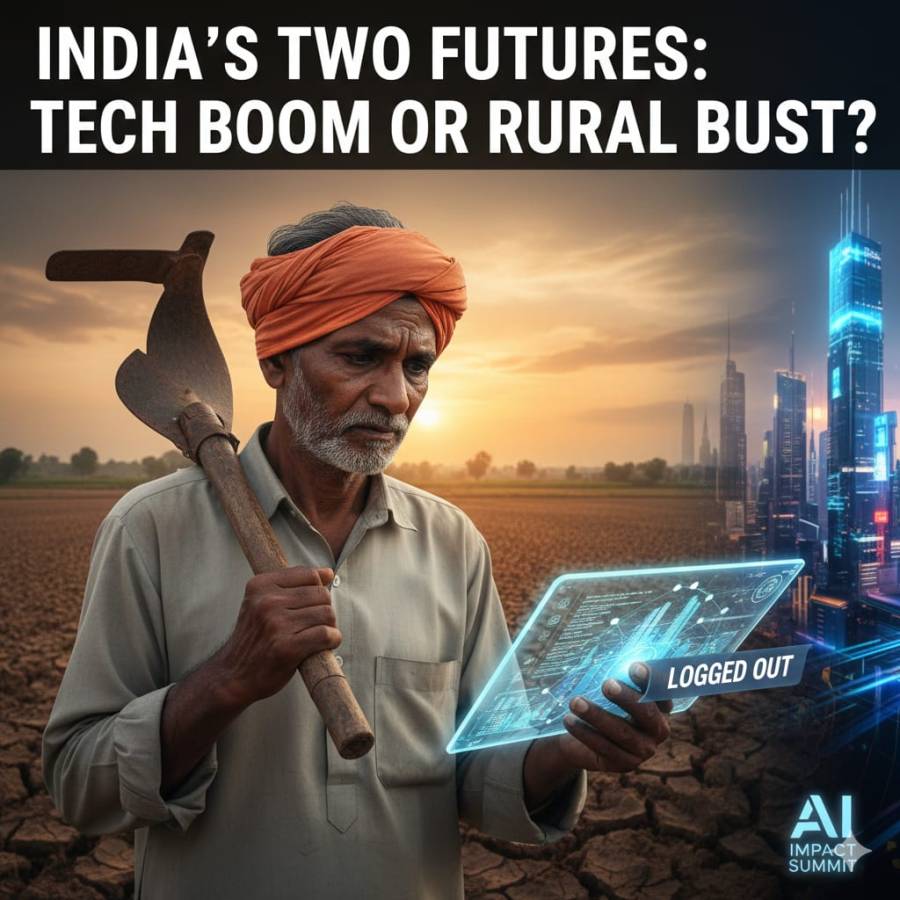
India’s tech revolution is accelerating — but who gets to log in, and who is being quietly logged out?
António Guterres didn’t come to New Delhi to pat tech giants on the back. Standing at the podium of the New Delhi AI Impact Summit 2026 this week, the UN Secretary-General’s message was a cold shower for the "digital superpower" narrative. He spoke of a world being carved up into a private club for billionaires, warning that the Global South and specifically the millions living on the margins are being systematically "logged out" of the future.
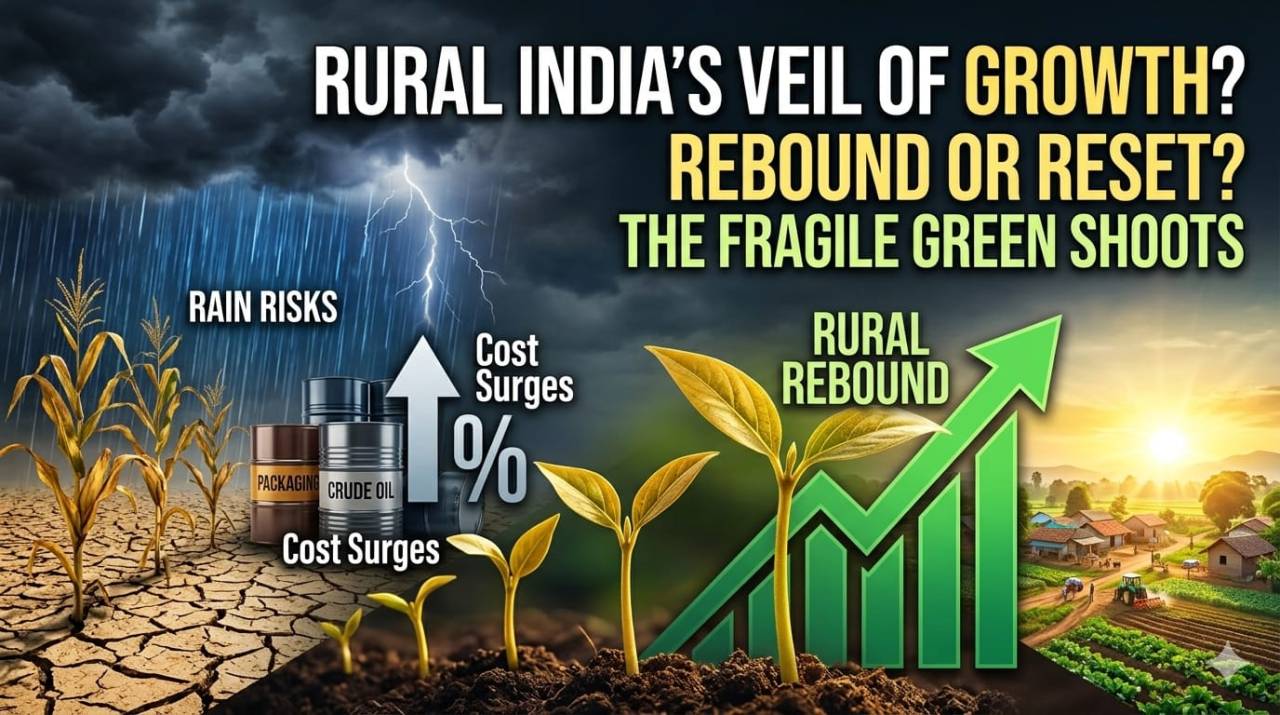
In India, that "logged out" population isn't a small minority. It is the 65 percent of our people who still call rural villages home. While the air-conditioned corridors of Bengaluru and Delhi talk about a "New India," the reality in a village in Bihar or a farm in Maharashtra is that this new tech ecosystem is acting more like a wedge than a bridge. We are staring at a future where the demographic dividend we’ve bragged about for decades—our massive, young, working-age population—could transform into a demographic disaster if the tools of the future remain an urban monopoly.
The math Guterres presented was simple but damning. He called for a $3 billion global fund to help developing nations catch up—a pittance, he noted, representing less than 1 percent of the annual revenue of a single tech titan. But money is only the surface of the problem. The deeper issue is the "hidden costs" that rural India will likely pay for urban progress.
Think about the resources. These massive data centers that run our "intelligent" world are thirsty and hungry. They consume millions of gallons of water for cooling and enough electricity to power entire small cities. Guterres warned against shifting these environmental costs onto vulnerable communities. In a country where groundwater is already a vanishing luxury for farmers, are we going to divert their lifeblood to keep the servers of a shopping app running cool? It’s a question no one in the high-rise boardrooms seems to be asking.
Then there is the "skill wall." In the city, a young graduate can take a six-month course to stay relevant. In a village where the primary school is struggling for basic supplies and the internet is a "sometimes" luxury, the jump to this new economy is impossible. We are creating a two-tier India. Tier One lives in an automated, high-speed world of convenience. Tier Two—the 65 percent—is being left to compete with machines for the only thing they have: manual labor. When a machine can do the work of a hundred hands for a fraction of the cost, what happens to the dignity of the Indian worker?
The UN Chief talked about "guardrails" and human oversight. For India, that guardrail needs to be a language barrier—or rather, the breaking of one. Most of this new ecosystem is built in English, by the elite, for the elite. If the tools of the future don't speak Marathi, Bhojpuri, or Tamil, they aren't tools for India; they are barriers to entry.
Guterres also pointed out that this technology is currently being used to "optimize" everything. In simple language, that means cutting out the middleman. But in rural India, the "middleman" is often a local trader, a small-scale distributor, or a village artisan. When a global algorithm optimizes a supply chain, it doesn't care if it destroys a local village economy that has sustained families for generations. It only cares about the bottom line of that billionaire club Guterres mentioned.
As journalists, we often get caught up in the "magic" of what these systems can do. But the Secretary-General’s address was a reminder to look at what they undo. If we don't demand that this tech be built from the ground up—starting with the needs of a farmer in a drought-hit district rather than a software engineer in a penthouse—we are participating in the greatest disenfranchisement in human history.
The demographic dividend is a ticking clock. We have a young, hungry population ready to work. If we give them tools that enhance their lives, India wins. But if we allow this ecosystem to remain an urban monopoly, we are effectively telling 900 million people that they are obsolete.
Guterres left us with a choice: technology as a public good or technology as a tool for extreme inequality. For the 65 percent of India watching from the rural heartland, the choice isn't academic. It's a fight for a seat at the table before the doors are locked for good.



















Leave a Comment