
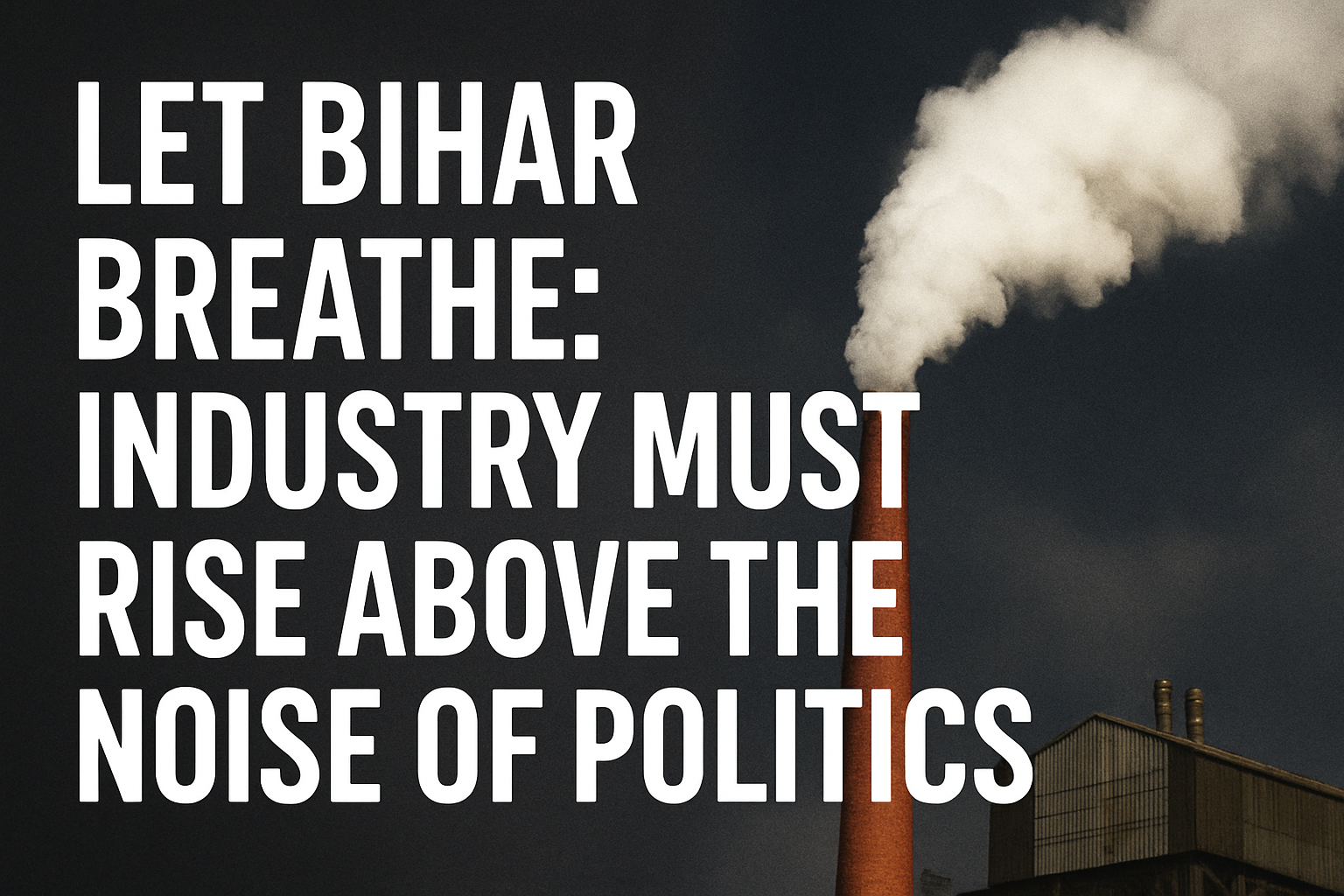
The debate in Bihar today is not about the future of a single project. It is about the very right of Bihar to breathe the air of modern industry. The state government has given land to the Adani Group for a power plant. Immediately the opposition raised the familiar cry of crony capitalism. They called it a betrayal of farmers and a collusion between BJP and corporate power. The charge may be sharp but the truth is more complex.
Bihar remains one of the poorest states in India. Its youth leave for Delhi, Punjab, Gujarat and Maharashtra to find work. Its factories are few. Its electricity supply is unreliable. Its people are ambitious but opportunity is scarce. If a company brings investment worth thousands of crores and promises jobs and energy, the instinct of any rational society should be to welcome it with both caution and hope. That is the balance Bihar must strike.
There is no virtue in poverty. For decades Bihar has carried the burden of being left behind. Leaders from every party have promised transformation. Yet every election leaves the state where it was before, with better slogans but no industries. Development costs. Progress requires land, capital and sacrifice. No one builds factories in the air. The soil of Bihar has to host the machines that can finally lift its people out of poverty.
The question is not whether Adani should be allowed in. The question is whether the deal is fair, transparent and beneficial to the people. Congress says the government has given away land at a throwaway price. Reports suggest that orchards and lakhs of trees may be lost. Farmers claim their voices were ignored. These allegations cannot be brushed aside. If development is to win trust, then the process must be open. Land must be taken with consent. Compensation must be full and timely. Rehabilitation must be real and not token. Environmental safeguards must be strict.
The opposition has a duty to raise these concerns. But the opposition also has a duty to offer solutions. It cannot simply say no to every investment. To oppose a project without proposing an alternative industrial policy is to condemn Bihar to permanent backwardness. The politics of rejection is not leadership. It is abdication.
The government too has a duty. If it hides behind closed doors, suspicion will grow. If it publishes the full terms of the lease and the obligations on Adani, citizens will judge for themselves. The government must set up independent monitoring. Economists, environmental scientists and representatives of affected communities should examine whether promises are being kept. Every concession must be tied to performance. Land should not be charity. It should be an instrument of accountability. If jobs are not created and local procurement not secured, the deal must be penalised. That is how a poor state can turn negotiation into strength.
Bihar cannot be trapped in the false debate between surrender and obstruction. The path forward is to negotiate hard, insist on fairness and then welcome investment. The people do not want empty politics. They want factories that employ their children. They want steady electricity that can run workshops and small industries. They want hospitals with modern equipment. They want roads that are not washed away with every monsoon and floods. Only industry can provide the revenue base for such transformation.
There is also a larger truth. India as a nation cannot rise while one of its largest states remains stagnant. Bihar is not asking for charity. It is demanding its right to join the industrial map of the country. For too long it has been seen only as a supplier of migrant labour. The dignity of Bihar lies in creating jobs within its own borders. That dignity requires courage from both government and opposition.
Critics say Adani is too powerful. That may be true. But power is checked not by denial of investment but by the strength of institutions. Bihar must use the law, the courts, the media and civil society to ensure that no corporate interest overwhelms the public good. But to slam the door on industry is to lock Bihar in poverty.
Let us separate development from the daily noise of politics. Let the government face scrutiny. Let farmers and citizens be protected. But let the factories come. Let the machines run. Let Bihar breathe the air of growth after decades of suffocation.
History will not forgive leaders who preferred easy slogans over hard choices. Bihar needs steel in its policies and not just steel in its mills. The choice is between a state that exports only its people and a state that exports its products. The choice is between slogans on poverty and the reality of prosperity. For once, let Bihar choose the harder path of growth.
This debate is not about Adani alone. It is about the right of Bihar to be industrial, modern and self-reliant. That right must not be sacrificed at the altar of party politics. It belongs to every Bihari who has waited too long for the dignity of development.

























Leave a Comment