
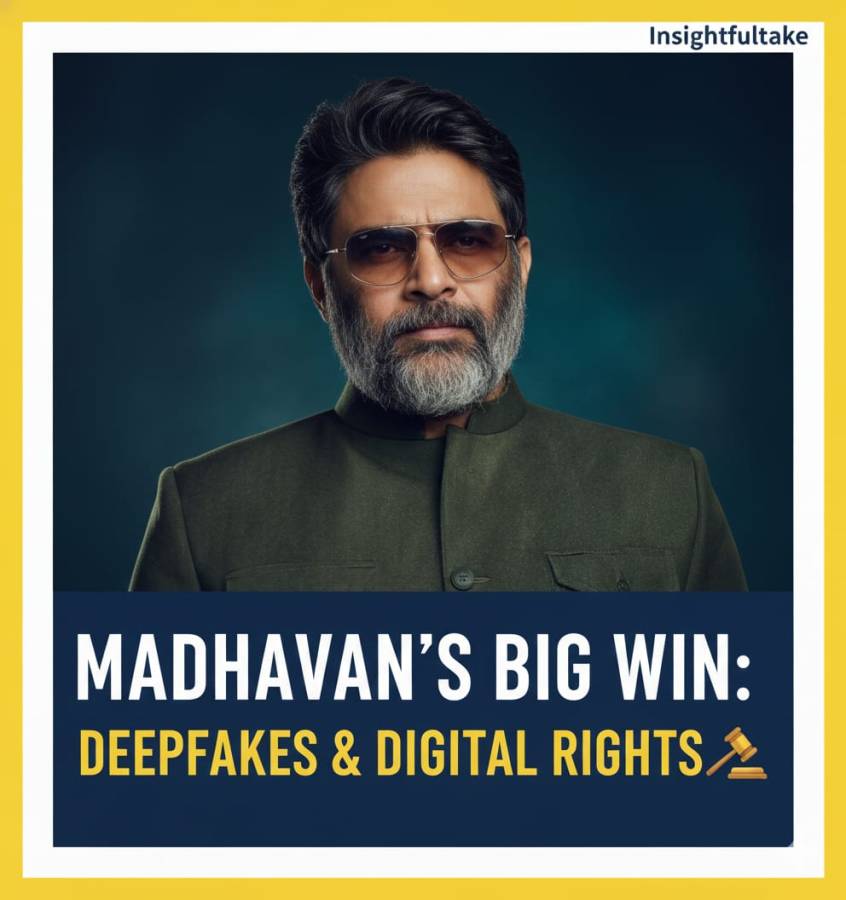
In an era where Artificial Intelligence (AI) can replicate a person’s voice and face with startling realism, the legal boundaries of digital identity are being tested as never before. A recent order by the Delhi High Court, protecting the personality rights of acclaimed actor R. Madhavan, marks a significant step in addressing the misuse of technology in the online space.
The court intervened after a surge of obscene, misleading, and AI-generated content using the actor’s likeness began circulating across digital platforms—raising urgent questions about privacy, consent, and accountability in the age of deepfakes.
The Core of the Dispute
R. Madhavan approached the Delhi High Court seeking protection against the unauthorized commercial and defamatory use of his identity. His legal team highlighted multiple forms of misuse, including:
- Deepfake videos that falsely and convincingly portrayed the actor
- Fake movie trailers for non-existent films such as Shaitaan 2 and Kesari 3, created to mislead fans and attract clicks
- Obscene and explicit content generated using his face without consent
- Unauthorized merchandise sold online using his image for profit
The actor argued that such content not only exploited his reputation but also caused irreparable harm to his dignity and public image.
What Are “Personality Rights”?
Personality Rights—also known as Publicity Rights—allow individuals, particularly public figures, to control the commercial use of their name, image, voice, and likeness.
While India does not yet have a dedicated Personality Rights Act, courts have consistently upheld these rights by linking them to:
- The Right to Privacy (Article 21 of the Constitution)
- The Right to Publicity, developed through judicial interpretation
The principle is straightforward: a reputation built over years cannot be commercially exploited by third parties without consent.
Why the Delhi High Court’s Order Matters
Granting an interim injunction, Justice Manmeet Pritam Singh Arora underscored several crucial points that resonate far beyond this individual case.
1. The AI Challenge
The court acknowledged that technology is advancing faster than the law. While broader legal questions surrounding AI-generated content remain unresolved, the immediate concern was preventing irreparable harm to the actor’s dignity and identity.
2. Platform Responsibility and Due Diligence
Notably, the court recorded that Madhavan had first approached social media platforms to report the misuse before filing the suit. This establishes an important standard of due diligence, suggesting that victims should attempt platform-level remedies before legal escalation.
3. Immediate Takedown Orders
The court directed platforms to make obscene content “invisible” or remove it entirely, and restrained entities from selling merchandise that exploited the actor’s persona.
A Growing Trend Among Celebrities
R. Madhavan joins a growing list of Indian public figures—including Amitabh Bachchan, Anil Kapoor, and Aishwarya Rai Bachchan—who have sought similar “John Doe” orders, aimed at unknown or anonymous offenders.
These cases reflect a shift in legal thinking: the fight is no longer just about protecting celebrity status, but about safeguarding human dignity in an era where deepfakes can be weaponized for harassment, fraud, or defamation.
Final Take
The court has scheduled a further hearing for May 2026, when it will examine the wider implications of AI-generated content in greater depth. Until then, the interim order serves as a protective shield, ensuring that Madhavan’s identity cannot be misused for obscenity or unauthorized profit.
For the wider public, this case sends a clear message: the digital world is not a lawless frontier. As AI continues to reshape reality, India’s legal system is beginning to draw a firm digital line, insisting that innovation must respect personal boundaries, consent, and individual rights.












Leave a Comment