

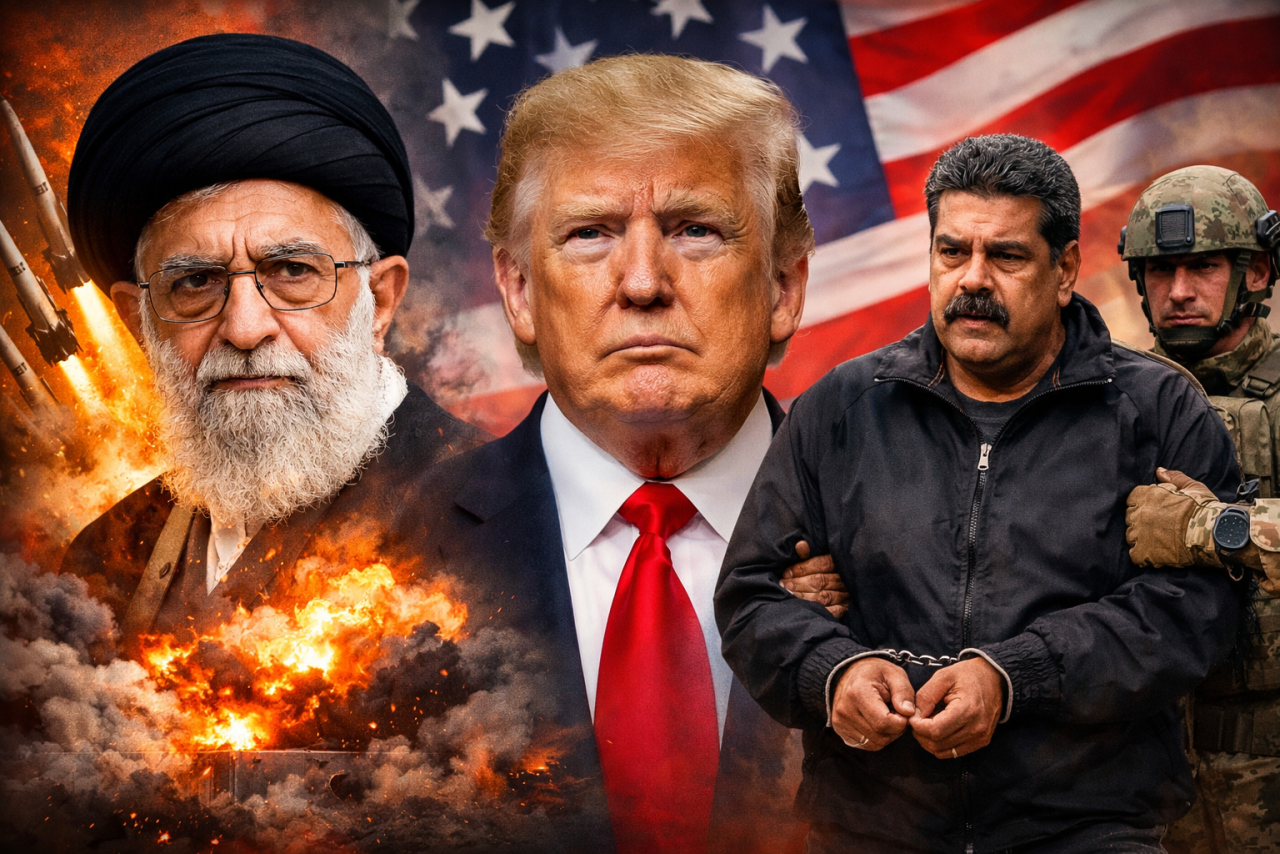
The idea that Donald Trump ordered military action against Venezuela to divert attention from renewed discussion around the Epstein files and to gain access to Venezuelan oil has circulated widely on social media and opinion platforms. It is a serious claim, and because it combines national security, personal reputation, and global energy politics, it deserves careful examination based on facts, timelines, and how governments actually function.
To begin with, there is no verified evidence proving that any U.S. military action against Venezuela was launched to distract from the Epstein files. Allegations linked to Jeffrey Epstein have existed for many years and have involved powerful figures across political, business, and social circles. While media attention to Epstein-related documents periodically increases, no new legally established finding has directly implicated Donald Trump in criminal wrongdoing. Without a direct legal threat or sudden revelation uniquely damaging to Trump, the argument that a foreign military action was needed as a diversion becomes weak.
It is also important to understand how military decisions are made in the United States. Large-scale military operations are not impulsive acts driven by a single individual’s personal concerns. Such actions involve intelligence assessments, legal review, coordination between the Pentagon and intelligence agencies, and often consultation with allies. Planning takes months, sometimes years. This reality makes it unlikely that a short-term domestic embarrassment could immediately trigger a complex international operation.
Supporters of the diversion theory often refer to the concept of “wag the dog,” where leaders create foreign conflicts to shift attention from internal problems. While this idea exists in political theory, real-world examples require strong proof such as leaked documents, whistleblower testimony, or consistent insider reporting. In the current case, no such credible evidence has surfaced. Correlation in timing alone does not establish intent.
The oil argument, however, deserves a more nuanced discussion. Venezuela holds the world’s largest proven oil reserves, yet its production has collapsed due to mismanagement, sanctions, and infrastructure decay. For years, U.S. policymakers from both major parties have viewed Venezuela’s oil sector as strategically important. However, modern U.S. energy policy does not rely on territorial control or military intervention to access oil. The United States is one of the world’s largest oil producers, and American companies typically operate through contracts, not occupation.
Historically, U.S. pressure on Venezuela has focused on sanctions, diplomatic isolation, and legal action rather than direct military force. Indictments against Venezuelan leaders for drug trafficking were issued as early as 2020. These actions were framed as law enforcement and national security measures, not oil seizures. If oil were the primary goal, easing sanctions and encouraging market access would be a far simpler and less risky strategy than military escalation.
Another key factor is international response. Any military action aimed at resource control would face immediate global backlash, legal challenges, and long-term instability. The costs would far outweigh the benefits. Markets react poorly to uncertainty, and oil infrastructure is highly vulnerable during conflict. From a purely economic perspective, war is a poor tool for securing energy supplies.
Media dynamics also undermine the diversion theory. In the digital age, governments cannot easily control public attention. A major foreign action does not erase domestic controversy; it often multiplies scrutiny. If anything, launching a controversial operation would draw more attention to a leader’s past, not less. History shows that scandals and foreign policy crises often coexist in public debate rather than replace each other.
That said, skepticism toward power is healthy in a democracy. Questioning motives, especially when military force and natural resources are involved, is legitimate. The United States has a long and complicated history in Latin America, and Venezuelans have strong reasons to distrust foreign intervention. But skepticism must be grounded in evidence, not assumption.
Finally, the claim that Donald Trump attacked Venezuela to divert attention from the Epstein files and seize oil remains unproven and speculative. Existing facts point instead to long-standing tensions, legal actions, and strategic disagreements that predate any renewed Epstein-related discussion. Without concrete evidence linking personal embarrassment or oil ambitions to military decision-making, such narratives should be treated with caution. Serious global issues require serious analysis, not conclusions driven by coincidence or political emotion.
By Gautam Jha
Managing Editor




















Leave a Comment