
Democracy is supposed to be the power of the people. It is meant to give every citizen a voice, every community a chance, and every generation a fairer society. But today, around the world, democracy is shaking. From South Asia to Europe, from new democracies to old ones, the system is under fire. Instead of being a way of sharing power, democracy is turning into a tool of the powerful few. Elected leaders are no longer seen as servants of the people but as rulers who enrich themselves. It is time to ask the system a hard question. Has democracy become nothing more than collective loot?
Democracies in Trouble Around the World
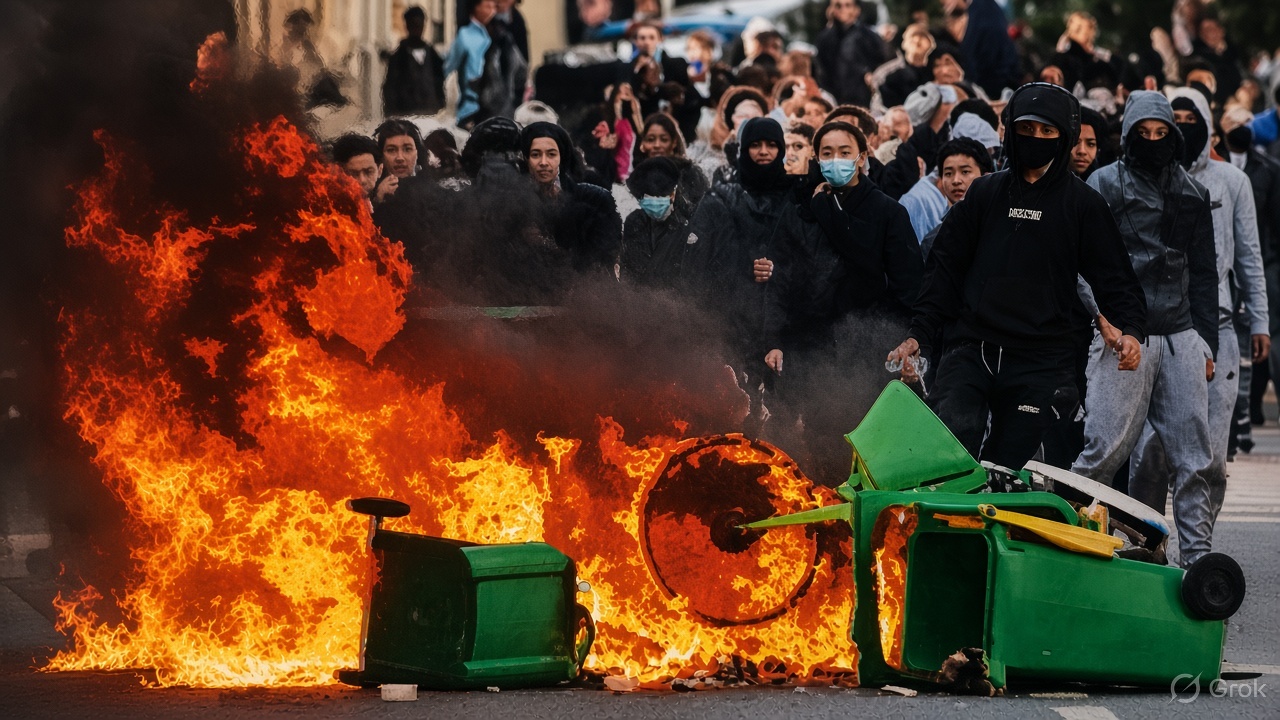
The signs are everywhere. Nepal has been burning with protests against political corruption and the growing sense that leaders are not listening to the young. Bangladesh recently saw violent crackdowns and deaths during mass demonstrations. Sri Lanka is still recovering from an economic collapse that pushed millions into poverty while politicians protected their families and allies. Pakistan continues to steam with unrest in Balochistan and an unstable government in Islamabad. Even France, one of the oldest democracies in the world, faced weeks of strikes and riots in the streets over political class and budget cuts.
The pattern is clear. People are angry. They feel cheated. They see their leaders living in luxury while ordinary citizens struggle for survival. This is not just a South Asian story. It is a global crisis.
India: The Numbers Tell a Dark Story
India is the world’s largest democracy, but size alone cannot hide its cracks. The Association for Democratic Reforms (ADR), which studies elections and politicians, has revealed shocking numbers. Nearly half of all lawmakers in India have declared criminal cases against themselves. Some of these cases are for serious crimes like bribery, assault, or even murder. Yet these candidates win elections.
At the same time, the declared wealth of Indian politicians is rising at record speed. Many MLAs and MPs are worth over 100 crore rupees. This wealth is not accidental. It reflects a system where politics has become a business investment. One contests elections not to serve the people but to multiply wealth.
Now place this fact beside another number. Over 80 crore Indians survive on 10 kilograms of subsidised rice and wheat given by the government every month. This is not a small group. It is more than half the population. It shows that while politicians declare massive fortunes, the majority of Indians are surviving on rationed grain. The contrast could not be sharper.
Media as a Partner in Power
In a democracy, the press is supposed to ask tough questions. It is supposed to hold the government accountable. But in India and many other countries, the media often looks like a partner of those in power. Television debates shout against citizens but rarely question the government. Political leaders are presented as demi-gods. Ordinary people are told that they are lucky to receive free food grains, rather than asking why they need free food in the first place.
Independent journalism is shrinking. Reporters are harassed, small newspapers are denied advertisements, and large channels are owned by businessmen close to politicians. As a result, truth becomes rare, and propaganda becomes daily news. Without an honest press, democracy becomes an empty stage where lies are repeated until they sound like facts.
Why This is a Crisis
A system where criminals win elections, where politicians grow rich while citizens stay poor, and where the media spreads lies is not a democracy. It is loot carried out in the name of the democracy. And this loot has dangerous consequences.
When people lose faith in democracy, they stop respecting the rules of society. They turn to violence in the streets, or to strongmen who promise quick fixes. This is what we saw in Sri Lanka when citizens stormed the president’s house. This is what we see in Pakistan where protests regularly turn violent. This is what we saw in Nepal and Bangladesh where young citizens believe they have no other option but to agitate. And this is what we risk in India if we continue to ignore the gap between politicians and people.
What Can Be Done
The crisis is deep, but it is not hopeless. Democracies can be repaired if there is courage. Some steps are urgent:
- Ban criminals from politics. If a person faces serious criminal charges, they should not be allowed to contest elections. Disclosure of cases in affidavits is not enough. Voters must have candidates who are free of taint.
- Clean up political money. Elections in India cost hundreds of crores. This forces candidates to depend on big businessmen. Strict caps on spending and full transparency of donations are needed.
- Protect the media. Journalists must be free to report without fear. Ownership of large media houses should not be concentrated in the hands of those close to political parties.
- Strengthen institutions. Agencies like the Election Commission, the courts, and anti-corruption bodies must be independent and strong. They should not act as servants of the ruling party.
- Provide universal social protection. Food, health, and education must be treated as rights, not as gifts from politicians. When people have basic dignity, they are less dependent on the ruling class.
The Time is Now
The collapse of Sri Lanka’s economy showed how quickly a democracy can fail when corruption becomes normal. The unrest in Nepal, the bloodshed in Bangladesh, the protests in Pakistan, and even the strikes in France all show that citizens will not stay quiet forever. India must learn from these examples.
Reform cannot wait for another generation. If half of our leaders are criminals, if our media acts like a cheerleader, and if our citizens live only on rationed food, then democracy is not working. It is being looted in broad daylight.
The people of India gave themselves a constitution to secure justice, liberty, equality, and fraternity. These words are not slogans. They are promises. Today those promises are broken. The only way forward is to overhaul the system, cleanse it of crime and corruption, and return power to the people where it truly belongs.
The change is not a dream for the future. It is a necessity for the present. Democracy can only survive if it serves the people. And for that, the time is now.














Leave a Comment