
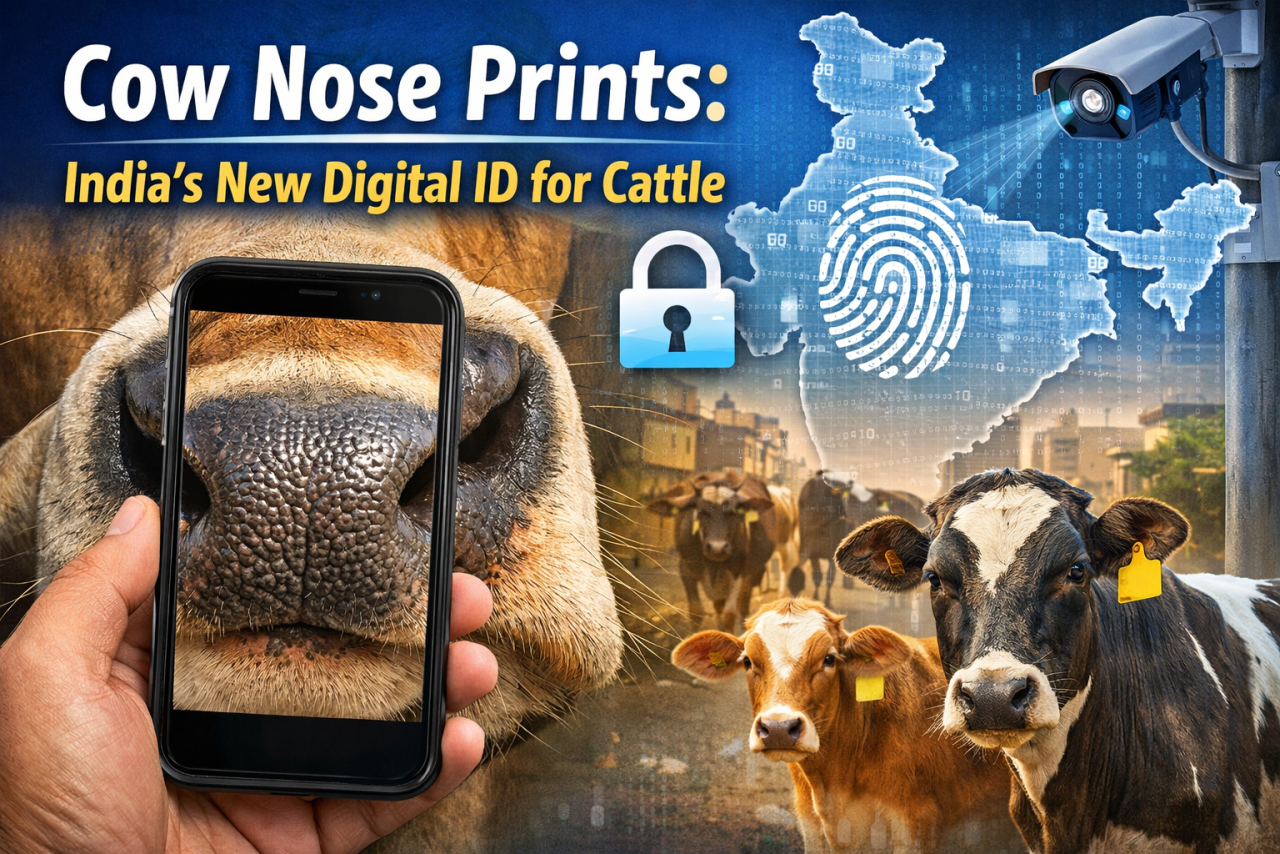
For the first time in India, cow nose prints are being used to track and identify cattle.
In India, the cow is more than just an animal. It is part of culture, livelihood, and faith. Cows provide milk, dung, and even economic security for millions of families. But for farmers and authorities, managing cows is a big challenge. How do you tell one cow from another? How do you stop theft or keep accurate health records? An idea long known to veterinary science is now being tested for the first time in India: the cow’s nose print.
You have probably heard of fingerprint scanning for humans. Every human has a unique pattern on their fingers. In the same way, every cow has a unique pattern of lines and ridges on its nose. No two are alike. This is called a nose biometric. Today, in India, this simple idea is turning into a powerful tool to protect cows and support farmers.
Why Do We Need Nose Biometrics?
Imagine a farmer with fifty cows. They can all look very similar. Ear tags can fall off, and brands can fade or cause pain to the animal. Without a permanent way to identify each cow, many problems arise.
If a cow is stolen, proving ownership becomes difficult. Keeping track of a cow’s health history, milk yield, or vaccination schedule becomes guesswork. For government schemes that provide insurance or subsidies, it is challenging to ensure the right cow is registered. Nose biometrics solves this by giving each cow a permanent and unforgeable ID.
How the Technology Works
The process is simple and cow-friendly. A farmer or official cleans the cow’s nose and takes a close-up photo using a smartphone. Special software, called an algorithm, reads the lines and patterns on the nose and converts them into a unique digital code. This code is stored in a secure database.
From that day on, the cow has a digital identity for life. To check the cow again, another photo is taken, and the system matches it to the original code within seconds. It is fast, accurate, and does not harm the animal.
Ahmedabad Leads the Way
Ahmedabad is one of the first cities in India to test this technology in 2026. The Ahmedabad Municipal Corporation (AMC) is using nose prints along with AI-enabled CCTV cameras to track both stray and registered cows.
Currently, about 1.1 lakh cows are registered in Ahmedabad with RFID tags and microchips, and their nose prints are being added to the system. The goal is to quickly identify cows, trace owners, and prevent accidents caused by stray animals on city roads. The pilot project has already shown promising results in reducing stray cow-related incidents and ensuring faster owner notifications.
The AI model used by the AMC considers nose patterns along with other features like facial marks and eye shapes to improve accuracy, even in crowded areas. This combination makes it possible to track cows in real-time while respecting their safety and comfort.
Other States Are Catching Up
Ahmedabad is just the beginning. Several other Indian states are exploring nose biometrics for cows:
- Uttar Pradesh is testing nose prints to curb cattle theft and improve records in gaushalas.
- Madhya Pradesh has introduced biometric IDs in state cow shelters to ensure proper distribution of subsidies and veterinary care.
- Karnataka and Telangana are working with agri-tech startups to link nose prints with apps that track milk production, breeding cycles, and health records.
These initiatives show a growing interest in digital identification of cows across the country. Nose biometrics is no longer just a novelty — it is becoming a practical tool for farmers and authorities alike.
The Benefits of Nose Biometrics
- Preventing Theft: Stolen cows can be identified instantly, and ownership can be verified quickly.
- Better Health Management: Vets can access a cow’s full medical history with a simple scan, helping prevent diseases and improve treatment.
- Supporting Government Schemes: Subsidies, insurance, and other benefits reach the right farmers and cows, reducing fraud.
- Urban Safety: Stray cows on busy roads can be tracked and returned to their owners, reducing accidents and traffic disruptions.
- Improved Breeding and Milk Yield: Farmers can monitor milk production and make informed breeding decisions based on accurate data.
- Cultural Fit: The technology is non-invasive, aligning with India’s emphasis on cow welfare and respect for animals.
Challenges on the Ground
Despite the promise, rolling out nose biometrics nationwide is not easy. Many rural areas still have poor internet connectivity, making it difficult to upload photos and access the central database. Farmers and municipal staff need training to take good quality images.
Building and maintaining a central database for millions of cows is also a huge task. The cost of smartphones and software must remain low for small farmers to adopt the system. Lastly, linking databases across states for nationwide tracking requires cooperation and standardization.
A Step Into the Future
Even with these challenges, the future looks bright. Digital India initiatives, smartphone penetration, and AI-based solutions are making it possible to scale nose biometrics. Ahmedabad’s 2026 pilot is a clear example of how technology can solve traditional problems in a humane and efficient way.
The humble nose print is proving to be more than just a scientific curiosity. It is a simple, safe, and effective way to protect cows, support farmers, and manage urban livestock. From Ahmedabad to other states, India is slowly giving every cow a name — and a permanent digital identity.
This is not just technology. It is about securing livelihoods, improving animal welfare, and modernizing traditional practices. One nose print at a time, India is learning to see its cows as unique individuals in the digital age.




















Leave a Comment