
Many vegetarian foods claim to be high in protein, but only a few actually help your body build strength.
The Best Protein Sources for a Vegetarian Diet
Many people talk about protein at the gym or the office. However, many vegetarians still rely on guesswork to meet their daily needs. It is important to know which foods actually help build muscle and which ones are just snacks.
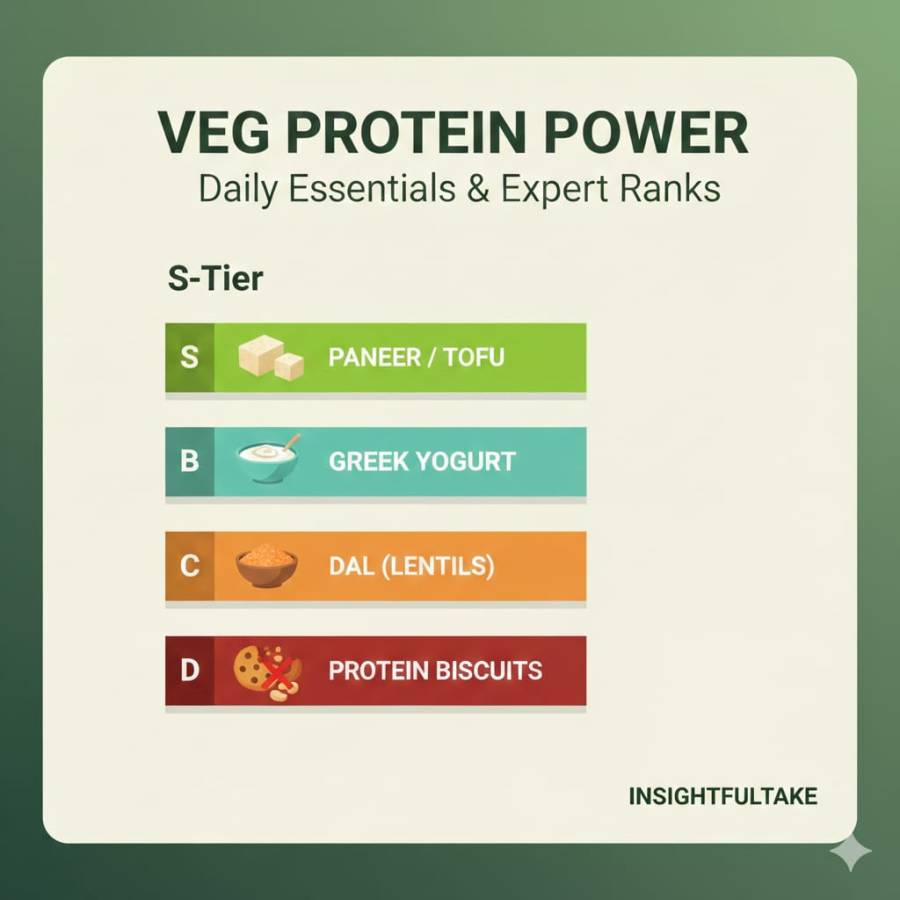
Celebrity fitness trainer Siddhartha Singh recently ranked common vegetarian foods into tiers. He used a scale from S-tier, which is the best, to D-tier, which is the least effective. This guide helps you choose the right protein for your daily meals.
The Top Picks: S and A Tiers
If you want the most value from your food, you should look at paneer and tofu. Singh places these in the S-tier. They are the most reliable protein sources for vegetarians. They contain high amounts of protein per serving. If you want to be even healthier, you should choose low-fat paneer. This gives you protein without extra calories from fat.
Next is Greek yogurt, which sits in the A-tier. Greek yogurt is a favorite among fitness experts because of its high protein content. It usually contains about 8 grams of protein per 100 grams. This makes it a good option for breakfast or a post-workout snack. It is easy to digest and very filling.
Common Staples: B and C Tiers
Many Indian households rely on dal or lentils for protein. Singh places dal in the B-tier. Dal is a common and comforting staple. However, it has a limitation. It is often an incomplete protein. This means it does not contain all essential amino acids on its own. The body may not absorb its protein as efficiently as it absorbs protein from paneer. Dal is still healthy, but it should not be your only protein source.
Nuts fall into the C-tier. Many people assume nuts are a strong protein source. In reality, nuts are mainly a source of healthy fats. They are nutrient-dense and easy to snack on. However, they provide very little usable protein. Only a small portion of the protein in nuts is properly digested. Nuts are good as a snack, but they should not be used to meet daily protein needs.
What to Avoid: D Tier
The D-tier includes protein biscuits. Many packaged snacks claim to be healthy because they mention protein on the label. Singh advises caution. Most of these products are regular biscuits with a small amount of added protein. They often contain high levels of sugar and refined flour. If a biscuit advertises protein, it is usually better to avoid it. These products are highly processed and do not support fitness goals.
How to Plan Your Daily Meals
To meet your protein needs, you should focus on foods from the top tiers each day. Start your morning with Greek yogurt. Include paneer or tofu in lunch or dinner. Dal and nuts can still be eaten, but they should support your main protein sources rather than replace them.
Summary Table of Protein Ranks
|
Tier |
Food Source |
Why it is ranked this way |
|
S-Tier |
Paneer / Tofu |
Most reliable sources with high protein per serving |
|
A-Tier |
Greek Yogurt |
High protein and easy to digest |
|
B-Tier |
Dal (Lentils) |
Healthy staple but incomplete protein |
|
C-Tier |
Nuts |
Mostly fats with very little usable protein |
|
D-Tier |
Protein Biscuits |
Highly processed snacks that should be avoided |
Eating the right protein does not need to be complicated. If you focus on whole foods and avoid protein-labeled junk, you can feel stronger and healthier.




















Leave a Comment