
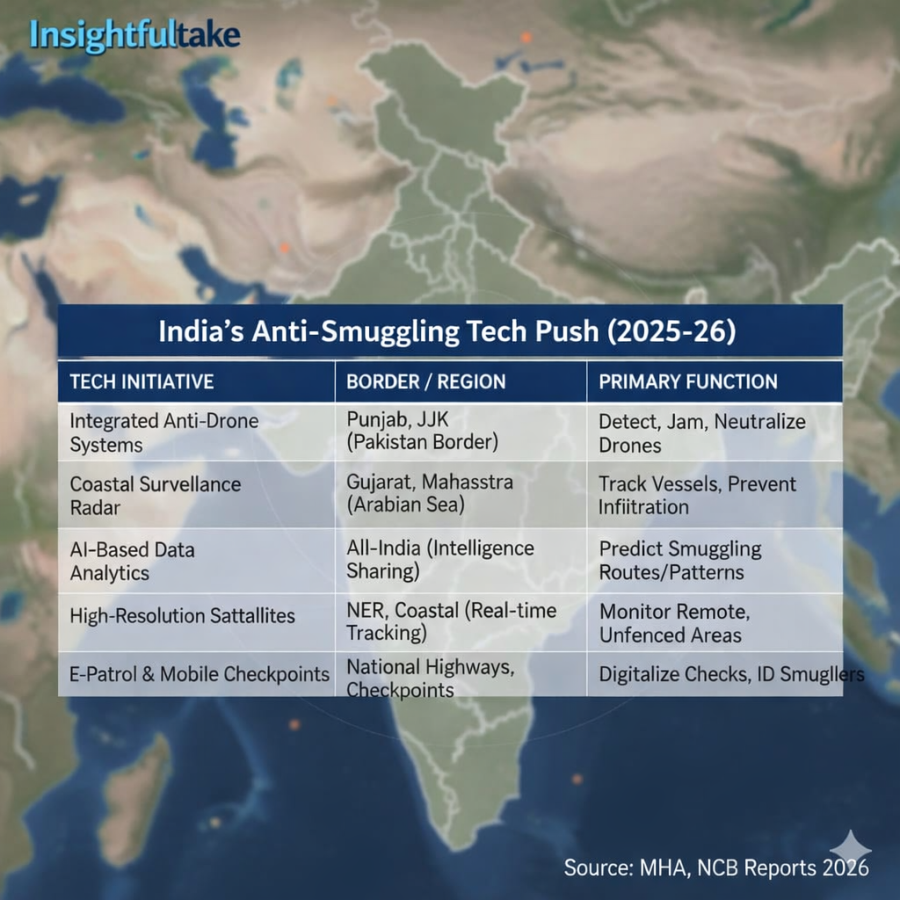
India is facing a growing security problem along its land and sea borders. Large amounts of illegal drugs and weapons are entering the country every year. This smuggling is not limited to one area. It is happening across several borders and through different routes.
The main sources of these illegal items are Pakistan, Afghanistan, and Myanmar. Drugs such as heroin, opium, and synthetic substances are entering India along with pistols, ammunition, and other small weapons. These items are not only harming public health but are also strengthening criminal networks. Security agencies believe that foreign-based groups are actively supporting these activities. The money earned from drug sales is often used to fund crime, terrorism, and anti-national actions. Smuggling networks take advantage of India’s long borders, difficult terrain, and heavy trade movement.
In some areas, borders pass through farms, forests, rivers, and coastal waters. This makes constant monitoring very difficult. Local smugglers and handlers help move the goods once they enter Indian territory. These items are then transported to big cities where they are sold or distributed further. Law enforcement agencies such as the Border Security Force, Coast Guard, Navy, and state police are under constant pressure to stop these activities.
Despite regular seizures and arrests, smugglers continue to change their methods. They use technology, new routes, and local support to avoid detection. This has turned drug and weapon smuggling into one of India’s most serious internal security challenges today.
The Use of Drones on the Western Border
On the western border with Pakistan, smugglers have started using drones on a large scale. Drones have become a preferred tool because they reduce direct contact with security forces. Smugglers do not need to cross the border fence. The drones fly at low heights and mostly operate at night.
In 2024, the Border Security Force seized 294 drones in the Punjab region alone. These drones were carrying heroin packets and small weapons such as pistols and ammunition. The drones usually drop the packets in agricultural fields near the border. Local contacts collect them within minutes.
This method is difficult to track. Drones are small and hard to spot on radar. Poor visibility at night makes detection even harder. Security forces have increased patrols and installed anti-drone systems, but the challenge remains serious.
Maritime Routes and Large Shipments
The sea route is used for transporting very large quantities of drugs. Afghanistan produces a large amount of heroin. This heroin is smuggled through international waters and brought towards India using ships and fishing boats.
The Arabian Sea has become a major route for such activities. Smugglers hide drugs inside containers on commercial ships. Sometimes they transfer drugs from one boat to another at sea. The Gujarat coast has become a sensitive area in recent years.
Authorities have seized thousands of kilograms of drugs from boats and ships operating near this coast. Many of these shipments originate from ports in Iran or the Gulf region. Coastal surveillance has been strengthened, but the long coastline remains difficult to monitor fully.
Challenges in the Northeast
The northeastern region of India faces a different but equally serious challenge. It shares a long border with Myanmar. This region lies close to the Golden Triangle, which is known for drug production.
In 2024 and early 2025, officials seized large quantities of opium and synthetic drugs like methamphetamine. Thick forests, hills, and remote villages make border monitoring difficult. Insurgent groups are also involved in drug trafficking.
These groups use drug money to buy weapons. This worsens violence and instability in the region. Security forces continue operations, but geography remains a major challenge.
Impact on National Security
Drug and weapon smuggling is not just a crime issue. It is a threat to national security. Drug money is often used to support narco-terrorism and other illegal activities.
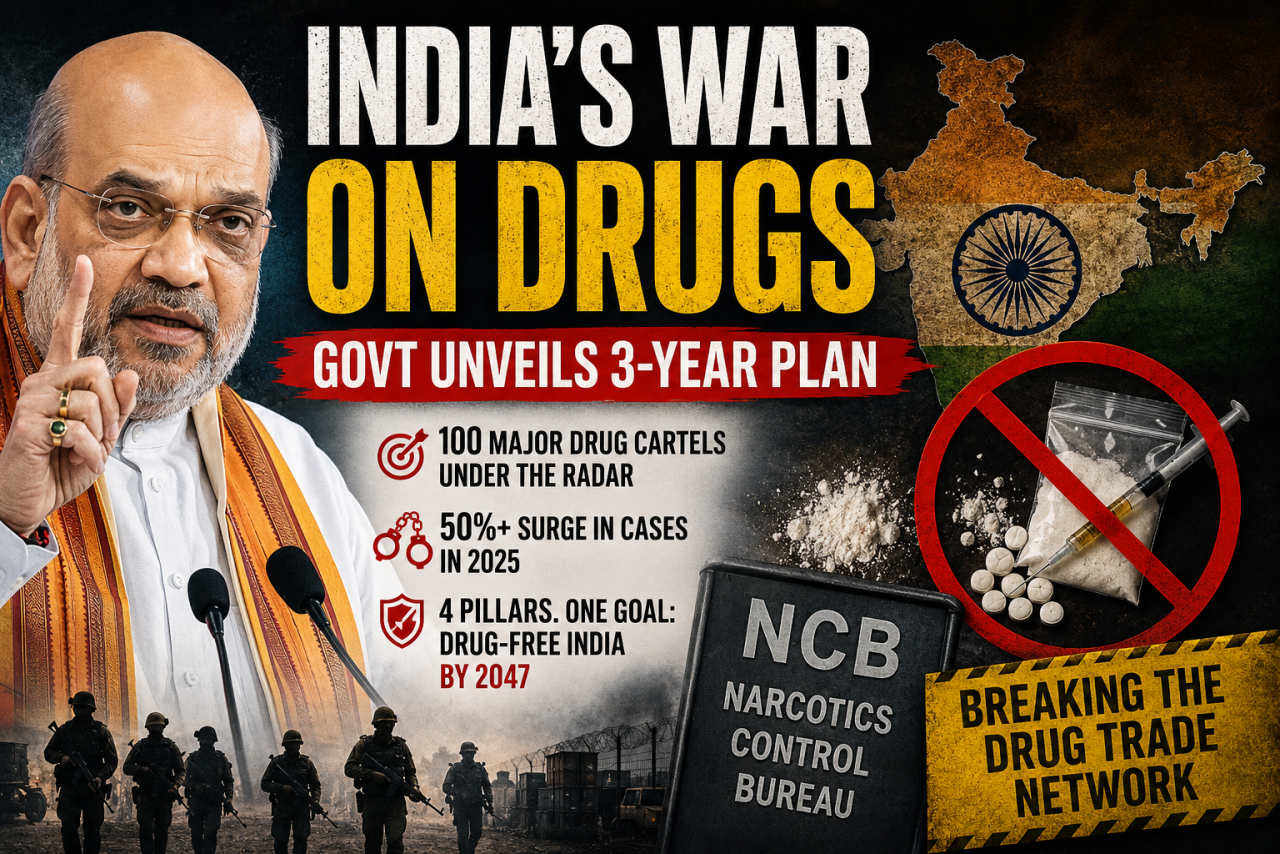
The government has taken steps such as installing anti-drone systems, increasing coastal patrols, and using satellite surveillance. The fight continues as India works towards becoming drug-free by 2029.


















Leave a Comment