
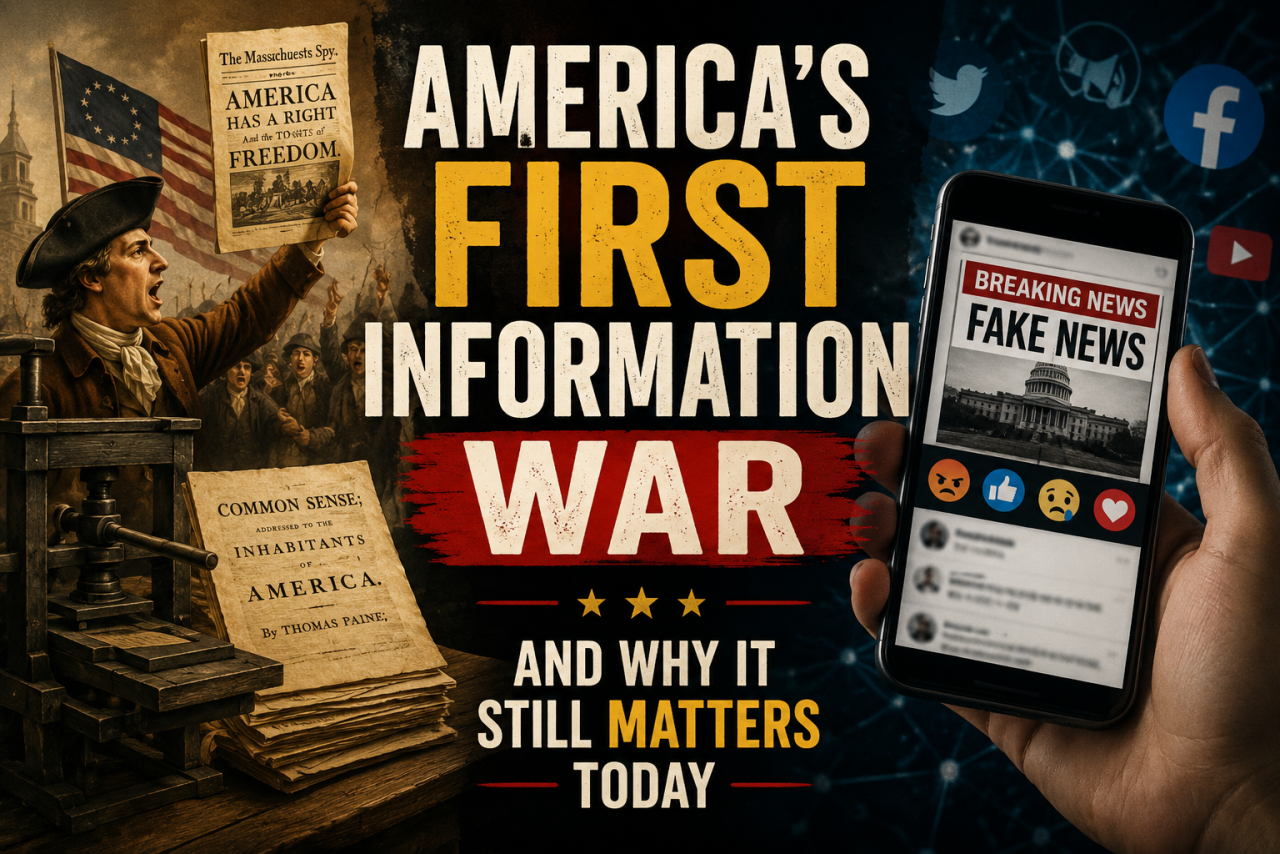
Every generation faces an information crisis. George Goodwin's Propaganda Wars of the American Revolution reveals how battles over narratives shaped history long before social media, algorithms, and misinformation dominated headlines.
Every generation goes through an information crisis, and so do we. Today, we blame social media algorithms, fake news websites, and AI-generated content for distorting public debate and deepening divisions. Yet George Goodwin's Propaganda Wars of the American Revolution reminds us that battles over information are far older than the internet. Long before social media feeds and viral posts, political leaders were already shaping narratives, influencing public opinion, and competing to control how events were understood.
Goodwin makes a compelling case that the American Revolution was fought not only with muskets and military strategy, but also with carefully crafted messages designed to persuade ordinary people. His book offers readers a chance to look beyond famous battles and political declarations to understand how ideas, stories, and public sentiment helped shape one of history's most significant political transformations.
Winning Minds Before Winning Battles
When most people think about the American Revolution, they picture soldiers crossing rivers, colonial militias confronting British troops, and the signing of the Declaration of Independence. Goodwin asks readers to look at a different battlefield.
Before armies marched and wars were fought, colonial leaders were already engaged in a struggle to win public support. Newspapers, pamphlets, speeches, letters, and political cartoons became powerful tools for spreading ideas and mobilizing opinion. Revolutionary leaders understood that military success would mean little if they failed to convince ordinary colonists that their cause was worth supporting.
The book shows how events were often presented in ways that strengthened the revolutionary narrative. Incidents that might otherwise have remained local disputes became symbols of a larger struggle for liberty and self-government. The goal was not simply to report events but to give them meaning.
This remains one of the book's most relevant insights. Facts matter, but people are often moved to action when facts are woven into a compelling story.
The Original Influencers
Long before social media personalities and online commentators emerged, the American colonies had their own masters of persuasion.
Goodwin highlights figures such as Samuel Adams and Thomas Paine, who understood how to communicate complex political ideas in language that ordinary people could grasp. Their writings transformed constitutional arguments into powerful calls for action.
Paine's Common Sense is perhaps the best-known example. It did not become influential because it was academically sophisticated. It became influential because it spoke directly to readers and made independence seem both practical and necessary.
Reading about these campaigns today, it is difficult not to notice the parallels. The technology has changed dramatically, but the challenge remains familiar: capturing attention, shaping perception, and persuading people to support a particular vision of the future.
George Washington's Other Battlefield
Most people remember George Washington as a military commander. Goodwin encourages readers to see another side of his leadership.
Washington understood that wars are not won only on battlefields. They are also won in the minds of citizens and soldiers. Maintaining confidence during difficult periods of the Revolutionary War was often as important as achieving military success.
The conflict lasted eight long years, and there were moments when the revolutionary cause appeared fragile. Washington recognized the importance of communication in sustaining morale and preserving public support. He paid close attention to how victories, defeats, and developments were presented to the public.
This aspect of leadership feels particularly relevant today. Governments, businesses, and political movements all understand that public trust can influence outcomes long before final results become visible. Perception is not everything, but it often shapes how people respond to events.
Why This History Feels Familiar
Reading Propaganda Wars of the American Revolution in today's media environment can be an unexpectedly modern experience.
Replace eighteenth-century pamphlets with social media posts, and some of the tactics feel surprisingly recognizable. Political actors still frame events to suit their objectives. Emotional messages still attract more attention than careful analysis. Competing narratives continue to shape public understanding of major events.
The difference lies largely in speed and scale.
A pamphlet that once took days or weeks to circulate can now be replaced by a viral post reaching millions within hours. Artificial intelligence can generate realistic images and convincing text. Social media platforms can amplify information across continents in seconds.
Yet the central challenge remains unchanged. Different groups compete to influence how people interpret events and which version of reality they choose to trust.
Goodwin does not portray propaganda as something inherently sinister. Rather, he demonstrates that communication has always been central to political movements. The same techniques that can divide people can also inspire collective action, build solidarity, and create a shared sense of purpose.
A Valuable Lesson for the Digital Age
One of the strengths of Goodwin's book is its ability to place today's debates in a broader historical context. Discussions about misinformation often treat the problem as something entirely new. This book suggests otherwise.
Understanding how narratives influenced the American Revolution encourages readers to approach modern media with greater awareness. It raises important questions. Who is telling a particular story? What interests are being served? Which facts are being emphasized, and which are being ignored?
The book does not offer easy solutions to today's misinformation challenges, nor does it claim that history provides a simple roadmap for the future. What it does offer is perspective.
Goodwin leaves readers with a useful reminder: the struggle over information did not begin with social media, nor will it end there. The tools have evolved from printing presses to smartphones, but the contest to shape public opinion remains a constant feature of political life.
For readers interested in history, politics, media, and the forces that influence public discourse, Propaganda Wars of the American Revolution provides an engaging and thought-provoking read. More importantly, it reminds us that understanding today's information battles may require looking further into the past than we often imagine.
Every generation goes through an information crisis, and so do we. Today, we blame social media algorithms, fake news websites, and AI-generated content for distorting public debate and deepening divisions. Yet George Goodwin's Propaganda Wars of the American Revolution reminds us that battles over information are far older than the internet. Long before social media feeds and viral posts, political leaders were already shaping narratives, influencing public opinion, and competing to control how events were understood.
Goodwin makes a compelling case that the American Revolution was fought not only with muskets and military strategy, but also with carefully crafted messages designed to persuade ordinary people. His book offers readers a chance to look beyond famous battles and political declarations to understand how ideas, stories, and public sentiment helped shape one of history's most significant political transformations.
Winning Minds Before Winning Battles
When most people think about the American Revolution, they picture soldiers crossing rivers, colonial militias confronting British troops, and the signing of the Declaration of Independence. Goodwin asks readers to look at a different battlefield.
Before armies marched and wars were fought, colonial leaders were already engaged in a struggle to win public support. Newspapers, pamphlets, speeches, letters, and political cartoons became powerful tools for spreading ideas and mobilizing opinion. Revolutionary leaders understood that military success would mean little if they failed to convince ordinary colonists that their cause was worth supporting.
The book shows how events were often presented in ways that strengthened the revolutionary narrative. Incidents that might otherwise have remained local disputes became symbols of a larger struggle for liberty and self-government. The goal was not simply to report events but to give them meaning.
This remains one of the book's most relevant insights. Facts matter, but people are often moved to action when facts are woven into a compelling story.
The Original Influencers
Long before social media personalities and online commentators emerged, the American colonies had their own masters of persuasion.
Goodwin highlights figures such as Samuel Adams and Thomas Paine, who understood how to communicate complex political ideas in language that ordinary people could grasp. Their writings transformed constitutional arguments into powerful calls for action.
Paine's Common Sense is perhaps the best-known example. It did not become influential because it was academically sophisticated. It became influential because it spoke directly to readers and made independence seem both practical and necessary.
Reading about these campaigns today, it is difficult not to notice the parallels. The technology has changed dramatically, but the challenge remains familiar: capturing attention, shaping perception, and persuading people to support a particular vision of the future.
George Washington's Other Battlefield
Most people remember George Washington as a military commander. Goodwin encourages readers to see another side of his leadership.
Washington understood that wars are not won only on battlefields. They are also won in the minds of citizens and soldiers. Maintaining confidence during difficult periods of the Revolutionary War was often as important as achieving military success.
The conflict lasted eight long years, and there were moments when the revolutionary cause appeared fragile. Washington recognized the importance of communication in sustaining morale and preserving public support. He paid close attention to how victories, defeats, and developments were presented to the public.
This aspect of leadership feels particularly relevant today. Governments, businesses, and political movements all understand that public trust can influence outcomes long before final results become visible. Perception is not everything, but it often shapes how people respond to events.
Why This History Feels Familiar
Reading Propaganda Wars of the American Revolution in today's media environment can be an unexpectedly modern experience.
Replace eighteenth-century pamphlets with social media posts, and some of the tactics feel surprisingly recognizable. Political actors still frame events to suit their objectives. Emotional messages still attract more attention than careful analysis. Competing narratives continue to shape public understanding of major events.
The difference lies largely in speed and scale.
A pamphlet that once took days or weeks to circulate can now be replaced by a viral post reaching millions within hours. Artificial intelligence can generate realistic images and convincing text. Social media platforms can amplify information across continents in seconds.
Yet the central challenge remains unchanged. Different groups compete to influence how people interpret events and which version of reality they choose to trust.
Goodwin does not portray propaganda as something inherently sinister. Rather, he demonstrates that communication has always been central to political movements. The same techniques that can divide people can also inspire collective action, build solidarity, and create a shared sense of purpose.
A Valuable Lesson for the Digital Age
One of the strengths of Goodwin's book is its ability to place today's debates in a broader historical context. Discussions about misinformation often treat the problem as something entirely new. This book suggests otherwise.
Understanding how narratives influenced the American Revolution encourages readers to approach modern media with greater awareness. It raises important questions. Who is telling a particular story? What interests are being served? Which facts are being emphasized, and which are being ignored?
The book does not offer easy solutions to today's misinformation challenges, nor does it claim that history provides a simple roadmap for the future. What it does offer is perspective.
Goodwin leaves readers with a useful reminder: the struggle over information did not begin with social media, nor will it end there. The tools have evolved from printing presses to smartphones, but the contest to shape public opinion remains a constant feature of political life.
For readers interested in history, politics, media, and the forces that influence public discourse, Propaganda Wars of the American Revolution provides an engaging and thought-provoking read. More importantly, it reminds us that understanding today's information battles may require looking further into the past than we often imagine.














Leave a Comment