
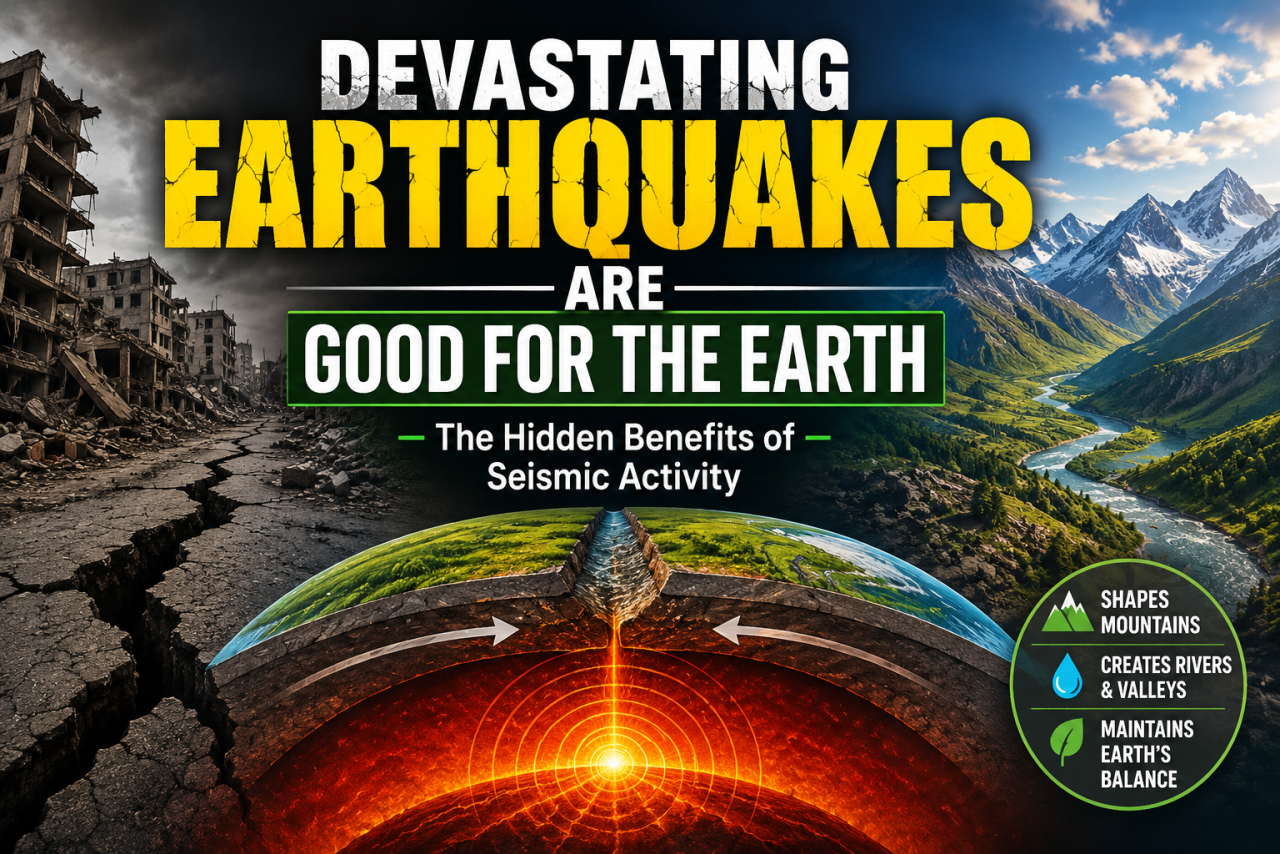
Earthquakes can destroy lives and cities, yet the same forces that cause devastation also help keep our planet geologically dynamic.
An earthquake is almost universally seen as a symbol of destruction. Buildings collapse, roads split apart, lives are lost and communities can take years to recover. Yet, from a geological perspective, earthquakes are not simply disasters. They are part of the natural processes that keep the Earth dynamic, evolving and, in many ways, geologically balanced.
This apparent contradiction raises an important question. Can something so destructive to human life actually be beneficial to the planet?
The answer, from the perspective of Earth science, is yes.
Earth Releases Its Hidden Energy
Earthquakes occur when enormous stresses accumulated within the Earth's crust are suddenly released. Tectonic plates are constantly moving, although usually so slowly that humans cannot feel it. Over time, this movement builds pressure along faults. An earthquake is one way in which that accumulated energy is released.
For the Earth itself, this is a natural mechanism. The planet is not a static structure. Its crust is continuously being fractured, shifted and reshaped.
The tragedy begins when these geological processes collide with human settlements.
The Earthquake Is Not Always the Real Killer
From a human perspective, an earthquake can appear to be the cause of death and destruction. But in many cases, the greatest danger comes from what humans have built on top of the moving ground.
Buildings constructed without adequate seismic standards, poor urban planning, weak infrastructure and inadequate disaster preparedness can turn an earthquake into a catastrophe. A properly engineered structure can withstand shaking that could prove fatal inside a poorly constructed building.
This makes earthquake-resistant construction more than an engineering preference. It is a public safety necessity.
Governments in earthquake-prone regions need strict building codes, effective enforcement and regular structural audits. Earthquake-resistant certification should become an essential requirement for major construction projects rather than a formality on paper.
Earthquakes Help Shape the Planet
Without seismic activity, the Earth would look very different.
The mountains, valleys, faults and many of the landscapes that define the planet are products of geological forces operating over millions of years. Earthquakes contribute to the movement and deformation of the Earth's crust, helping reshape landscapes and influencing the course of rivers, the formation of valleys and the evolution of ecosystems.
Seismologists Kusala Rajendran and C.P. Rajendran have extensively examined this dynamic relationship between earthquakes and the Earth. In their book The Rumbling Earth, they explore how seismic events have repeatedly transformed the Indian subcontinent.
The 1897 Assam earthquake, for instance, produced dramatic geological effects, including liquefaction. Under intense seismic pressure, water-saturated soil can behave like a liquid, causing the ground to lose its stability and producing remarkable changes in the landscape.
Such events may be destructive in the short term, but they also demonstrate the extraordinary geological forces continuously reshaping our planet.
History Records a Changing Earth
Historical accounts provide another window into the power of earthquakes. Letters, diaries, survey records, paintings and other documents have helped scientists reconstruct the effects of major earthquakes long before modern instruments existed.
The Rann of Kutch earthquake is one striking example. The massive seismic event, estimated at around magnitude 8.2, was powerful enough to alter the course of the Nara River.
These historical records are not merely stories from the past. They can help scientists understand seismic patterns, identify vulnerable regions and improve disaster preparedness.
Earthquakes cannot currently be prevented. Nor can scientists reliably predict exactly when and where every major earthquake will strike. But studying previous events can make societies better prepared for the next one.
The Real Lesson Is Adaptation
Calling earthquakes “good for the Earth” does not diminish the suffering they cause. For families who lose loved ones, homes or livelihoods, an earthquake is anything but beneficial.
The distinction lies in perspective.
For the planet, earthquakes are part of a natural geological cycle. For human beings, they become disasters when vulnerable societies and infrastructure are exposed to them.
The challenge, therefore, is not to stop the Earth from moving. It is to make human civilisation capable of living with that movement.
Better construction, stronger building regulations, effective early-warning systems, public awareness and regular disaster drills can dramatically reduce the human cost of seismic events.
Earthquakes remind us of something civilisation often forgets. We do not control the Earth. We build our lives upon it.
Understanding that difference may be the first step towards turning inevitable geological events from human catastrophes into manageable natural hazards.
An earthquake is almost universally seen as a symbol of destruction. Buildings collapse, roads split apart, lives are lost and communities can take years to recover. Yet, from a geological perspective, earthquakes are not simply disasters. They are part of the natural processes that keep the Earth dynamic, evolving and, in many ways, geologically balanced.
This apparent contradiction raises an important question. Can something so destructive to human life actually be beneficial to the planet?
The answer, from the perspective of Earth science, is yes.
Earth Releases Its Hidden Energy
Earthquakes occur when enormous stresses accumulated within the Earth's crust are suddenly released. Tectonic plates are constantly moving, although usually so slowly that humans cannot feel it. Over time, this movement builds pressure along faults. An earthquake is one way in which that accumulated energy is released.
For the Earth itself, this is a natural mechanism. The planet is not a static structure. Its crust is continuously being fractured, shifted and reshaped.
The tragedy begins when these geological processes collide with human settlements.
The Earthquake Is Not Always the Real Killer
From a human perspective, an earthquake can appear to be the cause of death and destruction. But in many cases, the greatest danger comes from what humans have built on top of the moving ground.
Buildings constructed without adequate seismic standards, poor urban planning, weak infrastructure and inadequate disaster preparedness can turn an earthquake into a catastrophe. A properly engineered structure can withstand shaking that could prove fatal inside a poorly constructed building.
This makes earthquake-resistant construction more than an engineering preference. It is a public safety necessity.
Governments in earthquake-prone regions need strict building codes, effective enforcement and regular structural audits. Earthquake-resistant certification should become an essential requirement for major construction projects rather than a formality on paper.
Earthquakes Help Shape the Planet
Without seismic activity, the Earth would look very different.
The mountains, valleys, faults and many of the landscapes that define the planet are products of geological forces operating over millions of years. Earthquakes contribute to the movement and deformation of the Earth's crust, helping reshape landscapes and influencing the course of rivers, the formation of valleys and the evolution of ecosystems.
Seismologists Kusala Rajendran and C.P. Rajendran have extensively examined this dynamic relationship between earthquakes and the Earth. In their book The Rumbling Earth, they explore how seismic events have repeatedly transformed the Indian subcontinent.
The 1897 Assam earthquake, for instance, produced dramatic geological effects, including liquefaction. Under intense seismic pressure, water-saturated soil can behave like a liquid, causing the ground to lose its stability and producing remarkable changes in the landscape.
Such events may be destructive in the short term, but they also demonstrate the extraordinary geological forces continuously reshaping our planet.
History Records a Changing Earth
Historical accounts provide another window into the power of earthquakes. Letters, diaries, survey records, paintings and other documents have helped scientists reconstruct the effects of major earthquakes long before modern instruments existed.
The Rann of Kutch earthquake is one striking example. The massive seismic event, estimated at around magnitude 8.2, was powerful enough to alter the course of the Nara River.
These historical records are not merely stories from the past. They can help scientists understand seismic patterns, identify vulnerable regions and improve disaster preparedness.
Earthquakes cannot currently be prevented. Nor can scientists reliably predict exactly when and where every major earthquake will strike. But studying previous events can make societies better prepared for the next one.
The Real Lesson Is Adaptation
Calling earthquakes “good for the Earth” does not diminish the suffering they cause. For families who lose loved ones, homes or livelihoods, an earthquake is anything but beneficial.
The distinction lies in perspective.
For the planet, earthquakes are part of a natural geological cycle. For human beings, they become disasters when vulnerable societies and infrastructure are exposed to them.
The challenge, therefore, is not to stop the Earth from moving. It is to make human civilisation capable of living with that movement.
Better construction, stronger building regulations, effective early-warning systems, public awareness and regular disaster drills can dramatically reduce the human cost of seismic events.
Earthquakes remind us of something civilisation often forgets. We do not control the Earth. We build our lives upon it.
Understanding that difference may be the first step towards turning inevitable geological events from human catastrophes into manageable natural hazards.




























Leave a Comment